

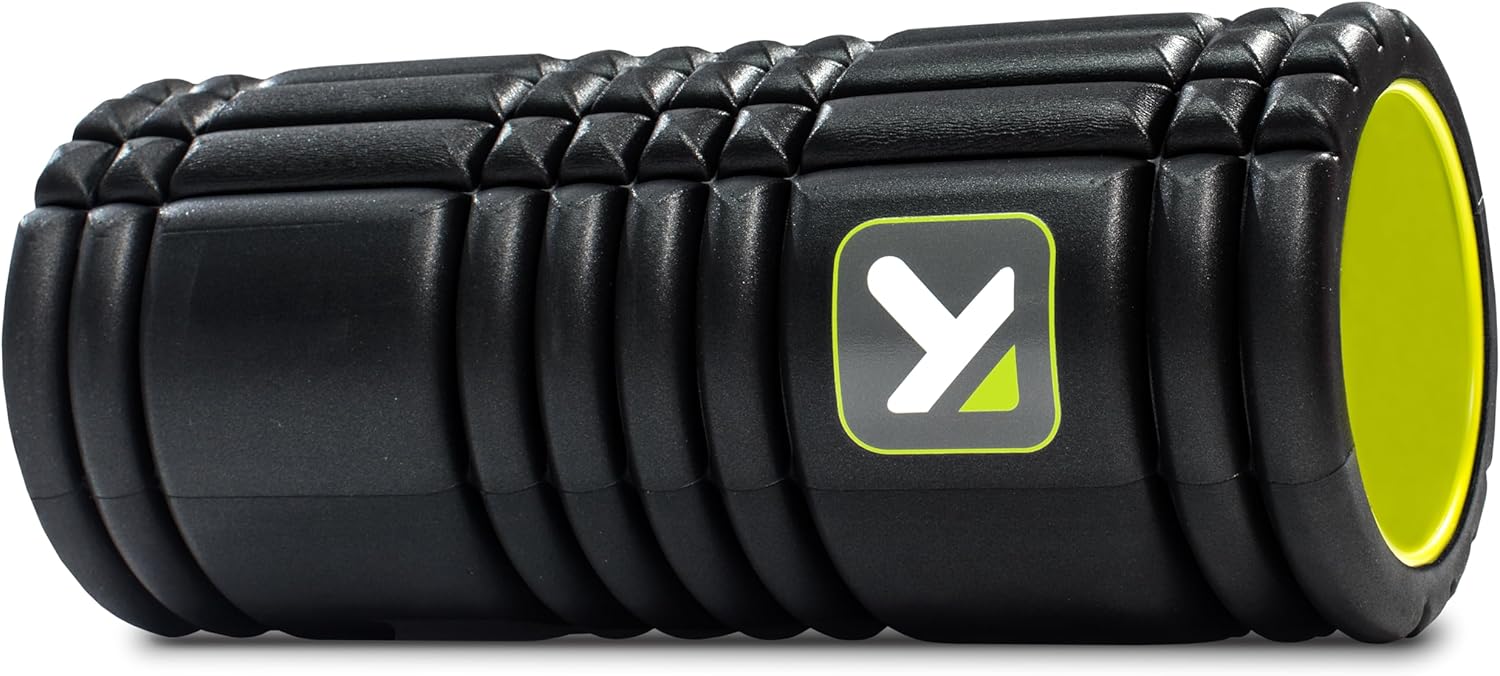
For muscle recovery, three foam rollers stand out: the TriggerPoint GRID 1.0 is the best all-rounder with a firm multi-density surface, the Amazon Basics High-Density Roller is the cheapest roller worth owning, and the RumbleRoller Original is the deep-tissue specialist for stubborn knots.
Rolling out tight muscles after a workout shouldn't require a physical therapist or a $60 gadget. A good foam roller costs less than a single massage session and lasts for years. But the market is flooded with near-identical foam cylinders at wildly different prices, and picking the wrong firmness can leave you with either a roller that feels like a pool noodle or one so aggressive you avoid using it. We compared the three that consistently earn their place in home gyms, physical-therapy clinics, and gym bags.
Who this comparison is for#
- Home exercisers and runners who want faster recovery between sessions without booking a massage.
- Desk workers dealing with a tight upper back, IT band, or calf knots who need something they'll actually use.
- Budget-conscious first-timers who want one roller that does the job without overspending on gimmicks.
How we picked#
- Density and firmness — a roller has to be firm enough to reach the muscle but not so brutal you dread it. We weighted multi-density and high-density cores over soft EVA.
- Durability — cheap rollers deform after a few months. We favored cores that hold their shape under repeated bodyweight loading.
- Reviews and track record — every pick has thousands of verified reviews and a 4-star-plus average, and all three are used in real clinical and gym settings.
- Value for the job — the right roller for a beginner is not the right roller for someone chasing deep myofascial release, so each pick targets a distinct need and budget.
- Size and portability — length matters for rolling your back safely, but a 36-inch roller won't fit in a gym bag, so we balanced coverage against packability.
Product 1 — TriggerPoint GRID 1.0 (Best Overall)#
The TriggerPoint GRID 1.0 is the roller most physical therapists reach for, and for good reason. It uses a hollow, rigid ABS plastic core wrapped in a multi-density EVA foam surface, so it stays firm and holds its shape even after years of bodyweight rolling. Cheaper solid-foam rollers slowly compress into an oval; the GRID's hard core means it rolls true for the life of the product.
What sets it apart is the patterned surface. Instead of one uniform firmness, the GRID has three distinct zones: flat sections that mimic the palm of a hand for broad pressure, tubular ridges that act like fingertips for pinpoint work, and firm bars that replicate a thumb pressing into tissue. In practice that means you can target a broad muscle group like the quads and then dig into a specific knot in the same rolling motion, without swapping tools.
At 13 inches long and roughly 5.5 inches in diameter, it is compact enough to fit in a gym bag or backpack yet long enough to roll your full back when placed perpendicular to your spine. The firmness lands in the sweet spot for most people: assertive enough to release a tight IT band or calf, but not so punishing that a beginner gives up after one session. If you have never used a roller before, this is the one that teaches you good technique without scaring you off.
The GRID supports up to around 500 pounds, so it works for larger and heavier athletes where a foam-only roller would bottom out. It also doubles as a stretching aid and a stability tool for core work.
Key Specs#
Type : Multi-density EVA foam over rigid hollow ABS core
Length : 13 inches (33 cm)
Diameter : 5.5 inches (14 cm)
Firmness : Medium-firm, multi-zone surface
Weight capacity : Up to ~500 lb (227 kg)
Best use : All-round recovery, IT band, back, quads, calves
Bottom line#
The GRID 1.0 is the roller that does 90% of what everyone needs — firm, durable, travel-friendly, and forgiving enough to learn on.
Product 2 — Amazon Basics High-Density Foam Roller (Best Budget)#
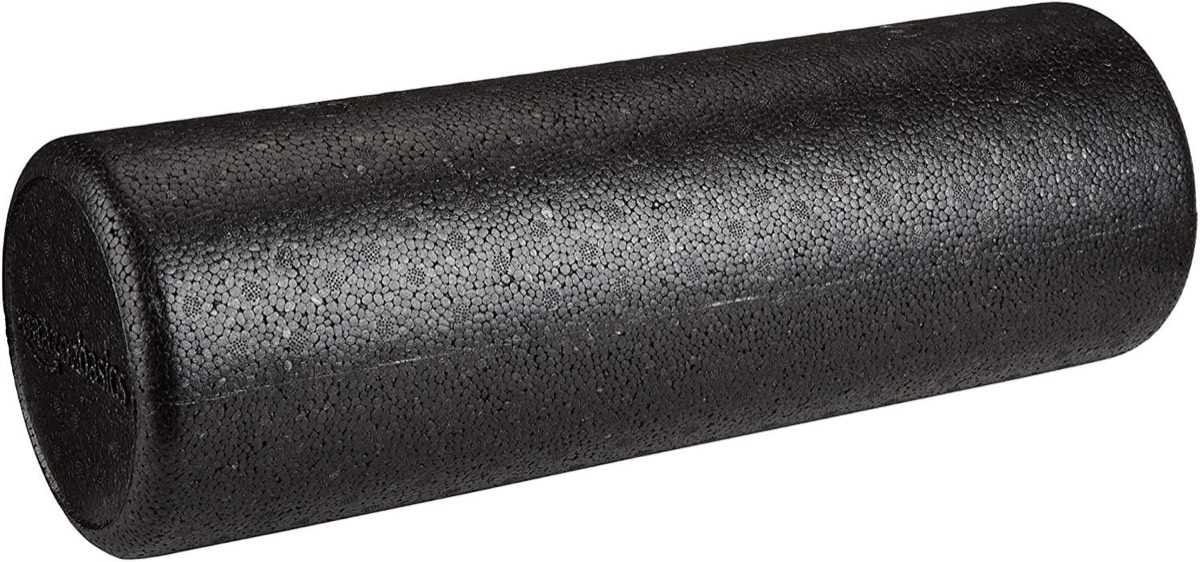
If you want to try foam rolling without committing much money, the Amazon Basics High-Density Foam Roller is the honest answer. It is a simple molded polypropylene cylinder — no patterned surface, no hollow core, no branding beyond a small logo — and it costs a fraction of the premium options. For a lot of people, that is all a foam roller ever needs to be.
Do not mistake cheap for flimsy. This is a high-density roller, meaning the foam is dense and firm rather than the squishy low-density EVA you find in the discount bin. It holds its cylindrical shape under repeated use far better than a soft roller, and the smooth surface applies broad, even pressure across large muscle groups. For rolling out quads, hamstrings, calves, and the upper back, that even pressure is genuinely all you need.
The 18-inch length is the standout practical feature here. It is longer than the GRID, which makes it noticeably easier and safer to roll your entire back lying perpendicular across it — the extra length gives your shoulders room and keeps the roller from tipping. It also works well as a prop for stretching, Pilates, balance drills, and physical-therapy exercises where you lie lengthwise along the roller. Amazon Basics also sells shorter 12-inch and 24-inch and 36-inch versions if you want a travel size or a full-body mat-length option.
The trade-offs are what you would expect at this price. The smooth surface cannot pinpoint a specific knot the way a textured roller can, so deep, targeted trigger-point work is harder. The firm high-density foam can feel a touch hard against bony areas at first. And it will not last as many years as a hard-core roller under daily heavy use. But for occasional-to-regular recovery rolling, it delivers the vast majority of the benefit at a small fraction of the cost.
Key Specs#
Type : Molded high-density polypropylene foam, solid core
Length : 18 inches (also sold in 12, 24, and 36 inch)
Diameter : 6 inches (15 cm)
Firmness : Firm, smooth uniform surface
Best use : Broad muscle groups, back rolling, stretching, beginners
Bottom line#
The cheapest roller genuinely worth owning — firm, long enough for your whole back, and impossible to overspend on.
Product 3 — RumbleRoller Original 22-inch (Best for Deep Tissue)#
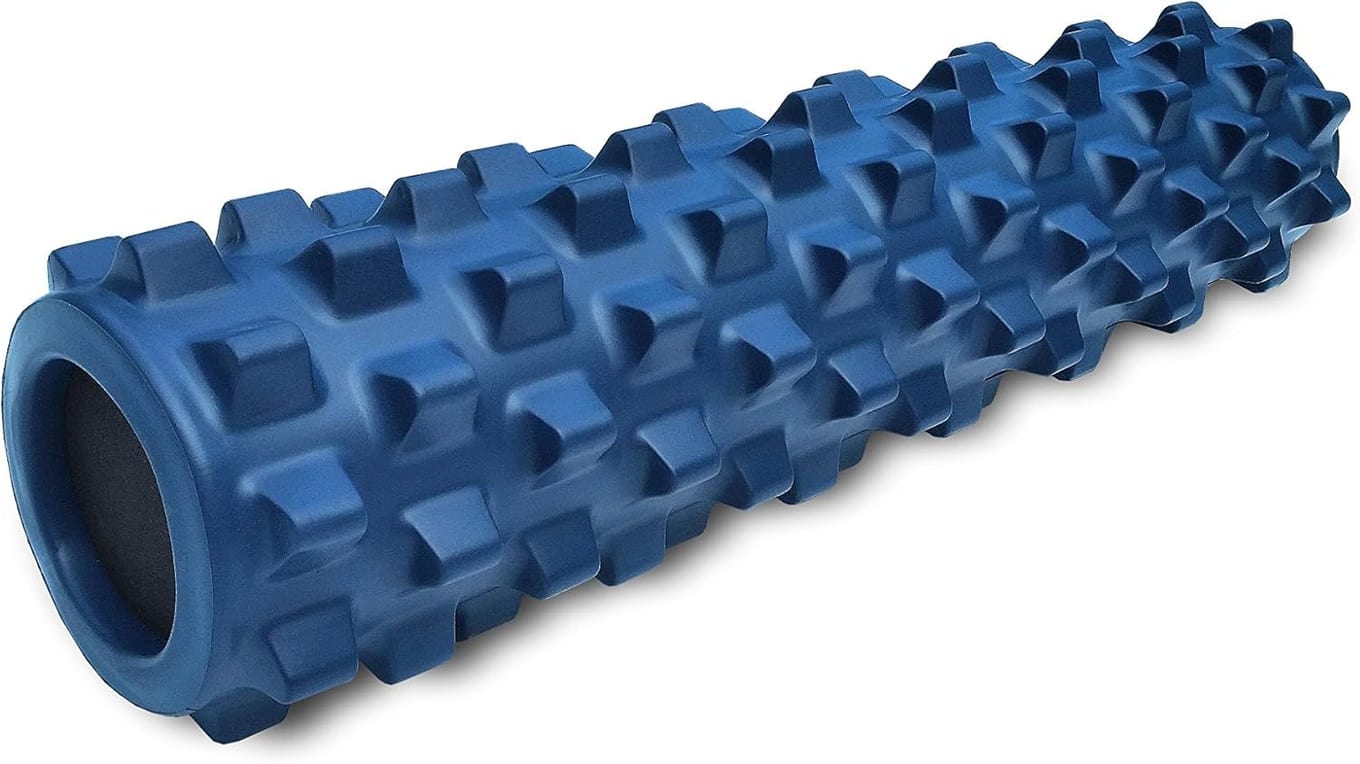
The RumbleRoller is not a beginner's roller, and it does not pretend to be. Its surface is covered in dozens of firm but flexible bumps, each designed to knead into muscle the way a therapist's thumbs would. Where a smooth roller presses evenly across the whole muscle, the RumbleRoller's fingers press between muscle fibers, grabbing and stretching the tissue to release adhesions and trigger points that a flat roller simply glides over.
This is the tool you reach for when a smooth roller has stopped delivering results — when you have a stubborn knot in a glute, a chronically tight IT band, or a piriformis that a flat surface cannot reach. The bumps are firm enough to dig deep, but because they flex under load, they contour around your body rather than bruising bone. The original-density version reviewed here is the standard aggressive firmness; RumbleRoller also makes an even harder "X-Firm" (blue) version for the most experienced users.
The 22-inch midsize length is the practical sweet spot in the RumbleRoller lineup. It is long enough to roll your full back and both legs at once, but still fits in a gym bag, unlike the 31-inch full-size version. The molded core holds its shape and firmness for years — these rollers are built to outlast cheaper foam by a wide margin.
Be honest with yourself about intensity before buying. First-time rollers often find the RumbleRoller too aggressive and end up not using it. If you already foam roll regularly, do targeted trigger-point work, or feel like your current roller just is not reaching deep enough, this is the upgrade that finally does. Pair it with a smoother roller for warm-ups and use the RumbleRoller for focused recovery on problem areas.
Key Specs#
Type : Molded foam with firm flexible bump surface
Length : 22 inches (56 cm), midsize
Diameter : 6 inches (15 cm)
Firmness : Aggressive; textured deep-tissue surface
Best use : Deep tissue, trigger points, experienced users, stubborn knots
Bottom line#
The specialist that reaches knots a smooth roller can't — aggressive, durable, and worth it only if you already roll regularly.
Which one should you buy?#
If you want one roller that handles everything and you are willing to pay a little more for durability and versatility, buy the TriggerPoint GRID 1.0. Its multi-density surface covers broad muscles and pinpoint knots, the hard core lasts for years, and the firmness is approachable for beginners yet effective for athletes. For most people reading this, the GRID is the correct answer.
If you are on a tight budget or simply testing whether foam rolling helps you, buy the Amazon Basics High-Density Foam Roller. The firm 18-inch cylinder does the fundamentals — even pressure across large muscle groups and safe full-back rolling — for a small fraction of the price. You can always upgrade later, and the extra length even makes it the better choice for stretching and Pilates work.
If you have foam rolled before and a smooth roller no longer touches your deepest knots, buy the RumbleRoller Original 22-inch. The bumpy surface digs into trigger points that flat rollers glide past. Just know it is intense — if you are brand new to rolling, start with one of the other two and graduate to the RumbleRoller once your tissue adapts.
A common smart combination is to own two: an affordable smooth roller for daily warm-ups and general recovery, plus the RumbleRoller for focused deep-tissue work on your personal problem areas.
FAQ#
Which foam roller is best for beginners?#
The Amazon Basics High-Density roller or the TriggerPoint GRID 1.0 are both good starting points. They apply firm but even pressure without the aggressive bumps of a textured roller. Avoid starting with the RumbleRoller — its intensity can put newcomers off before they build tolerance.
Is a textured roller better than a smooth one?#
Not universally — they do different jobs. A smooth roller like the Amazon Basics is better for broad, even pressure across large muscle groups and for beginners. A textured roller like the RumbleRoller targets specific knots and trigger points more precisely, but it is more intense and best suited to experienced users.
What length foam roller should I get?#
For rolling your full back safely, look for at least 18 inches, which is why the Amazon Basics 18-inch and RumbleRoller 22-inch handle back work comfortably. A shorter 13-inch roller like the GRID is more portable and better for isolating a single limb, and still fine for the back when placed across the spine.
How firm should a foam roller be?#
Most people do best with a medium-firm to firm roller. High-density and multi-density rollers like these three hold their shape and reach the muscle effectively. Very soft low-density rollers feel comfortable but often fail to release tight tissue, and they deform faster.
How often should I use a foam roller?#
Daily use is safe for most people. Many exercisers roll for five to ten minutes before a workout to warm up and after to aid recovery. Spend around 30 to 60 seconds per muscle group, and avoid rolling directly over joints, bones, or the lower back.
Can foam rolling replace a sports massage?#
Foam rolling is a low-cost complement to massage, not a full replacement. It handles day-to-day self-myofascial release and recovery well, and for many people that is enough. Deep, chronic issues may still benefit from a professional, but a good roller dramatically reduces how often you need one.