

For home baristas, a great manual grinder beats a cheap electric one. Our top three: the 1Zpresso JX-Pro S (best overall, pour-over to espresso), the TIMEMORE Chestnut C3 (best budget, serious burrs), and the KINGrinder K6 (best for espresso, fine micro-settings).
Who This Comparison Is For#
This roundup is for people who already care about their coffee and want grind quality to match.
- Pour-over and AeroPress drinkers who notice the difference between gritty supermarket pre-ground and a fresh, even grind.
- Home espresso beginners working with a manual machine, Moka pot, or entry-level setup who need fine, adjustable grinds without a $300 electric grinder.
- Counter-space-conscious and travel-minded brewers who want one quiet, cordless grinder that lives in a drawer or packs into a bag.
If you only ever drink drip from a pod machine, a hand grinder is overkill. Everyone else brewing by hand will taste the upgrade in the first cup.
How We Picked#
We focused on grinders that punch above their price and hold up to daily use.
- Burr quality first: all three use stainless steel conical burrs, not the wobbly ceramic burrs found in $20 grinders that drift out of alignment.
- Grind consistency: we prioritized models reviewers consistently rank for low fines and even particle size across pour-over and espresso ranges.
- Adjustment range: each grinder offers repeatable, numbered click settings so you can return to a recipe instead of guessing.
- Reliability signals: every pick carries strong ratings across hundreds to thousands of reviews, with a track record longer than a single hype cycle.
- Real price spread: we deliberately chose one premium all-rounder, one budget standout, and one espresso-focused value pick so there's a match for any setup.
Product 1 — 1Zpresso JX-Pro S (Best Overall)#
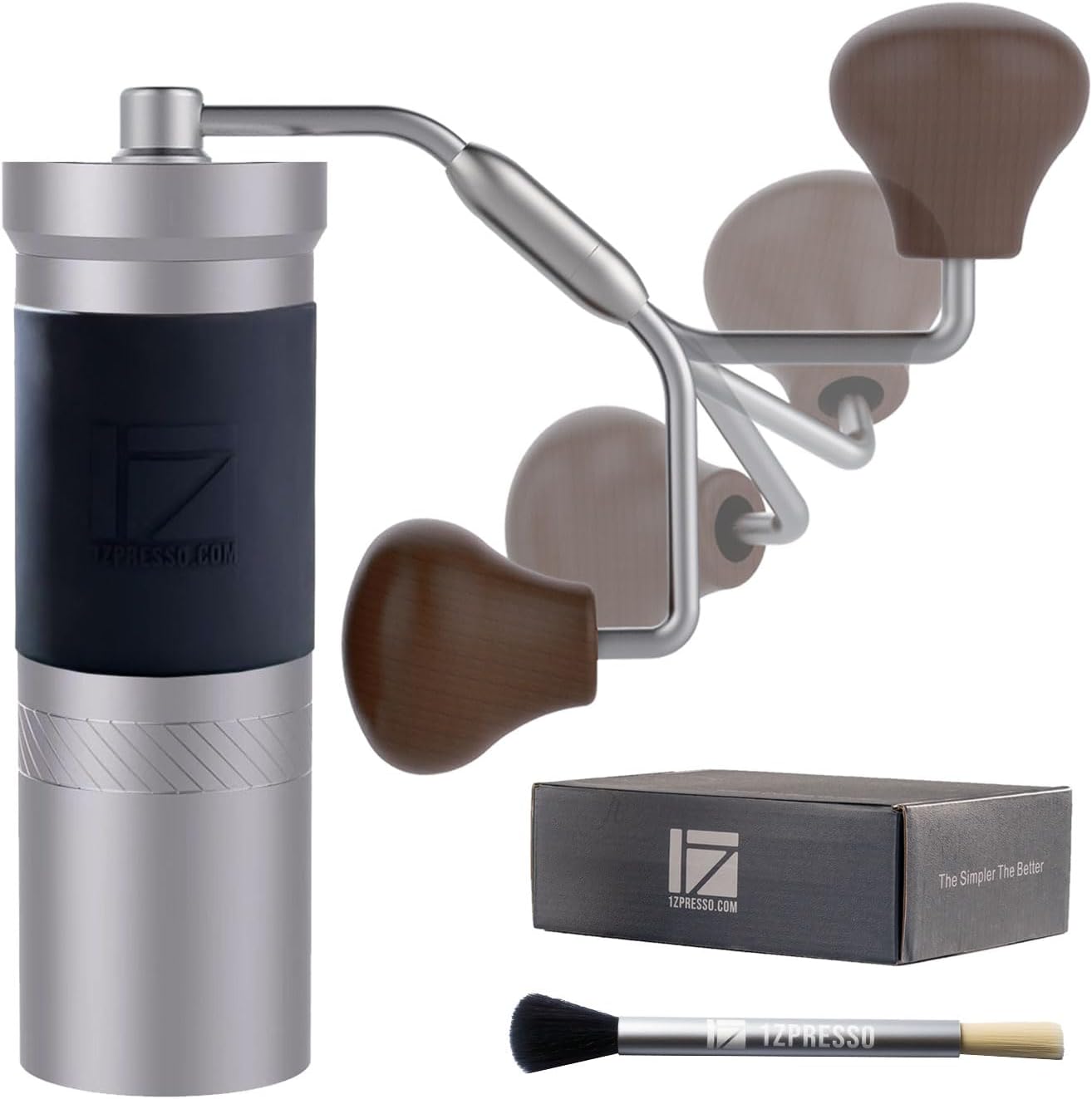
The 1Zpresso JX-Pro S is the grinder we'd hand to anyone who wants one tool that does everything well. It's the refreshed "S" version of the JX-Pro, a model that earned a reputation as the sweet spot in 1Zpresso's lineup. It grinds fast, the build feels like a precision instrument, and it moves effortlessly from coarse French press down to fine espresso.
The headline feature is the external adjustment dial at the base. You turn the numbered ring to a setting, and each click moves the burr a precise, consistent amount, so dialing in a new bean or switching brew methods is repeatable rather than a guessing game. Write down "12 for V60, 6 for AeroPress, 2 for espresso" once and you can return to those numbers every morning. The 48mm stainless steel conical burrs chew through beans quickly, and most users report a full pour-over dose in under 30 seconds of comfortable cranking.
What makes it the overall pick is the breadth. Pour-over fans get clean, even grounds with minimal fines, which translates to brighter, sweeter cups without the muddy bitterness that uneven grinds cause. Espresso users get fine enough control to actually chase a good shot rather than fighting a grinder that can't go fine enough. The magnetic catch cup twists off in either direction and holds about 35 grams, enough for a big mug or a double batch.
The grinding action is where the price shows. The burrs are well-aligned from the factory, so there's no wobble or grinding-to-a-stop on dense beans, and the folding crank tucks flat against the body for storage. It's heavier than the budget picks, but that weight is metal where it counts. After months of daily use, the JX-Pro S still feels like the day you unboxed it, which is exactly what you want from a grinder you'll keep for years.
Day to day, the JX-Pro S rewards the person who likes to experiment. Because the dial is so repeatable, you can run side-by-side tests, nudging two clicks finer to tame an acidic Ethiopian or two clicks coarser to open up a French press, and trust that the only variable you changed was grind size. That confidence is what separates a grinder you tolerate from one that actively makes you a better brewer. It's the single biggest upgrade most home baristas can make short of a new brewer.
Key Specs#
Burrs : 48mm stainless steel conical
Adjustment : External numbered dial, repeatable click settings
Capacity : ~35 grams per grind
Best brew range : Espresso through French press (true all-rounder)
Build : Aluminum body with folding stainless crank
Bottom Line#
If you want to buy once and never feel limited, the JX-Pro S is the safest premium pick for any home barista.
Product 2 — TIMEMORE Chestnut C3 (Best Budget)#
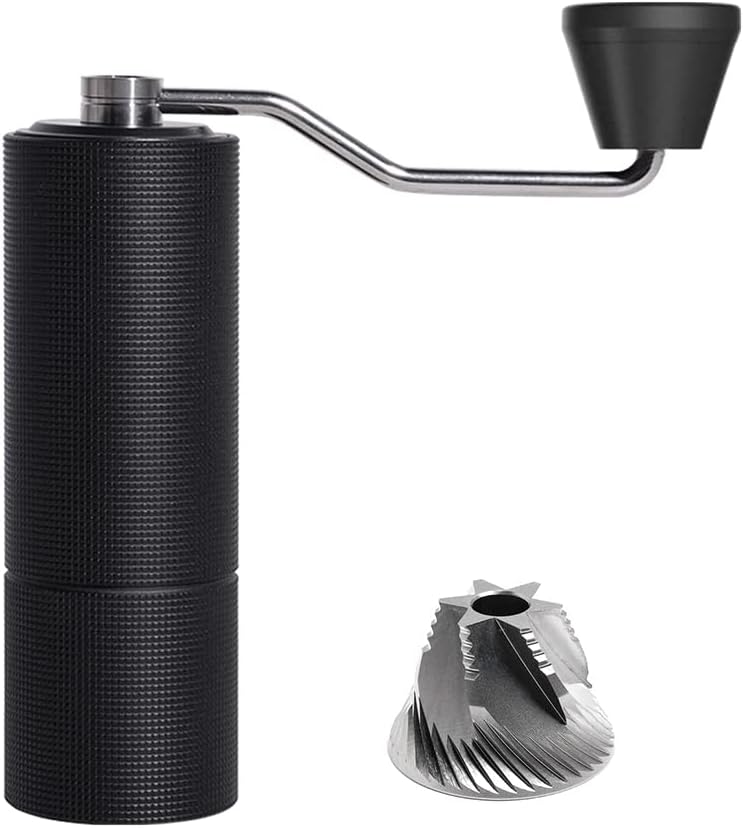
The TIMEMORE Chestnut C3 is the grinder that broke the "good hand grinders are expensive" rule. It costs a fraction of the JX-Pro S yet delivers stainless steel conical burrs and a grind consistency that genuinely surprises people coming from cheap ceramic-burr models. For most pour-over and drip drinkers, this is all the grinder they'll ever need.
TIMEMORE's S2C burr set is the star. It produces an even grind with few fines, which means cleaner, sweeter pour-over and AeroPress cups instead of the silty bitterness cheaper grinders leave behind. Coming from a blade grinder or a ceramic-burr budget model, the jump in cup clarity is immediately obvious. Adjustment is internal: you remove the catch cup and turn a numbered nut, clicking through settings. It's less convenient than an external dial, but once you find your pour-over number you rarely touch it.
The body is grippy and compact, with a textured silicone band that keeps it steady while you crank, and the whole thing weighs little enough to hold comfortably through a full grind. The folding handle and slim profile make it easy to drop in a drawer or a bag. At this price the C3 isn't trying to be an espresso specialist, though it can reach espresso-fine grinds in a pinch for a Moka pot or AeroPress. It's a pour-over and drip workhorse first, and it's the grinder most people should start with. For the full breakdown, see our complete TIMEMORE Chestnut C3 review.
The C3's real achievement is removing the excuse not to grind fresh. It costs little more than a few bags of specialty beans, so the upgrade pays for itself in flavor almost immediately, and there's no electricity, noise, or counter footprint to worry about. The smaller 38mm burrs mean grinding takes a little longer and a little more arm than the 48mm picks, but for one or two cups a day that's a non-issue. Many people buy a C3 as their "first real grinder" and find it does the job so well they never feel pushed to upgrade.
Key Specs#
Burrs : 38mm S2C stainless steel conical
Adjustment : Internal numbered nut, click settings
Capacity : ~25 grams per grind
Best brew range : Pour-over, drip, AeroPress, French press
Build : Aluminum body with silicone grip band
Bottom Line#
The best entry point into real hand grinding, with burrs that embarrass grinders twice the price.
Product 3 — KINGrinder K6 (Best for Espresso)#
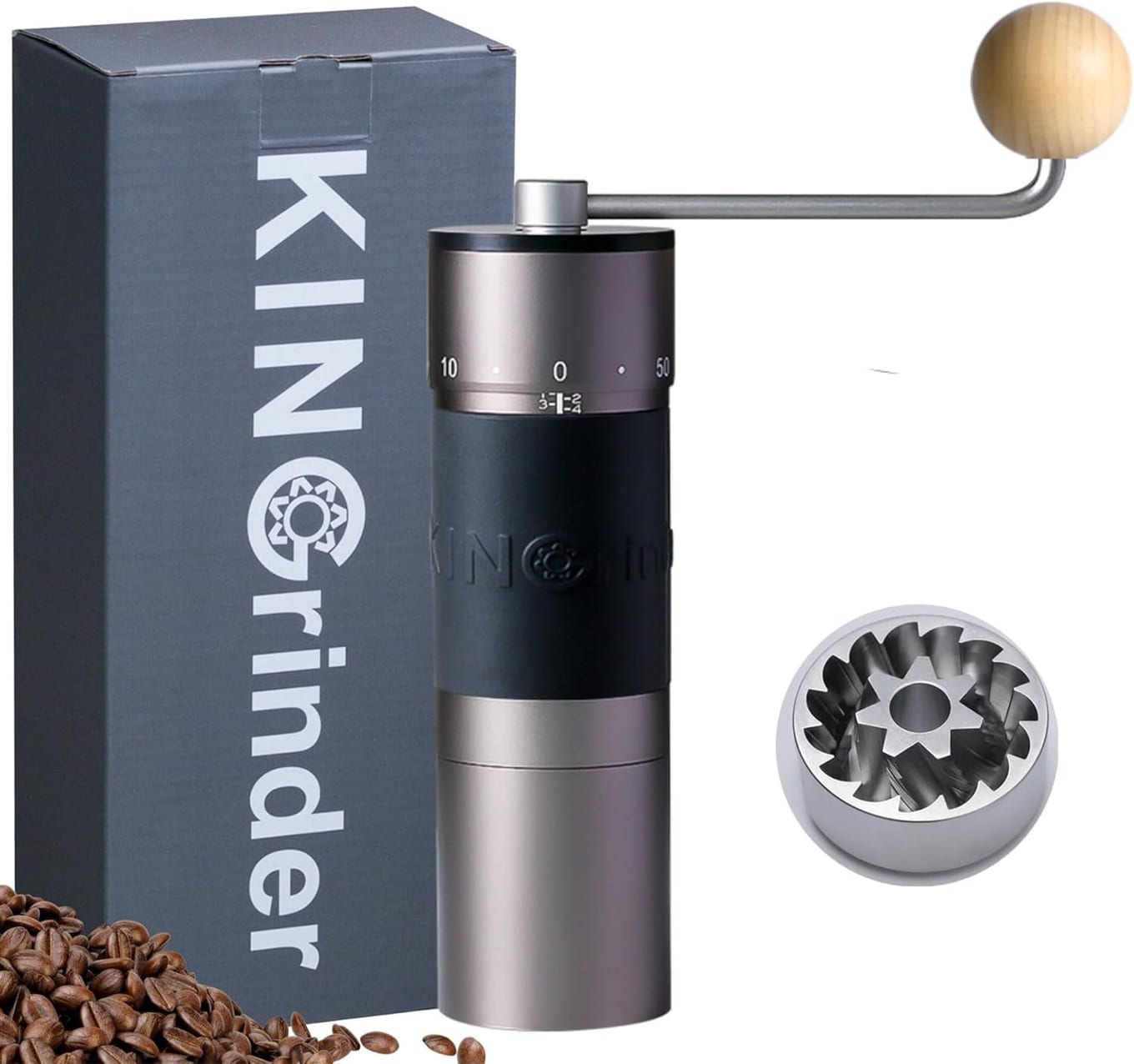
The KINGrinder K6 is the value pick for anyone who lives at the espresso end of the dial. Its standout feature is granular control: an external numbered ring offers extremely fine micro-adjustments per click across a wide range, which is exactly what espresso demands when a few microns separate a sour shot from a sweet one.
That precision is wrapped in a heavier-duty package than the price suggests. The 48mm stainless steel conical burrs are large for a grinder in this bracket, matching the size found on grinders costing far more, and the straight folding handle gives good leverage for the denser, finer grinding that espresso requires. Because the numbered ring is external and clearly marked, recording and returning to an espresso recipe is simple, which is half the battle when you're learning to pull shots. You can still open it up to coarse for French press, but the K6 earns its place by making affordable manual espresso genuinely viable.
The trade-off versus the JX-Pro S is refinement. The action is a touch less buttery, the finish is less premium, and fine espresso grinds take real effort by hand. But for the money, no other grinder here gives you this many repeatable espresso settings, and the consistency at fine grinds holds up well enough to chase a balanced shot. If a Moka pot, manual lever, or entry espresso machine is your daily driver and you don't want to spend big, the K6 is the smart buy.
The K6 also makes a strong case as a single grinder for a mixed household. One person can pull espresso in the morning at a low number, another can grind coarse for a French press in the afternoon, and the external ring makes flipping between those worlds a five-second job. For people upgrading from a pressurized-basket starter machine toward real espresso, the K6 is often the missing piece that finally lets the shots taste the way they're supposed to, without the cost of a dedicated electric espresso grinder.
Key Specs#
Burrs : 48mm stainless steel conical
Adjustment : External ring, fine micro-clicks (wide espresso-to-coarse range)
Capacity : 25–35 grams per grind
Best brew range : Espresso, Moka pot, AeroPress (coarse-capable too)
Build : Knurled metal body with straight folding handle
Bottom Line#
The most espresso adjustment per dollar, ideal for Moka pot and manual-machine brewers on a budget.
Which One Should You Buy?#
All three grind better than almost any electric grinder under $150, so you won't go wrong. The choice comes down to budget and what's in your kitchen.
If you want one grinder that handles every brew method and feels like a premium tool, buy the 1Zpresso JX-Pro S. Its external dial and fast 48mm burrs make switching between morning pour-over and weekend espresso painless, and it's the pick least likely to leave you wanting more later.
If you're new to hand grinding or just want the most quality for the least money, buy the TIMEMORE Chestnut C3. It nails pour-over and drip, the burrs are far better than its price implies, and it's the easiest "yes" for anyone who isn't chasing espresso.
If espresso is your focus and the JX-Pro S is out of budget, buy the KINGrinder K6. Its fine, repeatable settings make dialing in shots realistic at a mid-range price, with enough range left over for everything else.
FAQ#
Is a manual coffee grinder better than a cheap electric one?#
For grind quality, yes. Budget electric blade grinders chop beans unevenly, producing dust and boulders in the same batch. All three manual grinders here use conical burrs that crush beans to a consistent size, which makes a clear difference in flavor for pour-over and espresso. The trade-off is effort and time, since you grind by hand.
Can these grinders make espresso-fine grounds?#
The 1Zpresso JX-Pro S and KINGrinder K6 are both built for espresso, with fine, repeatable micro-adjustments to dial in shots. The TIMEMORE Chestnut C3 can reach espresso-fine settings but is happiest with pour-over and drip. If espresso is your main brew method, choose the JX-Pro S or the K6.
How long does it take to grind a cup by hand?#
Expect roughly 20 to 40 seconds for a standard pour-over dose, depending on the grinder, your grind setting, and the beans. Coarser grinds go faster; fine espresso grinds take longer and more effort. The 1Zpresso JX-Pro S and KINGrinder K6, with their larger 48mm burrs, generally grind quicker than smaller-burr models.
What is the difference between internal and external adjustment?#
External adjustment, used on the JX-Pro S and K6, puts a numbered dial on the outside of the grinder so you can change settings without disassembling anything. Internal adjustment, used on the TIMEMORE C3, requires removing the catch cup to turn a nut. External is more convenient for people who switch brew methods often; internal is fine if you mostly stick to one grind size.
Do I need to clean a manual coffee grinder often?#
A light brush-out every week or two keeps oils and fines from building up. All three grinders here disassemble without tools for deeper cleaning, and importantly, 1Zpresso and KINGrinder let you take them apart without losing your burr calibration. Keeping the burrs clean preserves grind consistency and flavor over the long run.
Are these grinders good for travel?#
Yes. Manual grinders are cordless, quiet, and durable, which makes them ideal for travel, camping, or the office. The folding handles on all three reduce their footprint, and the metal bodies shrug off being tossed in a bag. The TIMEMORE C3 and KINGrinder K6 are particularly easy to stash thanks to their compact, grippy bodies.