

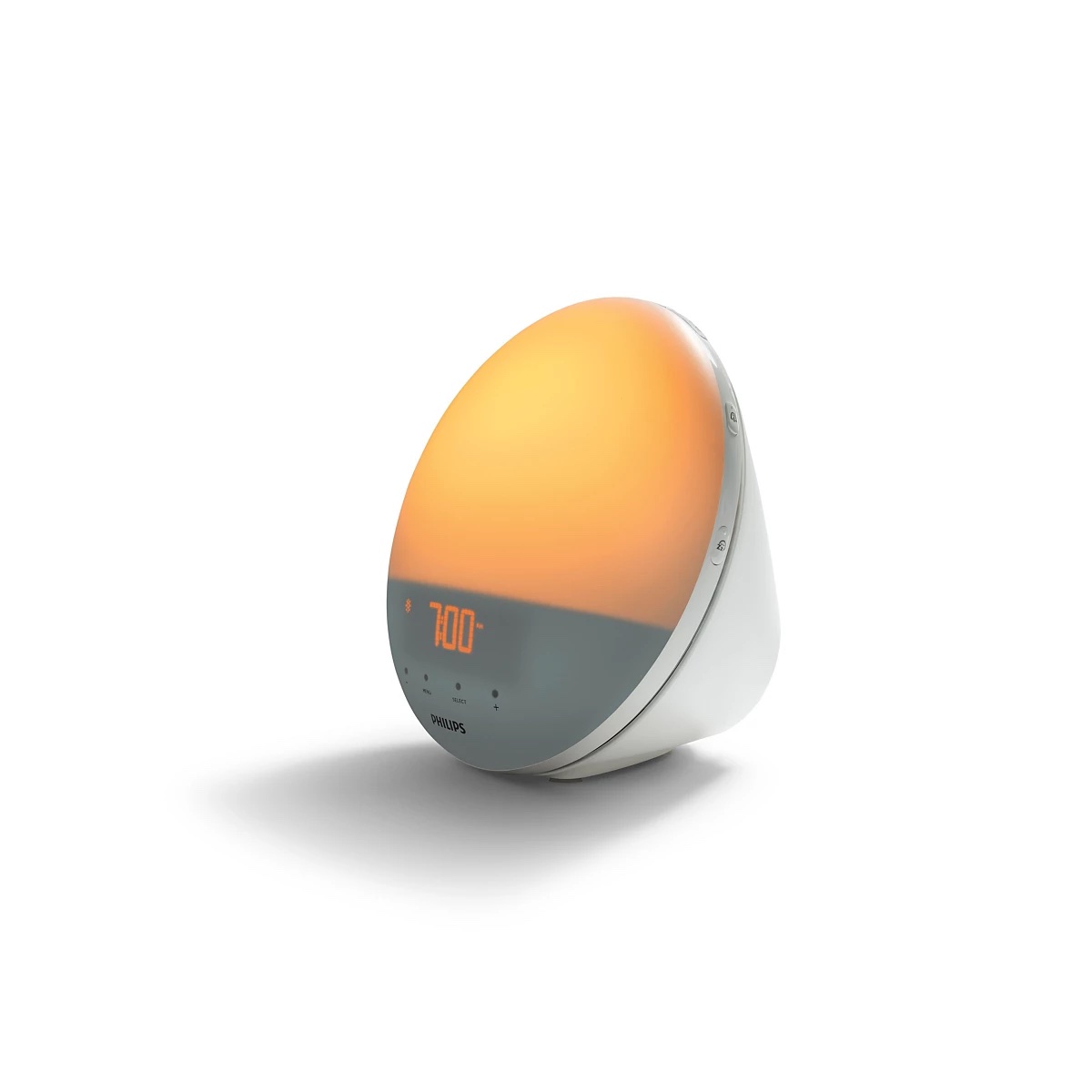
For heavy sleepers, the best overall sunrise alarm clock is the Philips SmartSleep HF3520/60 for its clinically-backed 30-minute sunrise. The JALL Wake Up Light is the best budget pick, and the Hatch Restore 3 is best for a full sleep-and-wake routine.
Who This Comparison Is For#
If a single beeping alarm leaves you groggy, disoriented, or reaching blindly for snooze, a sunrise alarm clock changes how you wake. It brightens the room gradually before the sound starts, so your body eases out of deep sleep instead of being jolted from it.
- Deep, hard-to-wake sleepers who sleep through phone alarms and need light plus sound working together.
- People in dark bedrooms or winter climates where the sun rises long after the alarm does.
- Anyone who hates the jolt of a buzzer and wants a gentler, less stressful start to the day.
How We Picked#
We compared dozens of sunrise alarm clocks and narrowed the field to three that each win a clear slot. Our criteria:
- Sunrise quality: a genuine, gradual light ramp (20-40 minutes) that reaches bright enough to actually wake you, not just glow.
- Wake reliability for heavy sleepers: a loud enough backup sound and a snooze that does not let you oversleep.
- Sound options: natural wake sounds and, ideally, wind-down or white-noise features for falling asleep.
- Ease of use: simple controls you can operate half-asleep, without fighting a fiddly menu.
- Proven track record: strong review counts and ratings across thousands of real buyers.
Every pick below is currently available and vetted against hundreds to thousands of reviews. Prices shift, so verify the current cost when you click through.
Product 1 — Philips SmartSleep HF3520/60 (Best Overall)#
The Philips SmartSleep Wake-Up Light is the pick we recommend to most people, and it is the one heavy sleepers should reach for first. It is the clinically-studied benchmark that most sunrise clocks are measured against, and it earns that reputation with a sunrise that is smooth, warm, and bright enough to pull you out of deep sleep.
Over 30 minutes, the light climbs from a soft dawn red through orange to a bright yellow that fills the room. By the time your chosen sound fades in, you are already surfacing. Philips reports that in its studies most users found it easier to get out of bed, and the difference is noticeable if you have only ever used a phone alarm.
You get five natural wake sounds (Forest Birds, Buddha, Yoga, Ocean Waves, and Nepal Bowls) plus an FM radio, and a sunset function that dims the light in reverse to help you wind down at night. The tap-anywhere snooze is genuinely half-asleep-friendly, and the whole thing doubles as a bedside reading lamp with 20 brightness levels.
If you want the deeper feature breakdown, read our full Philips SmartSleep wake-up light review.
Key Specs#
Sunrise duration : Adjustable, up to 30 minutes with colored dawn simulation
Wake sounds : 5 natural sounds plus FM radio
Max brightness : 300 lux at full intensity, 20 adjustable levels
Extras : Sunset wind-down, reading lamp, tap snooze
Power : Mains powered
Bottom Line#
The gold-standard sunrise clock: the most convincing dawn simulation and the most reliable wake for the money.
Product 2 — JALL Wake Up Light (Best Budget)#
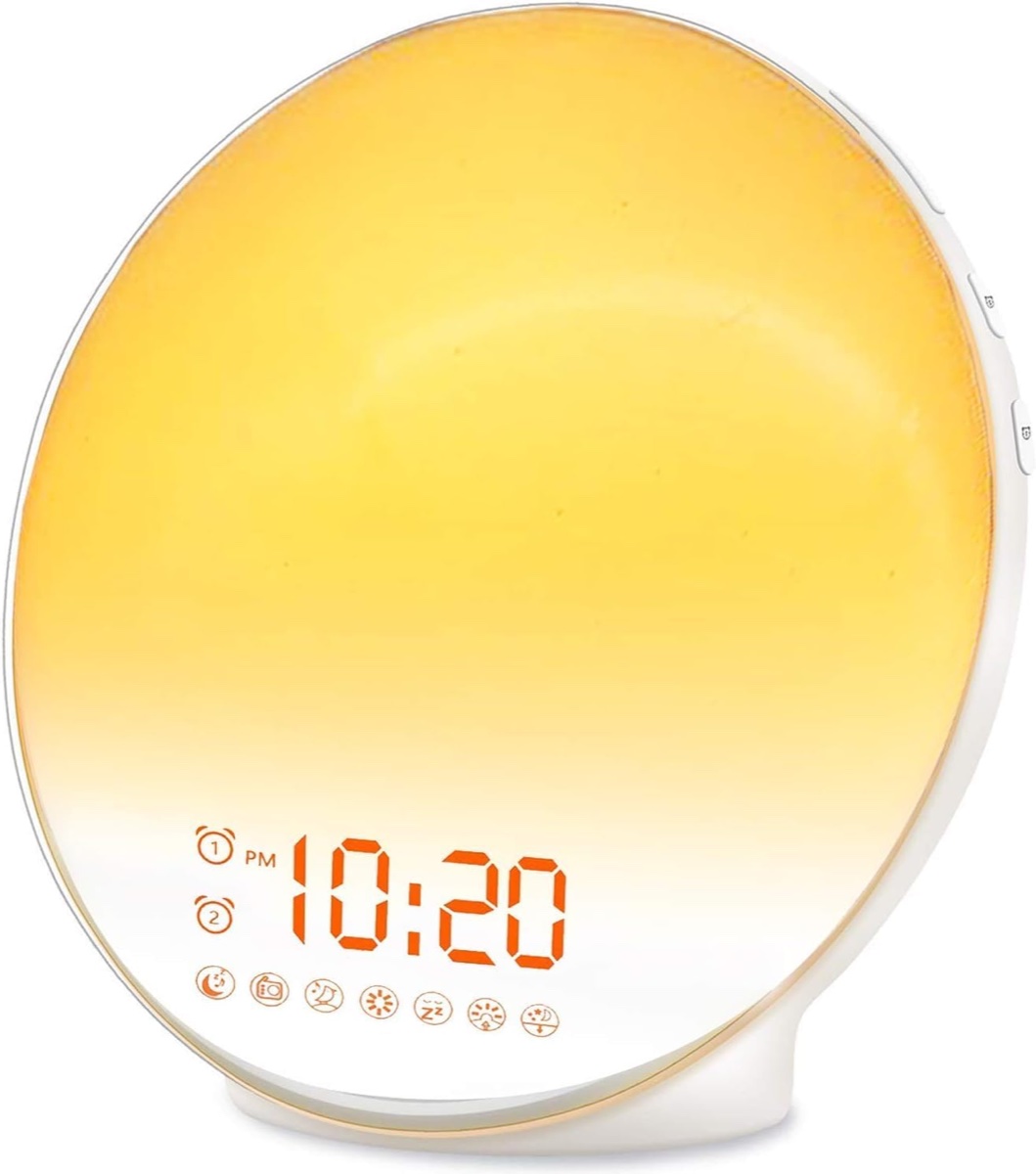
The JALL Wake Up Light proves you do not need to spend a lot to escape the buzzer. It is the budget favorite that regularly outsells pricier rivals, and for a first sunrise clock it hits every essential without the premium markup.
The dome-shaped light simulates both sunrise and sunset over an adjustable 10 to 30 minutes, and it goes bright enough to rouse a genuine heavy sleeper. Where it stretches past its price is flexibility: seven color nightlight settings, seven natural wake sounds plus FM radio, dual alarms for two different schedules, and 20 brightness levels. The dual alarms alone make it ideal for couples on different wake times.
It is not as refined as the Philips: the sunrise is a touch less gradual and the plastic build feels its price. But for the cost of a few coffees, you get the core benefit, gentle light-led waking, with room to tune it to your room and routine.
Key Specs#
Sunrise duration : Adjustable 10-30 minutes, sunrise and sunset
Wake sounds : 7 natural sounds plus FM radio
Light options : 7 nightlight colors, 20 brightness levels
Extras : Dual alarms, snooze, USB charging port
Power : Mains adapter with USB output
Bottom Line#
The most sunrise clock you can get for the least money, and the smart way to test whether light-based waking works for you.
Product 3 — Hatch Restore 3 (Best for a Full Sleep Routine)#
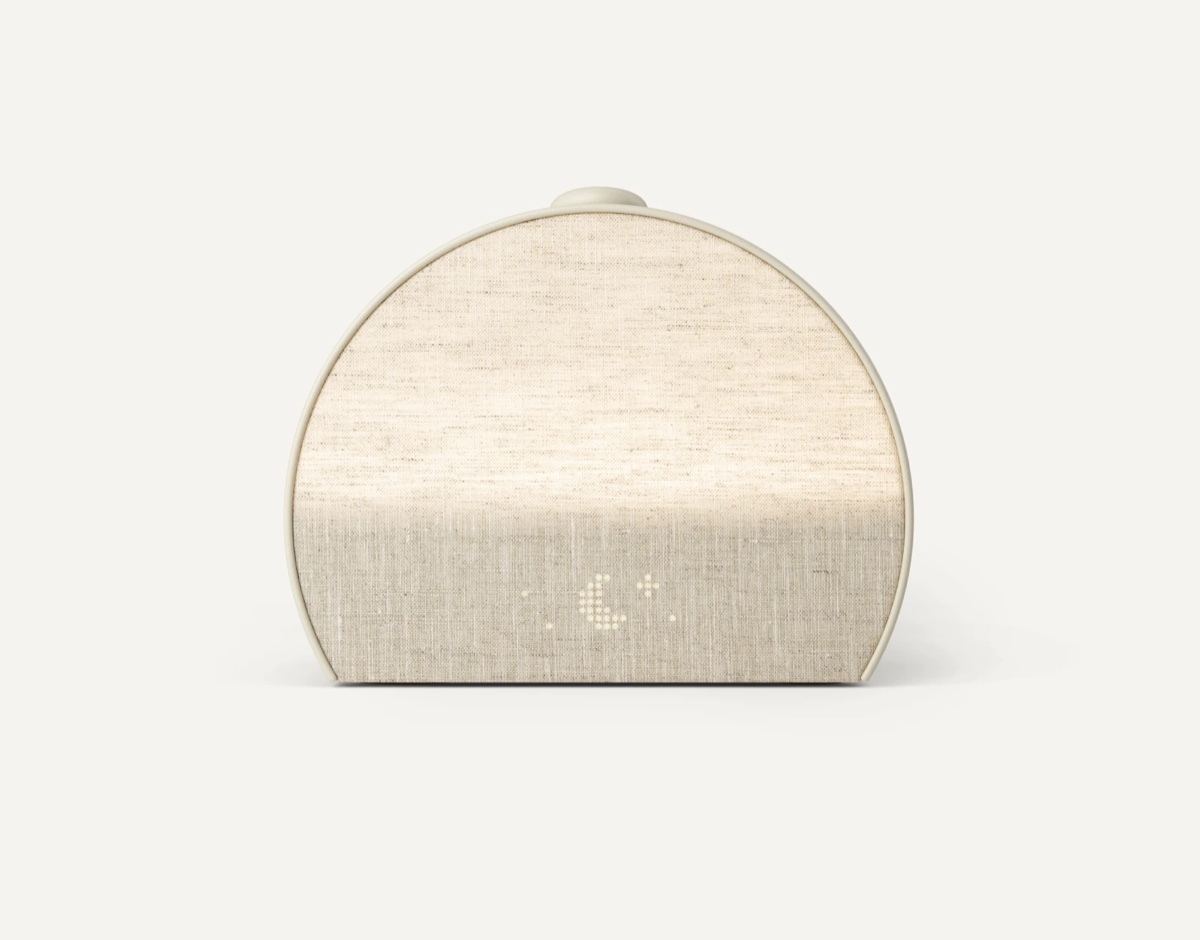
The Hatch Restore 3 is for people who want to fix the whole night, not just the morning. It is a sunrise alarm, a sound machine, a wind-down coach, and a reading light in one screen-free device that looks at home on a nightstand.
The sunrise wakes you with gradually building light, but the standout is the routine you build around it: a wind-down sequence at night with dimming light and a soundscape, white noise or sleep stories through the small hours, then a personalized sunrise and sound in the morning. It is app-controlled, so you set everything from your phone and then leave the phone out of the bedroom, which is the point.
The trade-off is the model here: the richest library of sounds, sleep stories, and guided content sits behind the optional Hatch+ subscription, though the core alarm, sunrise, and a set of free sounds work without it. If you sleep badly at both ends, falling asleep and waking, this is the one that treats the full cycle.
Key Specs#
Sunrise : Personalized gradual sunrise plus sunset wind-down
Sounds : Sound machine, white noise, plus expanded library via Hatch+
Design : Screen-free curved fabric body, no glowing numbers
Control : App-based routines, touch controls, reading light
Power : Mains powered
Bottom Line#
The best pick if you want to engineer your entire sleep routine, not just a nicer alarm, and you do not mind an optional subscription for the full experience.
Which One Should You Buy?#
All three wake you with light instead of a jolt, so your decision comes down to budget and how much of your sleep you want to manage.
If you want the most convincing sunrise and the most reliable wake without overthinking it, buy the Philips SmartSleep HF3520/60. It is the safe, proven choice for a heavy sleeper who just wants mornings to stop being brutal. View on Amazon
If you are on a budget or testing sunrise waking for the first time, buy the JALL Wake Up Light. It delivers the core benefit for a fraction of the price, and dual alarms make it great for shared bedrooms. View on Amazon
If your problem is the whole night, trouble falling asleep as much as waking, buy the Hatch Restore 3 and lean on its wind-down routines and soundscapes. View on Amazon
FAQ#
Do sunrise alarm clocks actually work for heavy sleepers?#
Yes, especially when paired with sound. The gradual light lifts you out of deep sleep so the backup alarm wakes you from a lighter stage, which feels far less jarring. Heavy sleepers should choose a model with a bright enough sunrise and a loud backup sound, like all three picks here.
What is the difference between the Philips and the Hatch?#
The Philips SmartSleep is a focused, mains-powered sunrise clock with on-device controls and no subscription. The Hatch Restore 3 is a fuller sleep system with app-controlled routines, a sound machine, and an optional subscription for its full content library. Pick Philips for simplicity, Hatch for a complete routine.
Is the budget JALL clock bright enough to wake a deep sleeper?#
Yes. The JALL reaches a high brightness at full intensity and pairs the sunrise with natural sounds and an FM radio backup. It is less gradual than the Philips, but for most heavy sleepers the combination of bright light and sound is enough to get you up.
Do I need to pay a subscription to use these?#
Only the Hatch Restore 3 has an optional subscription, and its core alarm, sunrise, and a selection of free sounds work without it. The Philips SmartSleep and JALL Wake Up Light have no subscriptions at all; every feature is included with the device.
Can these double as a bedside lamp or nightlight?#
All three can. The Philips works as a dimmable reading lamp, the JALL offers seven nightlight colors, and the Hatch includes a soft reading light. This makes any of them useful on the nightstand well beyond the morning alarm.
Which one is best for couples with different wake times?#
The JALL Wake Up Light is the standout here because it supports dual independent alarms out of the box. The Hatch can also manage multiple routines through its app, while the Philips is best suited to a single sleeper's schedule.