

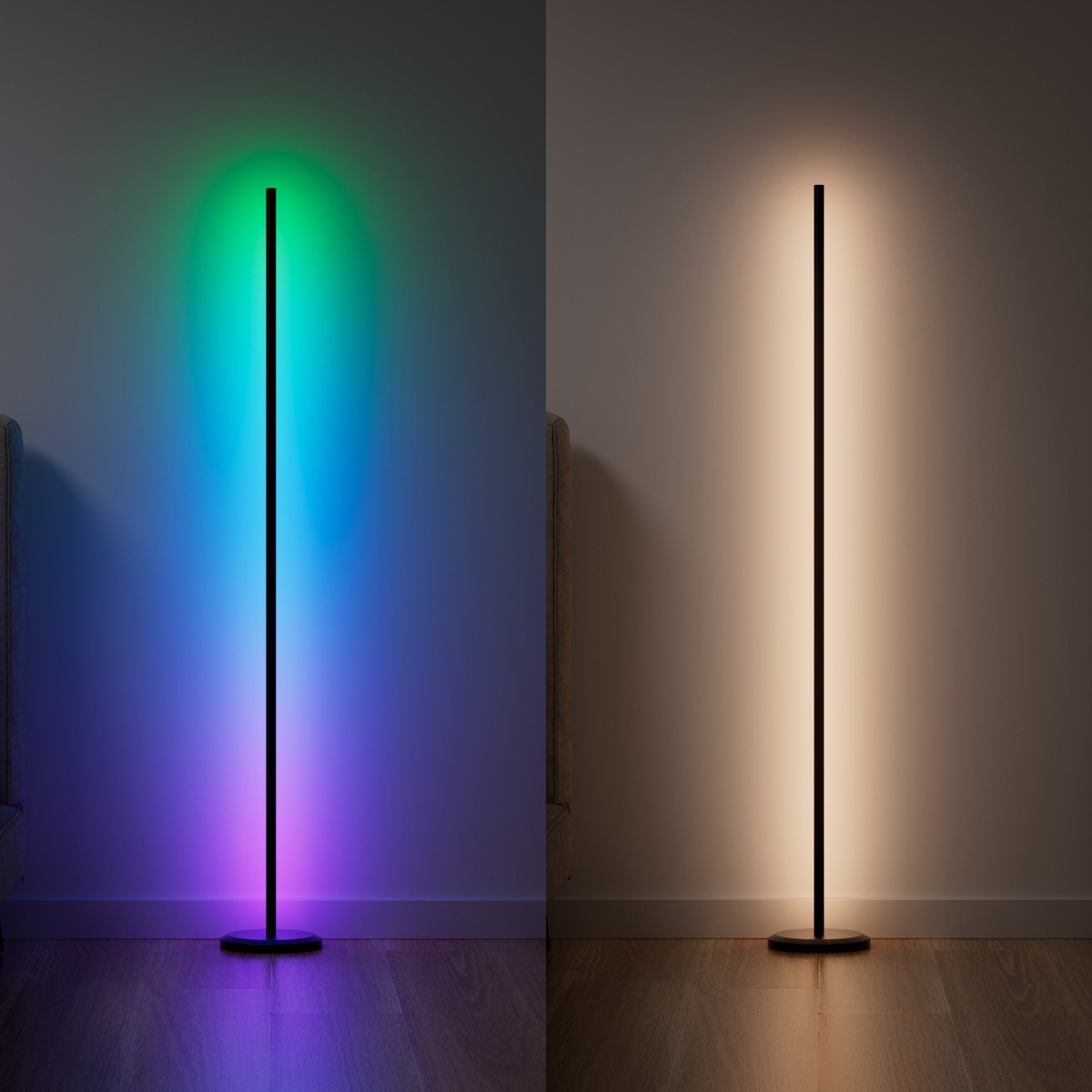
At a Glance#
The five decisions : Form factor, how it connects to the rest of your home, the quality of the white light, real brightness in lumens, and whether it travels when you move
The one most people get wrong : Buying a smart bulb for a fixture whose wall switch anyone can flip — kill the power and the smartest bulb on the market is just an unlit bulb
The spec that actually predicts satisfaction : Lumens for brightness and CRI for colour honesty — two plain numbers that manufacturers publish and rarely lead with
The quiet dealbreaker : A battery lamp you bought for its runtime that only lasts a few hours once you turn it up bright and add colour
Key Highlights:
- A bulb goes in a fixture you already own; a lamp is self-contained; a panel or strip is decoration, not task light
- A dumb wall switch cuts power to a smart bulb — a smart dimmer or switch exists precisely to solve that
- Colour accuracy does not track price: a cheaper bulb can out-render a dearer one
- Peak colours are fun; usable brightness is measured in lumens, and runtime trades against it
- Bulbs, lamps and peel-off panels move with you; a hardwired dimmer stays behind
Who This Is For#
Smart lighting is sold as one category, but it is really five different products wearing the same badge. A colour panel, a bridge-scaled white bulb, a bright floor lamp, a battery table lamp and a cheap colour multipack all show up under "smart lighting", and they solve completely different problems. Buy the wrong shape and no amount of app polish rescues it.
Especially useful if you are:
- A first-timer who has worked out that "smart bulb" and "smart light" are not the same purchase
- A renter who needs light that installs without wiring and leaves without patching
- A gamer or desk-setup builder deciding between reactive panels, a floor lamp, and strips
- Anyone frustrated that a smart bulb goes dark whenever someone flips the wall switch
1. Form Factor: Bulb, Lamp, Panel, or Strip#
This is the decision that comes before every other one, because it decides what job the light can even do.
A smart bulb screws into a fixture you already own. It is the cheapest way in and the most invisible — the socket does not change, only what is in it. The catch is that it depends on that fixture and its switch, which the next section deals with.
A lamp is self-contained. It brings its own body, its own diffuser and, in the case of a battery model, its own power. Nothing to wire, nothing to screw in — you set it down and it works. That independence is why a lamp suits a renter or anyone who wants light exactly where no socket exists.
A panel is decorative light. The Nanoleaf Shapes Hexagons are modular tiles that snap into a layout and stick to a wall — art that happens to glow, at roughly 100 lumens per panel. That number tells you the point: a panel sets a mood behind a desk or TV, it does not light a room to read by.
The fourth shape is the strip — a flexible run of LEDs for under-cabinet, behind-monitor or cove lighting, the other main "accent, not task" form. If that is the effect you are after, start with the best LED strip lights for bedroom ambiance rather than forcing a bulb to do a strip's job.
Our recommendation: decide the job before the brand. Existing fixture you want smarter, buy a bulb. Light where there is no socket, buy a lamp. A wall you want to turn into a feature, buy a panel or a strip — and stop comparing either against a bulb, because they are not competing for the same job.
2. How It Connects — and the Dumb Wall Switch That Kills a Smart Bulb#
Once you know the shape, the next question is how the light talks to your phone and your home, and there are three broad answers.
Wi-Fi-direct bulbs put the radio inside the bulb and join your 2.4GHz network with no hub to buy. The Govee bulbs work exactly this way — screw in, open the app, done. The trade-off shows up at scale: every bulb is another device on your 2.4GHz band, and a house full of them starts to crowd the network where a lighter protocol would not.
Zigbee with a bridge is the Philips Hue approach, and it is the cleanest example of paying a little structure now for a lot of scale later. The Philips Hue White A19 runs over Bluetooth straight from your phone for a small setup of up to about ten bulbs. Add a Hue Bridge (sold separately) and you unlock full Apple HomeKit support, multi-room scenes, automation across dozens of bulbs, and control when you are away from home. Nothing else here scales as cleanly into a serious setup — see the full Philips Hue White A19 review for that upgrade path in detail: View on Amazon
Matter over Wi-Fi is the newer, cross-platform answer, and it is what the Nanoleaf floor lamp and the Govee table lamp both speak — one light that joins Apple Home, Google Home, Alexa and SmartThings at once, without a proprietary bridge (ecosystem control does lean on a Matter hub such as a HomePod, Nest hub or newer Echo).
Now the gap almost every buyer walks into. A smart bulb needs power to be smart. The instant someone flips the dumb wall switch off — a guest, a habit, a child — the bulb loses power and drops off the network entirely. No app, no voice, no schedule reaches it, because there is nothing to reach. This is the single reason a smart dimmer or switch exists: it keeps power flowing and moves the intelligence into the wall, so the fixture stays controllable no matter who touches the switch. If your smart bulbs live behind a switch people actually use, the Lutron Caséta smart dimmer review is the fix, not another bulb.
Our recommendation: if you can trust the wall switch to stay on, a hub-free Wi-Fi or Matter bulb is the fastest start. If you cannot — or you know you will grow into whole-home automation — plan for a bridge or put the smarts in the wall from day one.
3. The White You Actually Live In#
Colour is the demo; white is what you live under every day. Two numbers describe it: the colour-temperature range and the CRI.
Colour temperature sets the mood, from candle-warm to daylight-cool. The featured lights span it well — the Nanoleaf floor lamp tunes from a warm 2200K to a daylight 6500K, the Govee lamp and bulbs cover 2700K to 6500K, and the Hexagons stretch from 1200K to 6500K. The Philips Hue White A19 is the exception on purpose: it is a fixed warm 2700K white, which is exactly the dependable glow you want in bedrooms, hallways and reading nooks where colour is a gimmick.
CRI — the Colour Rendering Index, on a 100-point scale — is the honesty number. It says how faithfully the light shows real colour, so a higher CRI means skin, food and decor look like themselves instead of flat or sallow. The revealing part is that CRI does not track price. Look at the two LIFX bulbs on their own manufacturer-published specs: the LIFX Everyday A19 rates 90+ CRI, while the pricier, brighter LIFX Color A19 rates 82. The cheaper bulb renders colour more accurately than the dearer one from the very same brand. That is the whole lesson — pay for brightness or features if you like, but do not assume you are buying colour accuracy along with them. Check the CRI figure directly; it is the one spec that quietly separates a light you enjoy from one that always looks slightly off.
Our recommendation: decide the white before the colour. If most of your hours are spent under plain white light — and for most rooms they are — read the CRI and the temperature range first, and treat the colour party trick as the bonus it is.
4. Real Brightness, Not Just Colours#
Lumens are the honest brightness number, and they cut straight through colour marketing. A light can throw sixteen million colours and still be too dim to read by.
At the bright end sits the Nanoleaf Smart Multicolor Floor Lamp at 1700 lumens — genuinely enough to anchor a corner as its main light source, which is rare for a slim accent lamp where 300 to 500 lumens is more typical. If you need one smart light that actually lights the space rather than just tinting it, this is the brightness anchor. The trade-off is honest: it has no battery and must stay tethered to its adapter.
The colour multipacks sit in the middle. The Govee bulbs put out 800 lumens — proper room-fill for a bedside table, desk or accent lamp, and enough to keep colour scenes visible rather than washed out, but sold as ambient light, not concentrated task light.
Then there is the runtime-versus-brightness trap, and the Govee Cordless Table Lamp is the clearest example. Its 4800mAh battery is rated for up to 30 hours per charge — but that figure is on a lower warm-white setting. Turn it up to its full 500 lumens with colour and the same battery lasts around five hours. Both numbers are true; they just describe different lamps. Buy it for the 30-hour headline and use it bright, and you will be recharging by the end of the evening. Read a battery lamp's runtime and its brightness together, never apart.
At the decorative end, the Hexagons' roughly 100 lumens per panel confirms the rule from section one: panels paint a wall, they do not light a room.
Our recommendation: match lumens to the job. Need a light you can work under, look for four figures like the floor lamp's 1700. Want mood or accent, 500 to 800 lumens is plenty. And with any battery lamp, read the runtime at full brightness, not the headline.
5. Moving Out, Renting, and What Travels With You#
The last decision only matters if you might move — which, if you rent, you will. Some of these lights come with you, and some stay nailed to the last place you lived.
Bulbs are the renter's friend by default. They screw into fixtures that are already there, need no wiring, and unscrew into a box on moving day. The Philips Hue White A19 and the Govee bulbs both install and uninstall in the time it takes to change a light bulb, because that is all you are doing.
Lamps are even simpler: there is nothing to install at all. The Nanoleaf floor lamp plugs in and the Govee table lamp runs off its own battery, so both just get picked up and carried. A battery lamp like the Govee is the most portable smart light here — no cord, no socket, it goes from nightstand to balcony to a power-cut hallway.
Panels peel off. The Hexagons mount with double-sided adhesive and no drilling, which is their headline feature for renters — up in under half an hour, and off cleanly when the lease ends (on textured or freshly painted walls, test adhesion first). As a plug-in decoration they carry to the next wall.
The one thing that does not travel is a hardwired smart dimmer. A Lutron Caséta dimmer earns its place by living in the wall — which is exactly why it stays in the wall when you leave. That is not a flaw, it is the trade: permanence in exchange for surviving the wall switch. Own your home and want the switch problem gone for good, wire it in. Rent, and keep to bulbs, lamps and peel-off panels that leave with you.
Our recommendation: if a move is anywhere on your horizon, buy light that unscrews, unplugs or peels off. Save the hardwired dimmer for the place you actually own.
Five Lights, Five Different Answers#
None of these is "best" in the abstract. They are five different shapes answering the five decisions differently.
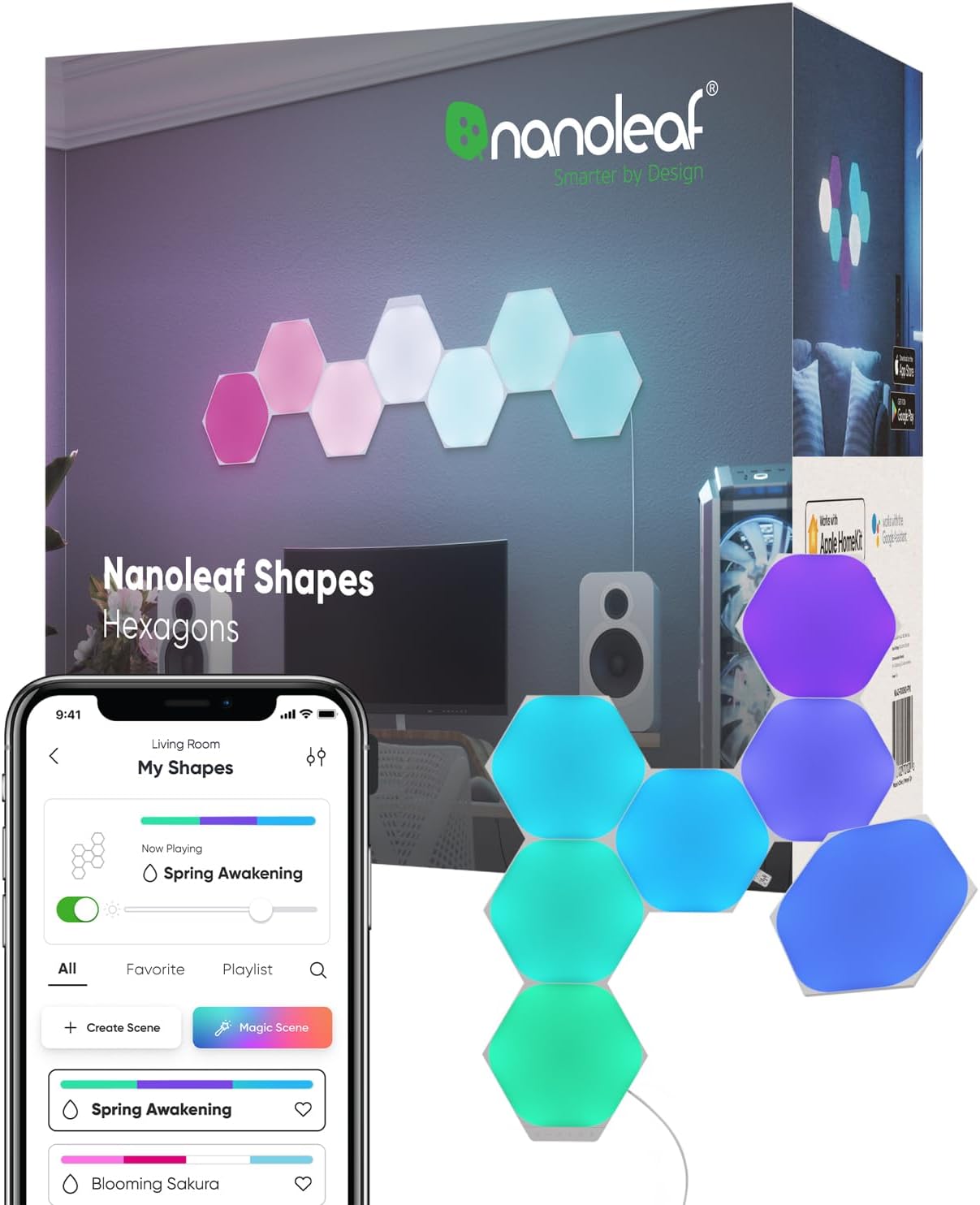
The Nanoleaf Shapes Hexagons are the panel answer — decorative light as the centrepiece of a room. Modular tiles you design into any layout, touch-reactive, with music sync and screen mirroring, mounted with peel-off adhesive that suits renters and one power supply that scales to 22 panels. Buy this when you want the wall itself to be the feature, not the fixture: View on Amazon
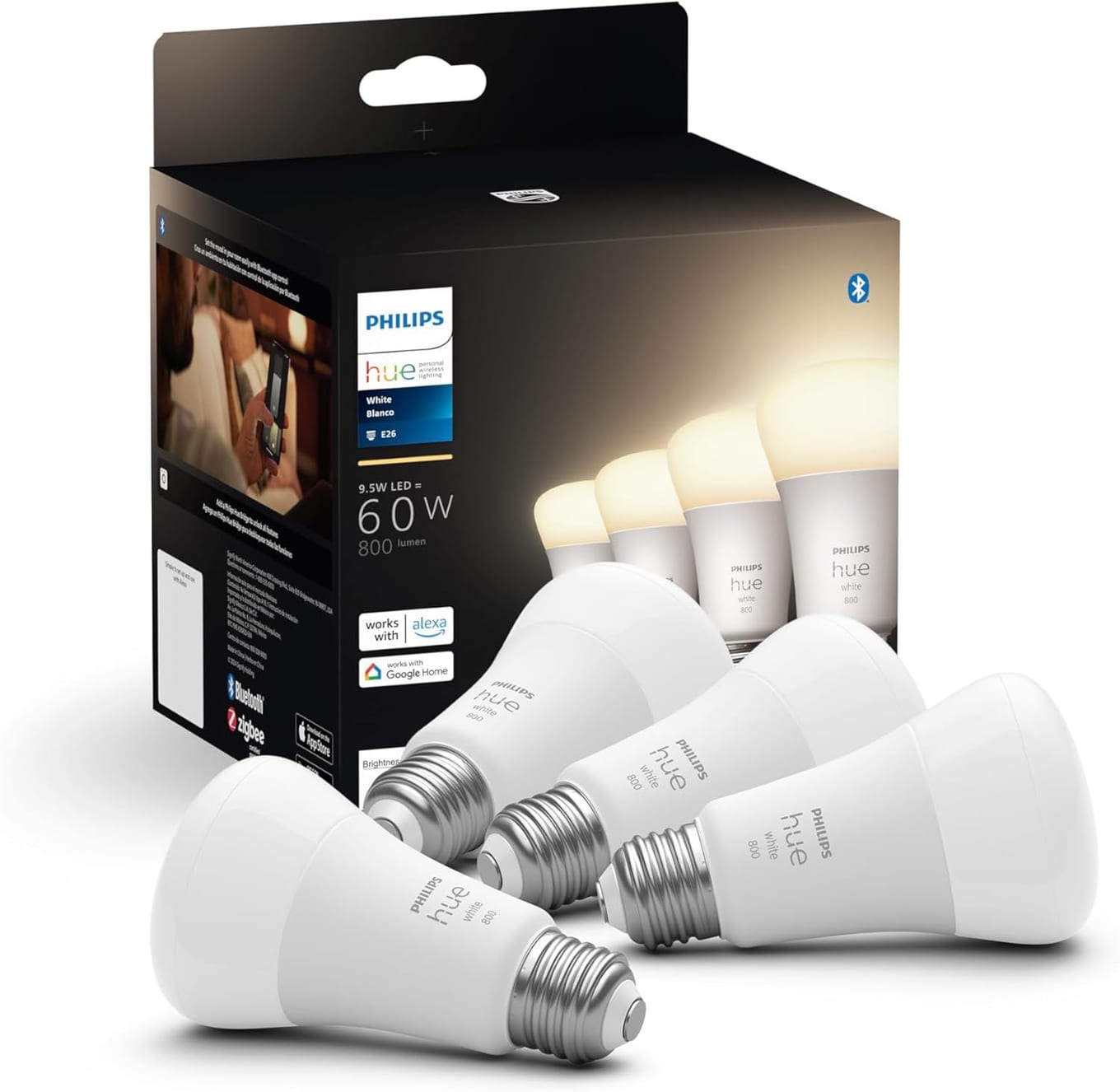
The Philips Hue White A19 is the white bridge-bulb answer — the one that screws into a fixture you already own and grows up cleanly. Bluetooth for up to ten bulbs on its own, then a Hue Bridge unlocks HomeKit, whole-home scenes and away-from-home control. Dependable 2700K warm white in the rooms where colour is a distraction. This is the bulb you keep for years: View on Amazon
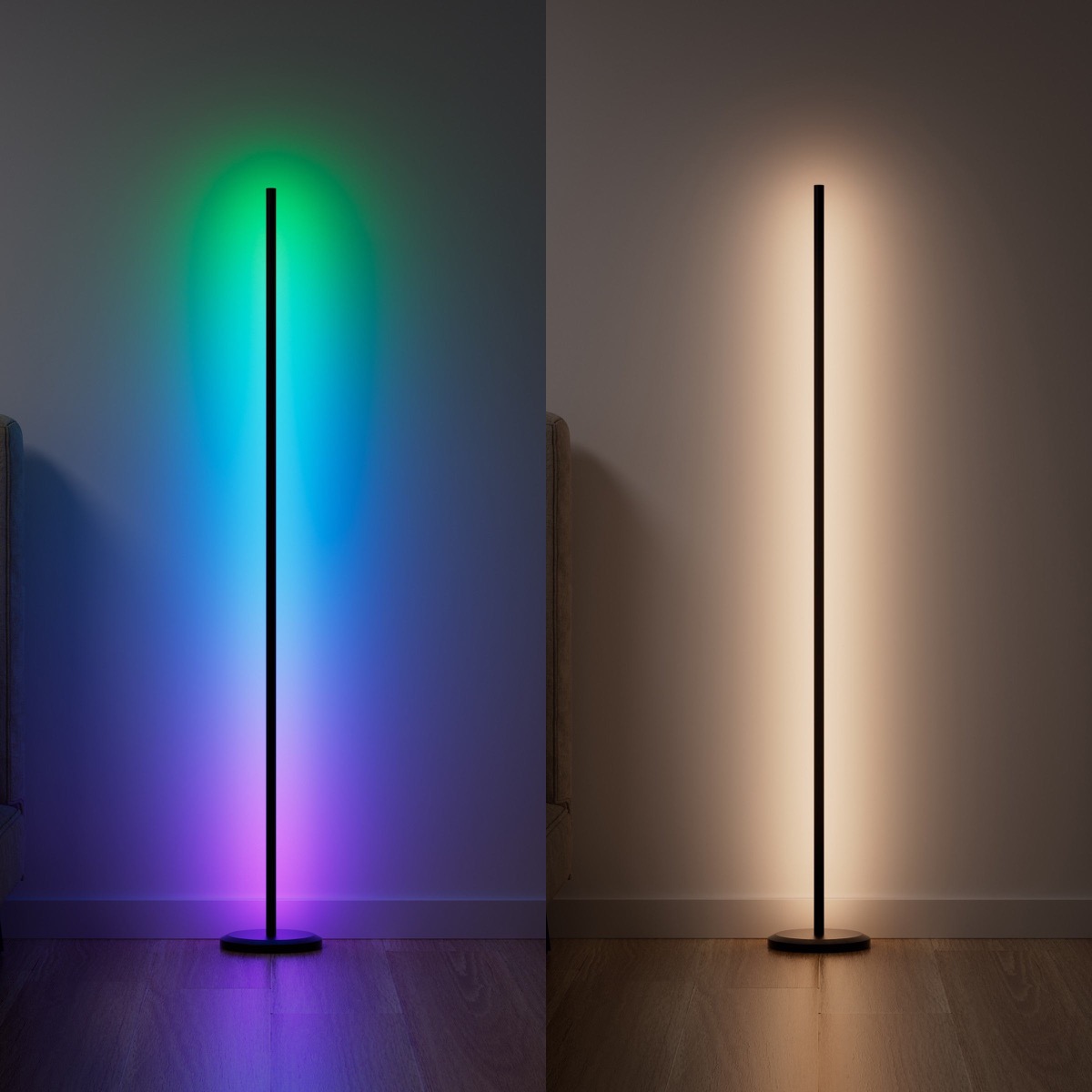
The Nanoleaf Smart Multicolor Floor Lamp is the bright floor-lamp answer. At 1700 lumens across 24 addressable colour zones, it is bright enough to be a corner's actual light source, not just a glow, with true vertical gradients and Matter control across every major platform. Pick this when one smart light has to genuinely light the space: View on Amazon
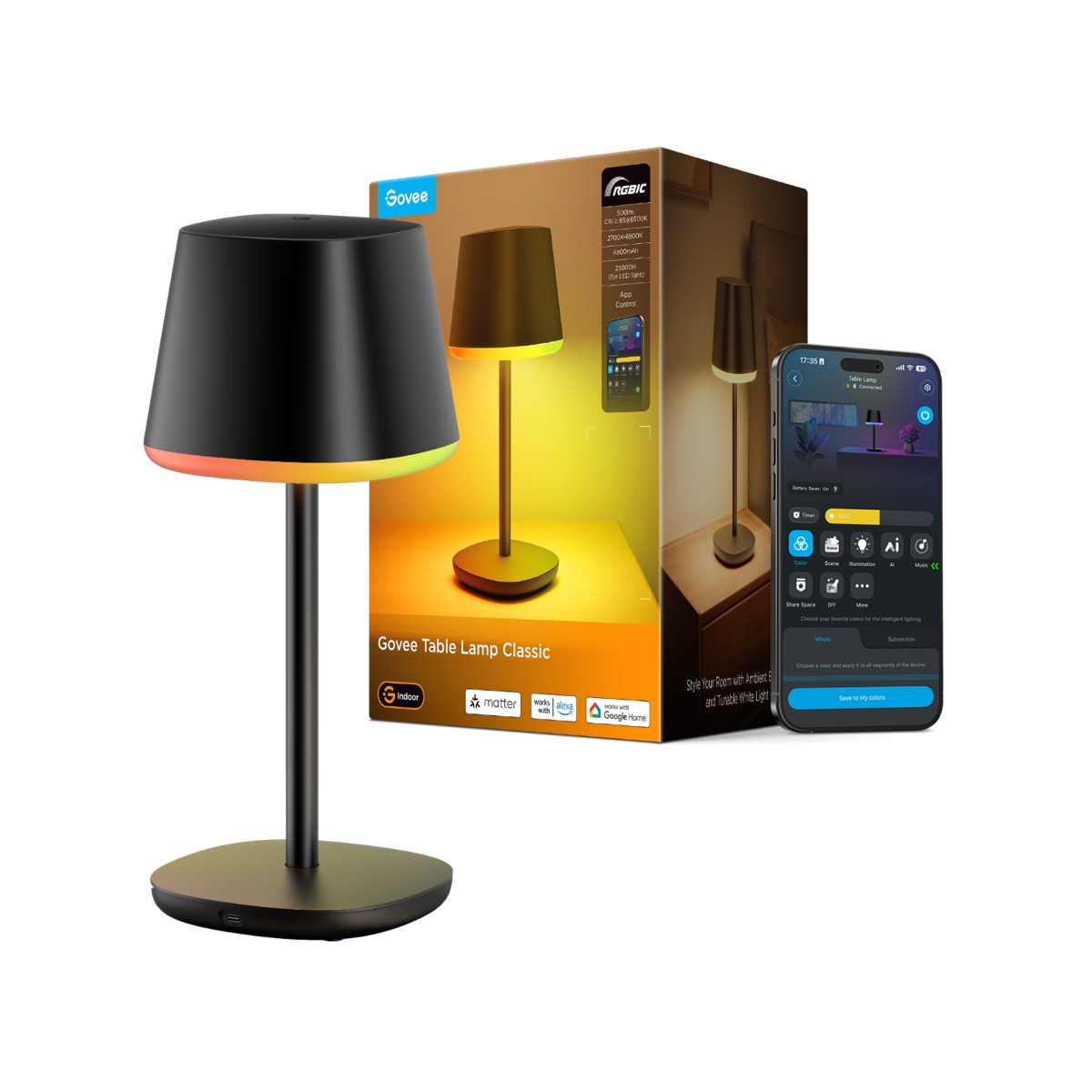
The Govee Cordless Table Lamp is the battery table-lamp answer — the only light here with no cord at all. A 4800mAh battery, RGBICWW colour with tunable white, CRI ≥85, USB-C recharging and a top touch control that works with no app. Carry it from nightstand to patio; just read its runtime at full brightness before you rely on it: View on Amazon
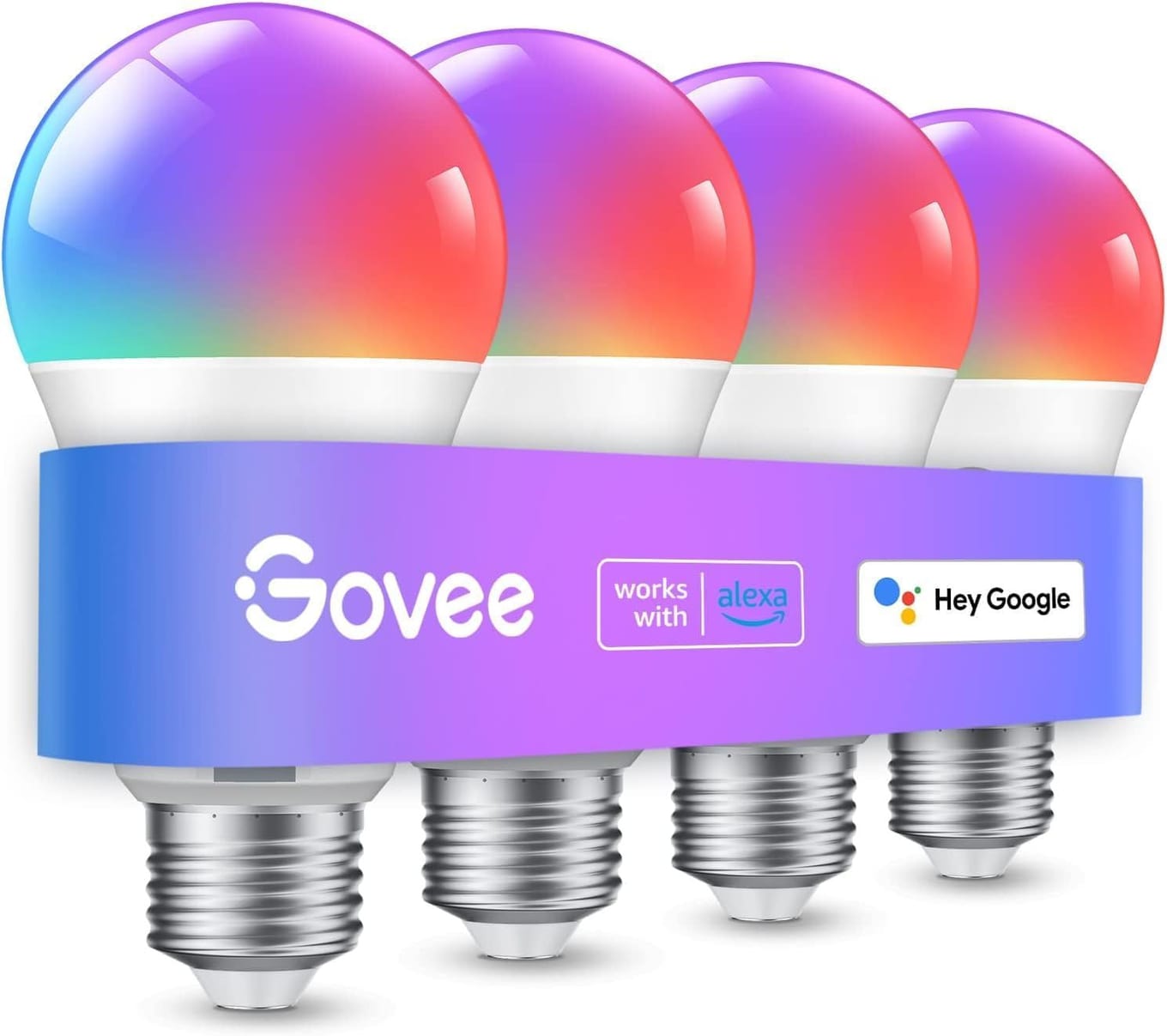
The Govee Smart Light Bulbs 4-Pack is the cheap colour multipack answer. At 800 lumens each with the full RGB range, music sync and no hub, a four-pack lights a whole room for less than a single premium starter kit. This is how you go colour across an apartment without committing to an ecosystem: View on Amazon
How to Choose in Five Minutes#
Start with the shape. Existing fixture you want smarter, buy a bulb. Light where there is no socket, buy a lamp. A wall you want to feature, buy a panel or a strip — and stop comparing either to a bulb.
Then check the wall switch. If people flip it, a bare smart bulb will keep going dark on you; put the smarts in the wall with a dimmer, or accept that habit and pick a self-contained lamp instead.
Then read the white — CRI first, temperature range second — and remember accuracy does not track price, so verify the number rather than trusting the price tag.
Then match lumens to the job: four figures if you need to work under it, 500 to 800 for mood, and with any battery lamp read the runtime at full brightness, not the headline.
Finally, if you might move, buy light that unscrews, unplugs or peels off, and leave the hardwired dimmer for a home you own.
If the answer came out "one smart light that actually lights the corner, moves when I do, and needs no bridge" — that is the 1700-lumen Nanoleaf floor lamp: View on Amazon