

If you rent an apartment and want smart-home control without rewiring anything, three smart plugs stand out: the Kasa Smart Plug Lite HS103P4 (best overall — reliable Wi-Fi, no hub, four to a pack), the Amazon Smart Plug (best budget pick if you live in the Alexa ecosystem), and the TP-Link Tapo P125M (best for future-proofing thanks to Matter support across Alexa, Google, and Apple Home).
Smart plugs are the single most renter-friendly upgrade in home automation. They use the outlets that are already there, leave no marks when you move out, and don't need landlord permission. Picking the right one depends on your ecosystem, your budget, and whether you care about Matter — the cross-platform smart-home standard. Below we compare the three picks head-to-head, with honest pros and cons for each.
Who this comparison is for#
- Renters who want smart control of lamps, fans, coffee machines, or chargers without modifying outlets or wiring.
- Apartment dwellers on shared Wi-Fi who need plugs that survive router resets and small living spaces.
- Anyone who wants to leave their smart-home gear behind cleanly when the lease ends — every plug below pulls out in seconds and works in the next apartment.
How we picked#
- No hub required. Each plug uses standard 2.4 GHz Wi-Fi or Matter-over-Wi-Fi. Nothing here needs a Zigbee hub, a SmartThings dongle, or any landlord-blessed wiring.
- Compact form factor. Apartment outlets are often crowded behind furniture or share a duplex with another plug. Every pick here is small enough to leave the second outlet free.
- Renter-grade install. Plug in, scan a QR code or pair via app, done. No tools, no neutral-wire hunts, no inspection risk.
- Ecosystem coverage. All three work with Alexa. The Kasa adds Google Assistant; the Tapo P125M adds Google Assistant, Apple Home and SmartThings through Matter. The Amazon Smart Plug is Alexa-only by design, which is the whole reason it is here as the budget pick rather than the all-rounder.
- Reliability signals. Each pick comes from an established brand (TP-Link, Amazon) with a proven firmware history.
Kasa Smart Plug Lite HS103P4 — Best Overall#
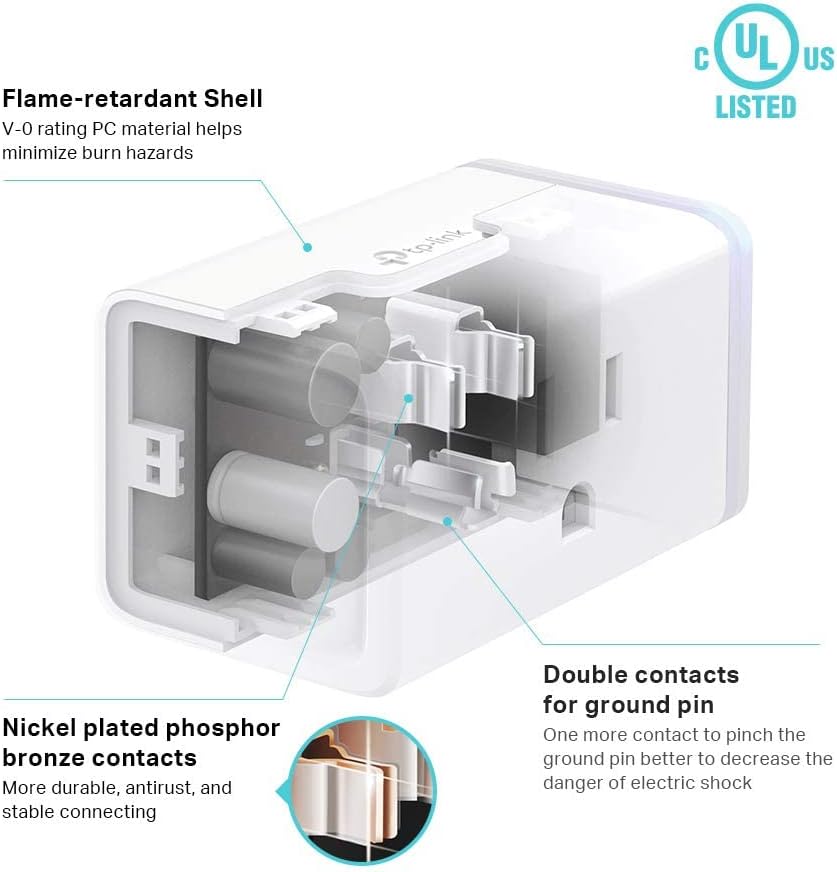
The Kasa HS103P4 is the smart plug we'd hand a renter who's never automated anything. It's a four-pack of compact, single-outlet Wi-Fi plugs from TP-Link's consumer Kasa line — the same hardware that's been on the market long enough to have its firmware bugs ironed out. Setup is the standard Kasa app dance: plug it in, open the Kasa app, pick your 2.4 GHz network, name the plug, done. Repeat four times.
What makes this the all-rounder pick for apartments is the combination of size, reliability, and price-per-plug. Each unit is small enough that you can stack two on a duplex outlet without one blocking the other — a real problem with chunkier plugs from less-considered brands. A four-pack drops the per-unit cost low enough that you can drop one each on the lamp, the coffee maker, the fan, and a seasonal heater or fairy lights without thinking about it.
Reliability is the part that separates Kasa from no-name brands on Amazon. The HS103 line has been shipping for years, and the Kasa app handles router changes, ISP swaps, and Wi-Fi password rotations gracefully — which matters more in apartments than people expect, because your landlord may swap routers without warning. There's no energy monitoring on this model, no Matter, and no Bluetooth fallback for setup, but for the renter use case those are fair trade-offs against the price.
If you've already got a Tapo P125M review on your reading list, the Tapo P125M review covers our deeper take on the Matter-flagship sibling — useful if you decide you want the newer protocol from day one.
Key Specs#
Pack size : Four plugs per pack
Dimensions : 66.5 x 40.0 x 38.0 mm H x W x D per plug (2.62 x 1.57 x 1.50 in)
Wi-Fi : 2.4 GHz only (no 5 GHz support — standard for smart plugs)
Hub required : No — connects directly to your router
Voice control : Alexa and Google Assistant
Energy monitoring : No
Matter support : No
Manual override : Side button toggles the outlet without the app
Schedules and routines : Yes, via the Kasa app
Bottom line#
If you want one product to put four lamps and a coffee maker on smart schedules tomorrow morning, this is it.
Amazon Smart Plug — Best Budget#
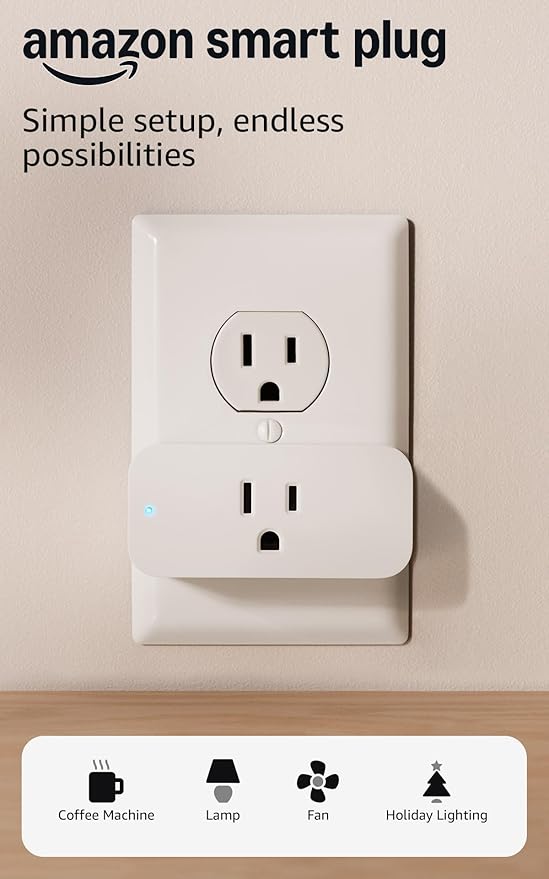
The Amazon Smart Plug is the simplest path into a smart home if you already own an Echo or Fire device. It's a single plug per box, noticeably deeper than the Kasa, and pairing is the shortest of the three — Amazon's "frustration-free" setup actually works as advertised when your Amazon account already has an Echo on file. Plug it in, open the Alexa app, and the device shows up automatically. No QR codes, no separate manufacturer app to install.
For apartment renters, the appeal here is twofold. First, it's cheap on its own — often half the per-unit cost of the Kasa four-pack at single-unit retail — so it's the right pick if you only need one or two plugs. Second, the Alexa integration is deeper than third-party plugs: routines, voice control, and Echo-specific shortcuts (like the Hunches feature that prompts you to turn off forgotten devices) work without any extra plumbing. Our Amazon Smart Plug review covers the Alexa-side experience in detail.
The trade-offs are real, though. There's no separate manufacturer app, which means if you don't use Alexa, this plug is functionally useless — there's no Google Home support and no Apple Home support. There's no energy monitoring. The body is also the largest of the three by volume - Amazon publishes 80 x 38 x 57 mm against the Kasa's 66.5 x 40 x 38 mm - so it takes up more of the outlet plate whichever way you read the axes. Amazon does not label which figure is height and which is depth. And while you can use it on a Google or Apple-only household via heroic third-party hacks, you really shouldn't — you'd be paying for software you can't use.
Key Specs#
Pack size : One plug per box (multi-packs sometimes available)
Dimensions : 80 x 38 x 57 mm (3.2 x 1.5 x 2.2 in), 87g — Amazon publishes the triplet unlabelled, so which figure is height is not stated anywhere
Wi-Fi : 2.4 GHz only
Hub required : No — works directly with any Echo or via the Alexa app on phone
Voice control : Alexa only (no Google Assistant, no Apple Home)
Energy monitoring : No
Matter support : No
Manual override : Side button toggles the outlet
Schedules and routines : Yes, via Alexa app routines
Bottom line#
The cheapest competent way to add smart control if you're already deep in Alexa-land — but skip it if you're not.
TP-Link Tapo P125M — Best for Future-Proofing#
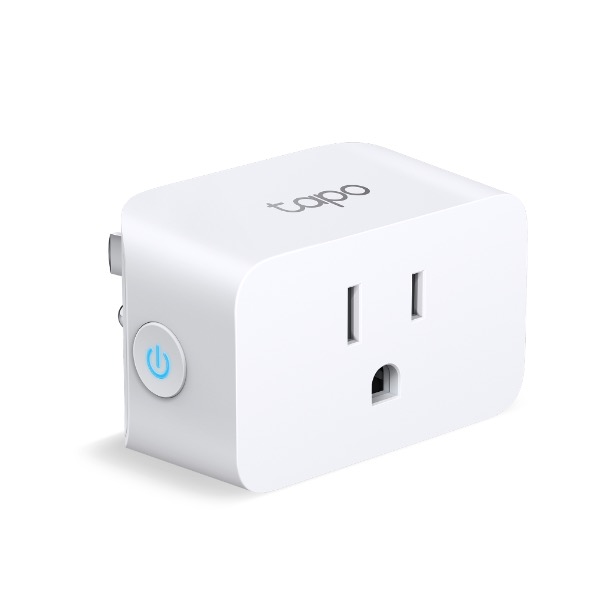
The Tapo P125M is the only one of the three that supports Matter — the cross-platform smart-home standard backed by Apple, Google, Amazon, and Samsung. In practice that means you can pair it directly into Apple Home from an iPhone, into Google Home from a Pixel, and into Alexa from an Echo, and all of those platforms will see the same plug. If you don't know which ecosystem you'll commit to a year from now, this is the apartment-renter pick that doesn't lock you in.
Setup is QR-code based: open the Apple Home, Google Home, or Alexa app, scan the Matter pairing code on the plug, pick your 2.4 GHz Wi-Fi network, and you're done. The Tapo app is also available if you want the manufacturer's own scheduling and away-mode features, but it's optional — Matter pairing covers the basics through whichever ecosystem app you prefer. We have a full Tapo P125M review if you want the deep dive on the app and Matter quirks.
The P125M is also the most renter-considerate physical design of the three, and the numbers back it up: TP-Link labels it 60 mm high x 38 wide x 33 deep, smaller on every axis than the Kasa's labelled 66.5 x 40 x 38 mm, and smaller than every figure Amazon publishes for its own plug (80 x 38 x 57 mm, axes unlabelled). Whichever way you read them, it is the least intrusive of the three on a duplex outlet. The power button is a large illuminated ring on the side face. There's no energy monitoring, which is the one feature renters sometimes ask about — TP-Link keeps that for the metering models like the Tapo P110 and the Kasa KP125M, which sit a tier up.
The honest caveat: Matter adds a layer. You are pairing through an ecosystem app and, for remote access, through a hub, where the Kasa talks straight to the Kasa app. If you want the simplest possible setup with the fewest moving parts, the Kasa is still calmer. The P125M is the right pick if you specifically want the option to switch ecosystems later without buying new hardware.
Key Specs#
Pack size : One plug per box
Dimensions : 60 x 38 x 33 mm H x W x D (2.4 x 1.5 x 1.3 in) — the smallest of the three
Wi-Fi : 2.4 GHz only, with Matter-over-Wi-Fi (Bluetooth is used for setup only)
Hub required : No — but Matter hub (HomePod mini, Echo 4, Nest Hub 2nd gen) recommended for remote access in Apple Home and Google Home
Voice control : Alexa, Google Assistant, Apple Home (Siri) via Matter
Energy monitoring : No
Matter support : Yes — Matter-certified by TP-Link
Manual override : Side button toggles the outlet
Schedules and routines : Yes, via Tapo app or any Matter ecosystem app
Bottom line#
The plug to buy if you might switch from Alexa to Apple Home (or back) and don't want to re-buy hardware.
Which one should you buy?#
If you want the simplest, most reliable apartment setup and need more than one outlet smart, buy the Kasa HS103P4 four-pack. It's the lowest-friction option, the cheapest per-unit price, and the firmware is mature. This is the right answer for most renters most of the time.
If you only need one or two plugs and you already use an Echo or Fire device, buy the Amazon Smart Plug. The Alexa integration is tighter than any third-party plug, setup is the fastest here because the Alexa app finds it for you, and the unit cost is hard to beat at single-unit retail. Don't buy this one if you don't use Alexa — you'd be paying for software you can't access.
If you're not sure which voice assistant you'll commit to long-term, or if you specifically want Apple Home support today, buy the Tapo P125M. Matter is the future-proofing argument: pair it once, switch ecosystems later without replacing hardware. Apartment renters move, and movers often switch tech ecosystems in the process — Matter is the renter-friendliest answer to that.
For households mixing platforms (e.g., one partner on iPhone, the other on Android with an Echo), the Tapo P125M is also the right call — both phones can see the same plug through their preferred ecosystem.
FAQ#
Do smart plugs damage rental outlets?#
No. Smart plugs use the outlet exactly the same way a regular plug does — they slide in, they slide out, and they leave no residue, no holes, and no electrical work behind. None of the three picks above require modifying the outlet, the wall, or the wiring. When the lease ends, you unplug them and pack them.
Can I use these plugs without Wi-Fi at home?#
The Kasa HS103P4 and Amazon Smart Plug both require a 2.4 GHz Wi-Fi network during setup and for remote control. You can use them on your phone's mobile hotspot in a pinch, but they're designed for a permanent Wi-Fi connection. The Tapo P125M is similar but adds Matter support, so on Apple Home with a Matter hub it can keep working locally over Wi-Fi if your internet drops — a small but real reliability advantage. It is Matter-over-Wi-Fi, not Thread, so it still needs your 2.4 GHz network to be up.
Will smart plugs work with old appliances?#
Yes, with one important caveat: smart plugs only control whether power flows to the device. They can't press buttons. So a coffee maker, lamp, or space heater that turns on automatically when power is restored will work fine — flick the smart plug on, power flows, the device runs. A modern TV or microwave that defaults to "standby" when power is restored won't work, because the smart plug can't press the physical Power button afterward.
Do I need a smart-home hub for any of these?#
No, none of the three plugs above require a hub for basic operation. They all connect directly to your router over 2.4 GHz Wi-Fi. The Tapo P125M optionally benefits from a Matter-capable hub (HomePod mini, Echo 4, or 2nd-gen Nest Hub) for the smoothest remote-access experience inside Apple Home or Google Home, but even without a hub you'll get local control on the same network.
What about energy monitoring — do any of these track usage?#
None of the three picks above include energy monitoring. If that's a hard requirement, look at the Tapo P110 (Tapo's energy-monitoring sibling) or the Kasa KP125M, both of which add per-plug usage stats. We didn't include those here because metering plugs sit a tier up in cost per unit, which conflicts with the "small apartment, multiple plugs" use case this comparison is built around.
Can I take these plugs to a different country when I move?#
Only within the same outlet standard. All three plugs above use the US Type B (NEMA 5-15) outlet shape and are rated for 120V, 60 Hz — they won't physically fit a European Schuko outlet, and even if you adapted them, the voltage mismatch would damage them. If you're an international renter who moves between regions, plan to repurchase smart plugs in the country you're moving to. TP-Link's European Matter mini plug is a different model, the Tapo P110M — Matter-certified for Apple Home, Alexa and Google Home, but a Schuko body rated 100-240V and 16A, and it adds energy monitoring the P125M does not have.