

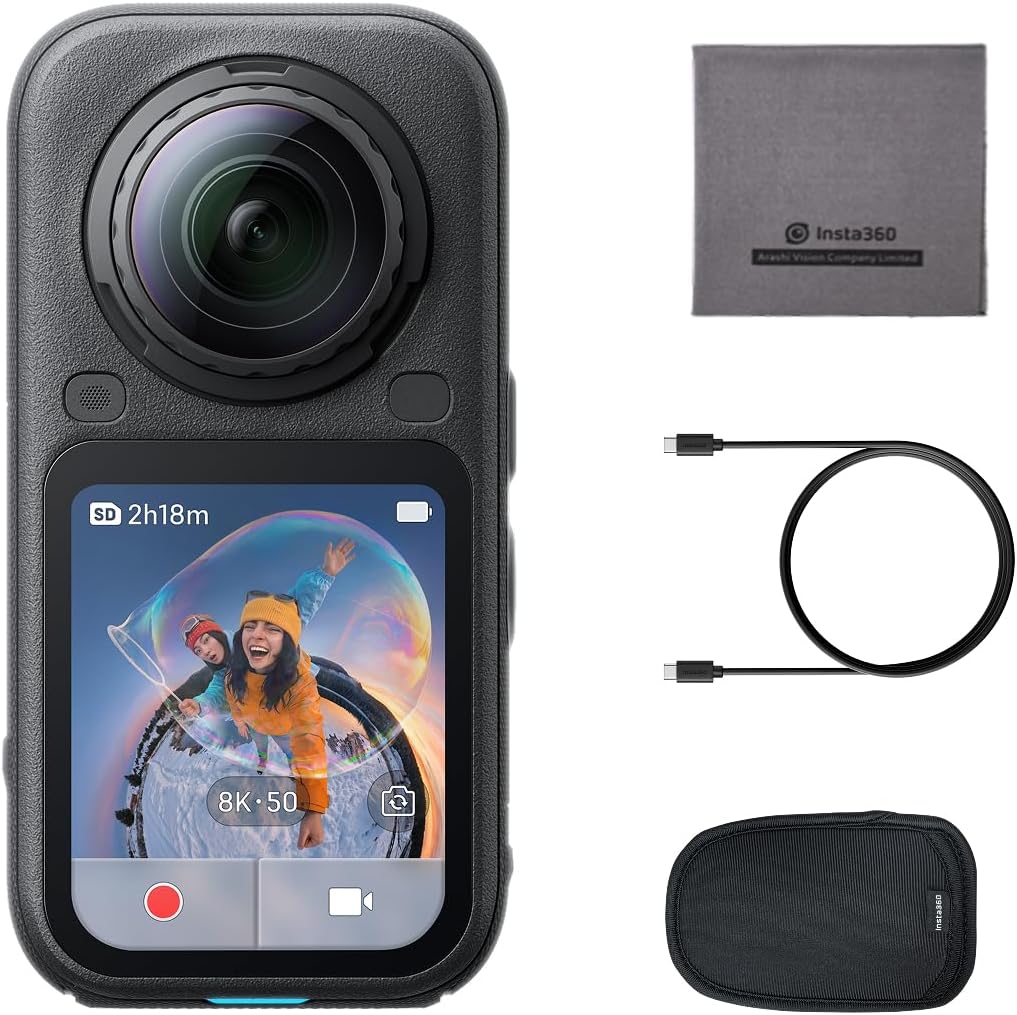
The Insta360 X6 arrives with a battery, a cable, a pouch and a cloth — and no memory card. That is the first thing to solve, and it is the one place where buying a faster-rated card can actively make things worse. Insta360 asks for a UHS-I card rated V30 or higher, formatted exFAT, up to 1TB, and tells you explicitly not to fit a UHS-II or UHS-III card. V60 and V90 ratings, Insta360 notes, are typically associated with UHS-II or UHS-III cards — so the faster shelf is the wrong shelf. Below: the cards that fit the spec, plus the two official accessories — the Invisible Dive Case Pro and a second Xtreme Battery — and when each one earns its place.
At a Glance#
Product : Insta360 X6
Brand : Insta360
Best For : 360 shooters setting up a new camera and choosing the card, case and battery it does not ship with
Card Spec : microSD, UHS-I, V30 or higher, formatted exFAT, up to 1TB
Buy Now : View on Amazon
Key Highlights:
- The box holds no memory card, no selfie stick and no tripod
- Built-in storage is 64GB, of which 47GB is available to you
- Insta360 warns that UHS-II and UHS-III cards can cause recording to stop
- Insta360 rates the X6's maximum bitrate at 360 Mbps
- Insta360's tested-card list names a SanDisk 1TB part number that differs from the model number on the Extreme PRO 1TB's listing
What's in the Box — and What Isn't#
The box ships one camera, one Xtreme Battery pre-installed, one USB-C cable, one protective pouch and one lens cloth. No card. No stick. No tripod.
Insta360 specifies 64GB of built-in storage with 47GB available, the remainder used for system and cache. The camera is designed around a card, and the card is the one part you have to choose yourself.
The Card Insta360 Actually Asks For#
Insta360's memory-card compatibility page covers the whole X series and names the X6 among the applicable models. Its guidance is short: use a microSD card rated UHS-I, V30 or higher, formatted exFAT, up to a maximum supported capacity of 1TB. A slower card, it says, may cause recording interruptions or file corruption.
Then comes the instruction that runs against instinct:
"Do not use UHS-II or UHS-III microSD/TF cards, as compatibility issues may cause recording to stop."
Insta360 adds two practical notes on the same page: UHS-I is indicated by a single row of gold pins on the back of the card, and it recommends regularly backing up your files and formatting the microSD card.
V60 and V90 are rated for higher speeds than V30 — Insta360 itself says they theoretically offer more — so they read as the safer upgrade. Insta360 addresses them directly: V60 and V90 are speed class ratings typically associated with UHS-II or UHS-III memory cards, and their interface standards may cause compatibility issues with X Series cameras. The guidance is then repeated: stay on UHS-I, V30 or higher, exFAT. On this camera a V90 card is not a better V30 card. It is, typically, a card on the interface the manufacturer advises against.
One more wrinkle worth knowing. Insta360 publishes a list of tested memory card models for reference. Its 1TB entry is SanDisk model SDSQXCZ-1T00-ZN6MA; the SanDisk Extreme PRO 1TB covered below lists model SDSQXCD-1T00-GN6MA. Of the seven tested entries only one is 1TB, and the smallest are 32GB. Read the list as a definition of the class Insta360 supports — UHS-I, V30, exFAT — rather than as a shopping list.
What the V30 mark means — and what the write ratings mean#
SanDisk's listing for the Extreme 512GB spells out what the V30 mark means: a sustained video capture rate of 30 MB/s, which SanDisk's footnote describes as a performance option designed to support real-time video recording with UHS-enabled host devices. Insta360's own figure for the camera is in a different unit — a maximum bitrate of 360 Mbps — and the card guidance it publishes is the class, UHS-I V30 or higher.
The rated write speeds above it are a different kind of number. SanDisk rates the Extreme 512GB for writes up to 130 MB/s and the Extreme PRO 1TB for up to 140 MB/s, and attaches a footnote to the 512GB figure: performance may be lower depending upon host device interface, usage conditions and other factors. Read the ratings as the vendors ranking their own cards, not as what the X6 will see. Buy V30 as Insta360 specifies; inside that class, the ratings are a tie-breaker, not a promise.
The Cards#
| Card | Capacity | Rated read | Rated write | Class | Buy |
|---|---|---|---|---|---|
| SanDisk Extreme PRO | 1TB | 200 MB/s | 140 MB/s | UHS-I, V30, U3, A2 | View on Amazon |
| SanDisk Extreme | 512GB | 190 MB/s | 130 MB/s | UHS-I, V30, U3, A2 | View on Amazon |
| Samsung PRO Plus | 1TB | 180 MB/s | 130 MB/s | UHS-I, V30, U3, A2 | View on Amazon |
| Samsung PRO Plus | 512GB | 180 MB/s | 130 MB/s | UHS-I, V30, U3, A2 | View on Amazon |
| Lexar PLAY | 1TB | 160 MB/s | 100 MB/s | UHS-I, V30, U3, A2 | View on Amazon |
SanDisk Extreme PRO 1TB — the closest thing to the tested list#
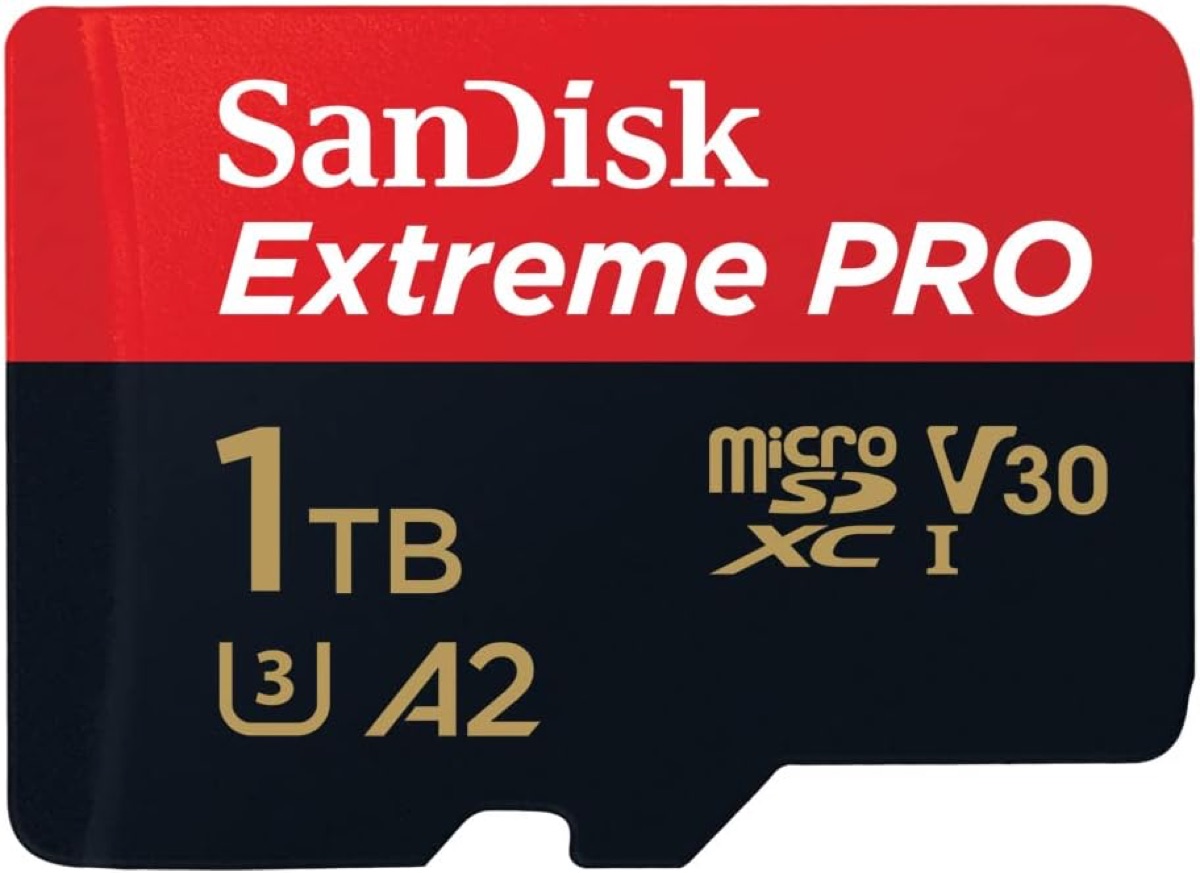
SanDisk maps model SDSQXCD-1T00-GN6MA to its 1TB Extreme PRO microSDXC UHS-I card and rates it up to 200 MB/s read and 140 MB/s write, crediting the transfer speed to its QuickFlow technology. The box contents are the card, an adapter and RescuePRO Deluxe.
It is the same Extreme PRO family Insta360 tested, at the 1TB ceiling the X6 supports, and it carries the highest rated write speed of the five cards here. SanDisk pitches it at drones and action cams as well as phones and tablets, and ties its 4K UHD recording to the U3 and V30 marks. This card also has a review of its own: SanDisk Extreme PRO 1TB microSDXC.
SanDisk Extreme 512GB — the sensible default#
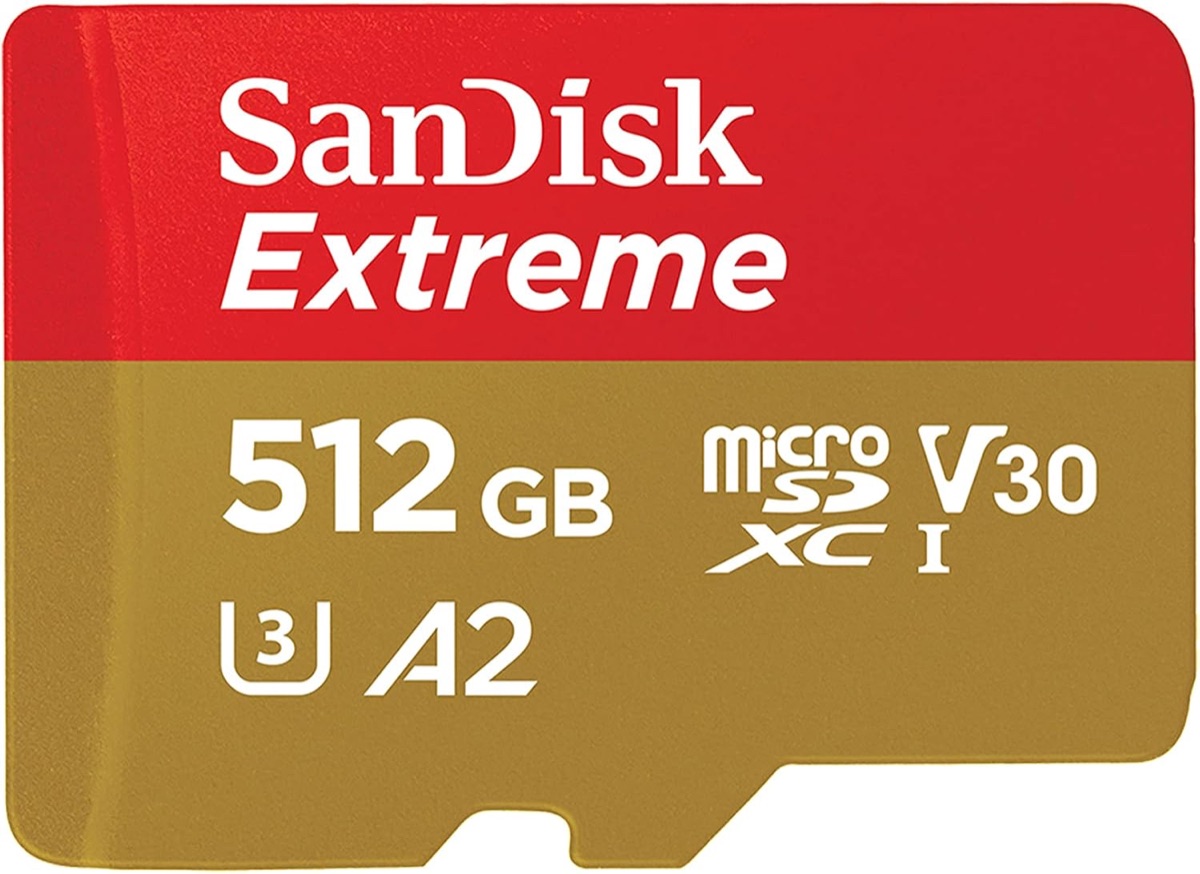
Model SDSQXAV-512G-GN6MA, rated up to 190 MB/s read and 130 MB/s write, V30 and A2 at 4,000 read and 2,000 write IOPS. SanDisk lists a lifetime limited warranty, and the Extreme family also appears on Insta360's tested list.
The read rating depends on SanDisk's QuickFlow technology, which the listing describes as reaching beyond UHS-I's 104 MB/s and requiring compatible devices capable of such speeds; SanDisk points to its own PRO-READER to achieve the maximum. Treat 190 MB/s as best case with matched hardware, and the 130 MB/s write rating the same way. In the X6 itself, V30 is the class Insta360's spec names.
Samsung PRO Plus 1TB — the rating comes with a reader condition#
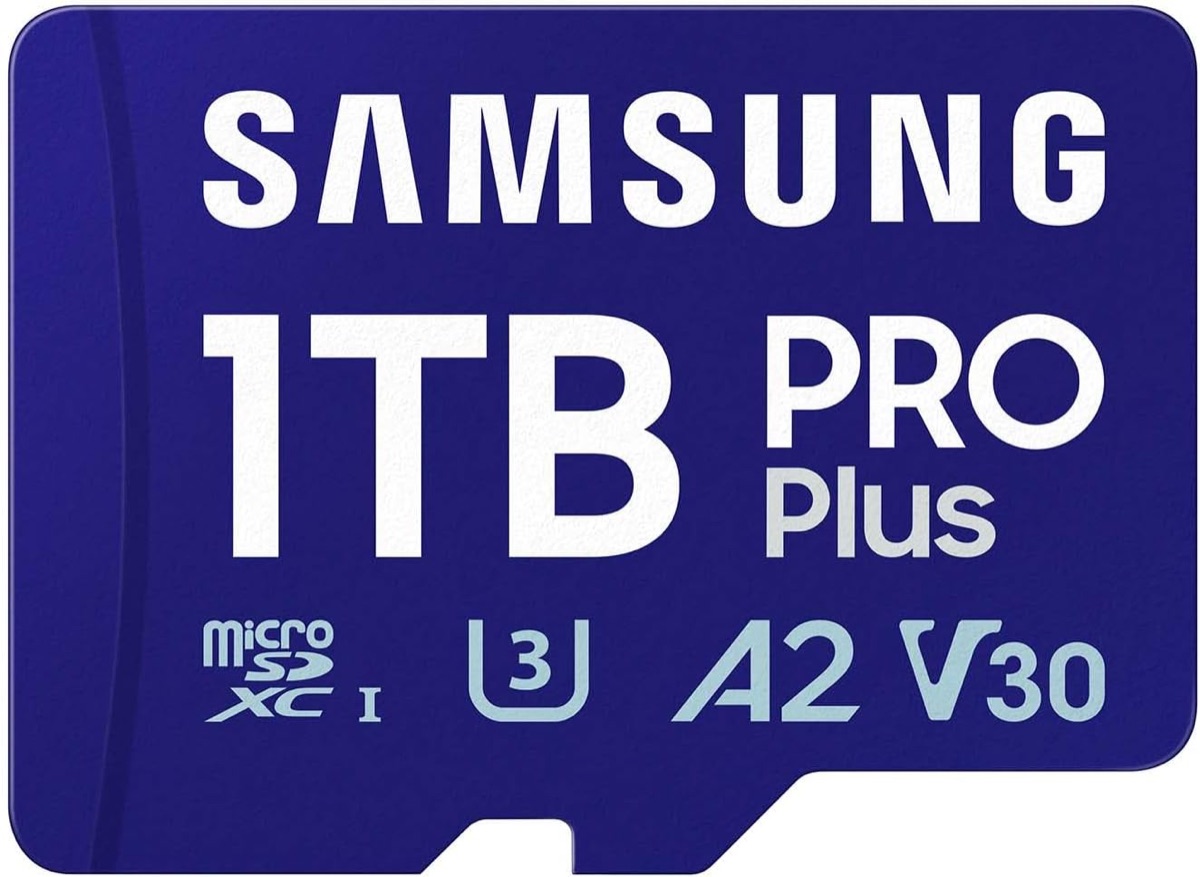
Model MB-MD1T0SA/AM, UHS-I, rated up to 180 MB/s read and 130 MB/s write, marked V30, U3 and A2.
Samsung attaches two conditions to those figures: the read and write performance is based on testing of the 1TB capacity under standard conditions, and the stated performance is achieved when using Samsung USB readers. Samsung's protection claims — water, temperature, X-ray, magnet, drop and wearout — are for the microSD card and do not include the adapter.
Samsung PRO Plus 512GB — the same card, half the outing#
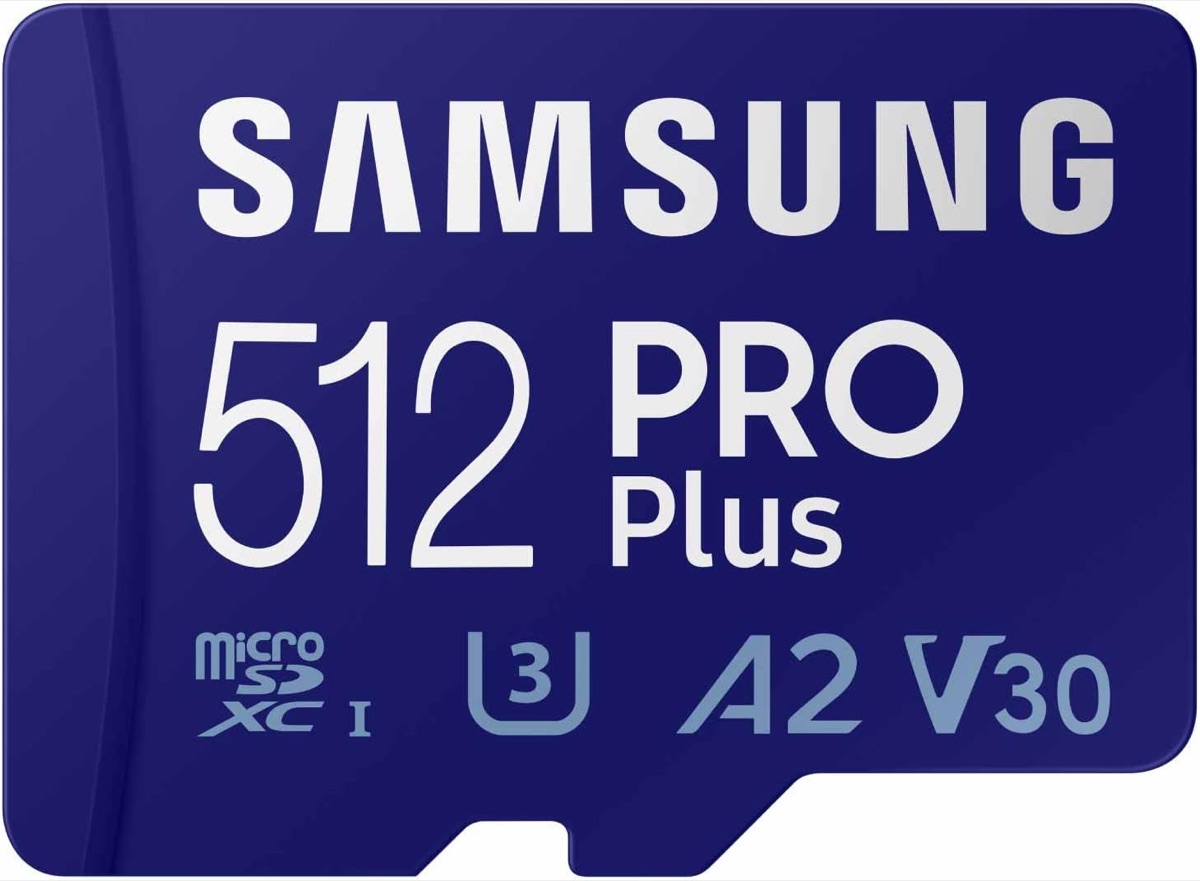
Model MB-MD512SA/AM, same 180/130 MB/s ratings and same U3, V30, A2 marks, with an operating range Samsung gives as −25°C to 85°C.
Samsung's bullets back it with a 10-year limited warranty, while the same listing's item details give the warranty as 1 Year Manufacturer — two figures on one page, so read the card's own warranty terms before relying on either. The same reader condition applies: stated performance is achieved by using PRO Plus cards with Samsung readers.
Lexar PLAY 1TB — the third 1TB, with eyes open#
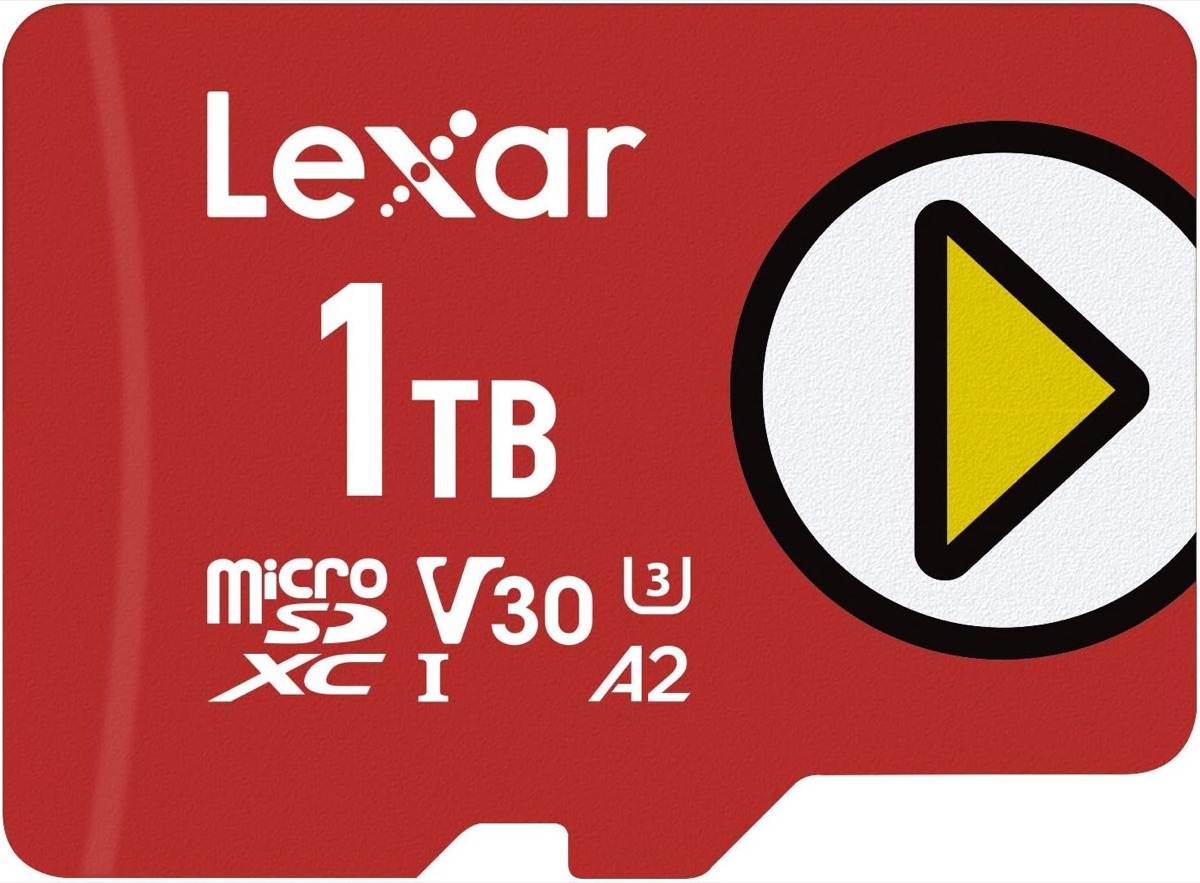
Model LMSPLAY001T-BNNNU, Class 10, U3, V30 and A2, rated up to 160 MB/s read and 100 MB/s write, with a five-year limited warranty.
It meets the class Insta360 specifies, with the lowest rated read and write speeds in this table. Lexar positions the PLAY line for portable gaming devices, smartphones and tablets, and its copy describes capturing, playing back and transferring Full-HD and 4K video. That positioning, plus the ratings, is why it sits third among the 1TB cards here rather than first.
For Diving: the Invisible Dive Case Pro#
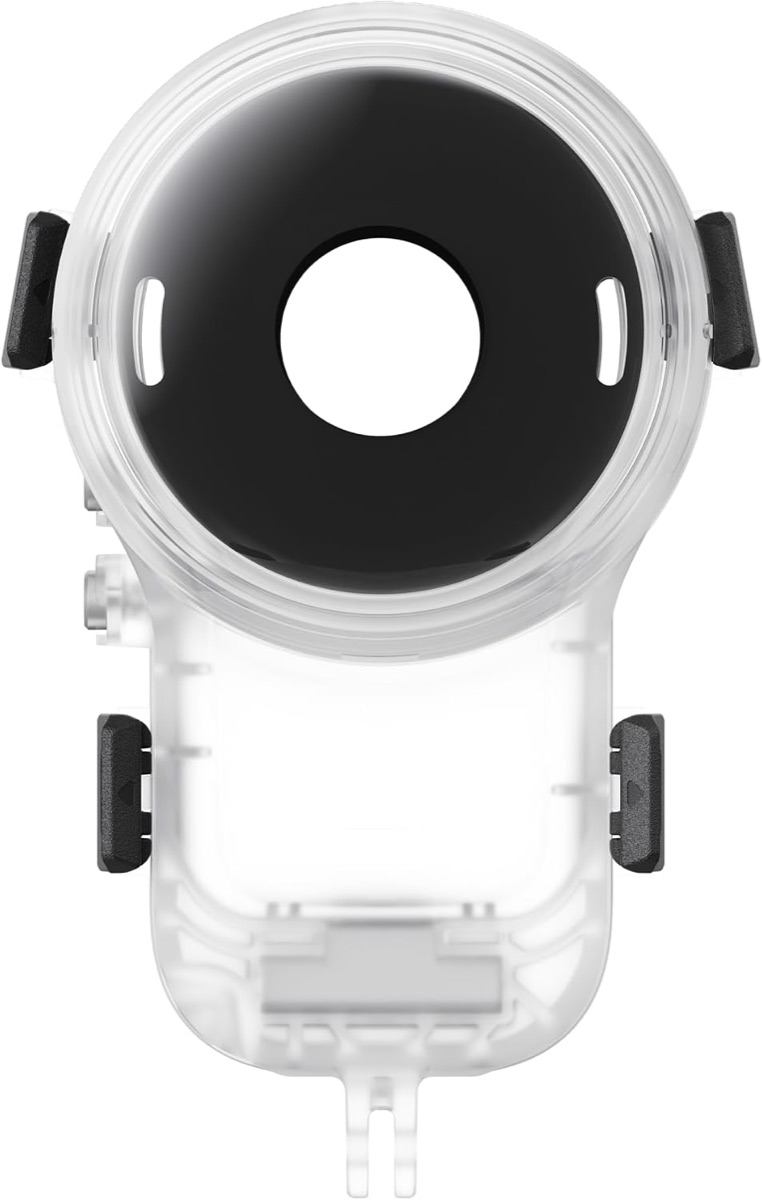
The X6 is rated IPX8 and waterproof to 20 m on its own. Past that you need the case, which Insta360 rates for 60 m.
Two things to know before it arrives. It must be used with the included underwater lenses, and Insta360's instruction is to use the kit in a clean, low-dust environment with humidity below 70% — a condition to meet at home, not on a boat.
Insta360 describes the case as made for underwater capture — professional-grade 360 footage beneath the surface — with a compact, streamlined design for easier carrying. The 60 m figure is the manufacturer's own rating.
For Longer Days: a Second Xtreme Battery#
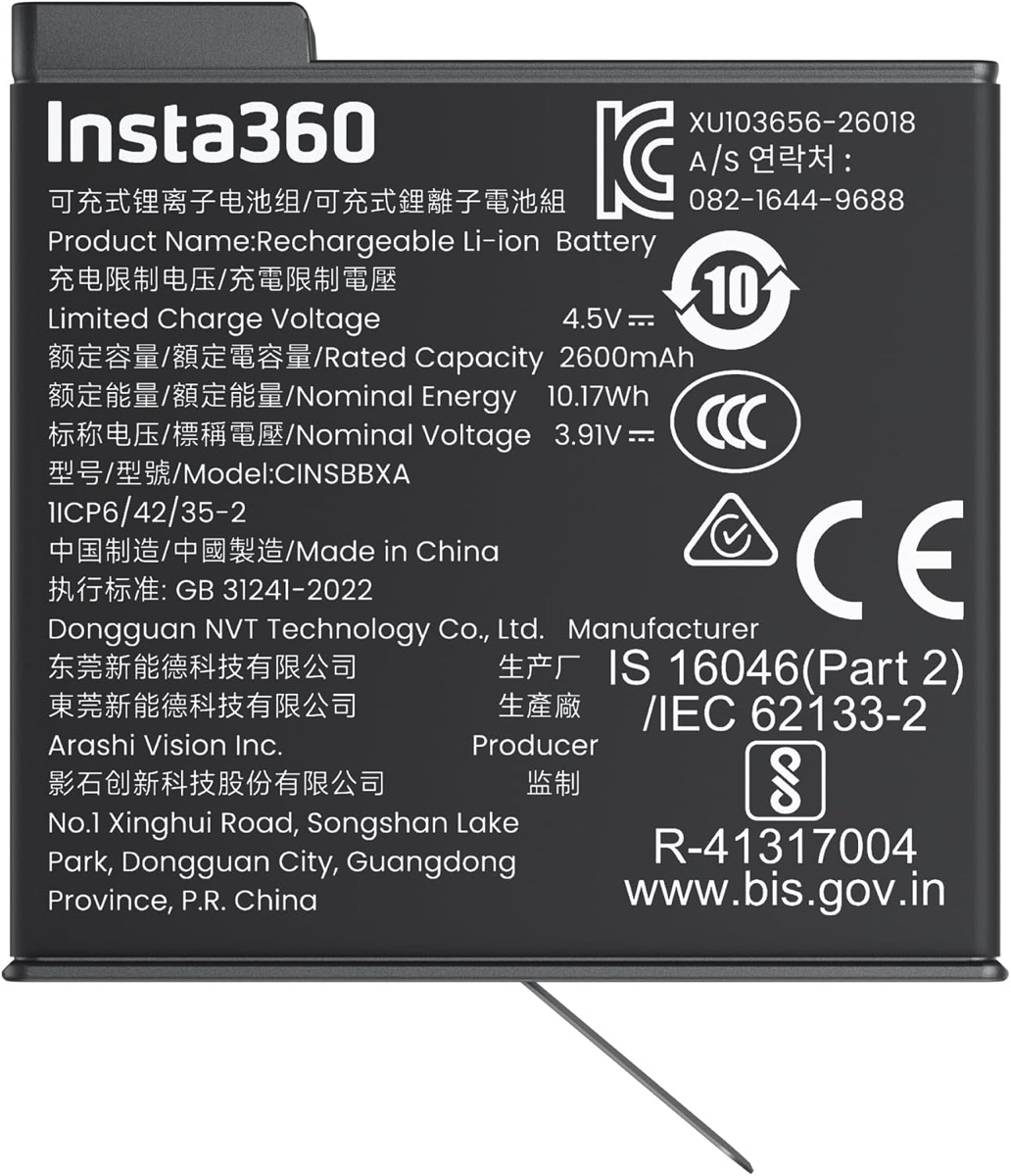
The Xtreme Battery included with the X6 is 2600mAh, rated for up to 140 minutes of 8K30fps recording and about 79 minutes at 8K50fps. Insta360 measured those figures at 25°C in a laboratory environment — 360 mode, screen off, Wi-Fi on, standard bitrate, standard color — and says actual battery life may vary under different conditions.
So 140 minutes is a laboratory figure at one setting, not a promise for every outing, and the frame rate you choose changes it. A spare is worth it if a single stretch of shooting runs longer than the rating for your mode, or in conditions unlike Insta360's lab. If you shoot in shorter bursts, spend on the card first: the camera has 47GB of internal storage and no card in the box.
Final Verdict#
Buy the card first, and buy it in the class Insta360 names — UHS-I, V30, exFAT — not the fastest card on the shelf. The V90 upgrade instinct is the one to resist: Insta360 says those cards are typically UHS-II or UHS-III, and it says not to use those.
For a single 1TB card, the SanDisk Extreme PRO 1TB carries the highest rated write speed of the five and sits in a family Insta360 tested. The Samsung PRO Plus 1TB and the Lexar PLAY 1TB are the other two at that capacity — Samsung with its note that stated speeds are achieved with Samsung readers, Lexar with the lowest ratings of the five. If 512GB covers your outings, the SanDisk Extreme 512GB is the straightforward answer.
Add the Xtreme Battery only if a single outing outruns Insta360's rating for your mode, and the Invisible Dive Case Pro only if you are going past 20 m — below that the camera is already rated to cope.
Our recommendation: start with a 1TB UHS-I V30 card, format it exFAT, and add the case or the battery when a specific trip demands it. View on Amazon
FAQ#
What memory card does the Insta360 X6 need?
Insta360 specifies a microSD card rated UHS-I, V30 or higher, formatted exFAT, up to a maximum supported capacity of 1TB. It warns that a slower card may cause recording interruptions or file corruption.
Does the Insta360 X6 come with a memory card?
No. The box contains the camera, an Xtreme Battery pre-installed, a USB-C cable, a protective pouch and a lens cloth. The camera has 64GB of built-in storage, of which Insta360 says 47GB is available.
Can I use a V90 microSD card in the Insta360 X6?
Insta360 advises against it. It states that V60 and V90 are speed classes typically associated with UHS-II or UHS-III cards, and instructs users not to fit UHS-II or UHS-III cards because compatibility issues may cause recording to stop.