

At a Glance#
The five decisions : Brush, flosser, or both; whether it protects you from pressing too hard; how the head moves; a flosser's pressure, tank and where it plugs in; and the heads and tips you commit to
The one most people get wrong : Treating a water flosser as a replacement for a brush — it is an addition, reaching between teeth and below the gumline where a brush head physically cannot fit
The feature worth paying for : Pressure protection — a sensor that warns you, or quietly eases the intensity, when you press too hard
The quiet dealbreaker : The replacement heads and tips, a proprietary consumable you are locked into for the life of the handle
Key Highlights:
- A brush cleans the exposed surfaces of teeth; a water flosser directs a stream into the gaps and below the gumline where a bristle head cannot reach
- Pressure protection is a mechanical feature, not a luxury — it warns or throttles when you bear down too hard
- Sonic vibrates the head at high frequency; oscillating spins a small round head back and forth
- Countertop flossers carry a bigger tank and need an outlet; cordless ones fit a small bathroom or a travel bag
- Replacement heads and tips are proprietary and swap on a roughly three-month cadence — factor the ecosystem in before you pick the handle
Who This Is For#
This category is confusing because two very different devices get sold as if they were rivals, and the spec sheets are crowded with modes, intensities and tip counts that obscure the handful of choices that actually decide whether you are happy in a year.
Especially useful if you are:
- A first-time buyer deciding whether you need a brush, a flosser, or both, and unsure how they differ
- Someone with braces, implants, a bridge or crowns trying to work out what a brush head physically cannot get around
- A heavy-handed brusher who has been told to ease off and wants the device to enforce it
- A frequent traveller or a small-bathroom dweller weighing a big countertop unit against a cordless one that fits in a bag
1. Brush, Flosser, or Both#
A toothbrush and a water flosser are not competing for the same job; they physically reach different places. A brush head sweeps the exposed surfaces of your teeth — the fronts, the backs, and the chewing tops — wherever its bristles can make direct contact. That is most of the tooth, and it is the part a brush does well.
What a brush head cannot do is fit into the narrow gaps between adjacent teeth or slip below the gumline. The head is simply too large for those spaces. A water flosser addresses that mechanically: it directs a pulsing, pressurised stream of water into the gaps between teeth and along the gumline, flushing food debris out of places a bristle cannot physically enter.
That difference is exactly why a water flosser is an addition to brushing, never a substitute for it. The stream does not sweep the broad surfaces a brush covers, and the brush cannot squeeze into the channels the stream flushes. Drop either device and a whole category of surface goes untouched.
The clearest case for adding a flosser is hardware in your mouth. Braces, implants, bridges, and crowns all place fixed structures where a brush head cannot manoeuvre — wires and brackets to snag on, fixed appliances a bristle cannot wrap around. A directed water stream reaches around and under that hardware where a solid brush head has no path. If you wear any of it, the two devices stop being an either/or and become a pair.
Our recommendation: if you have no hardware and want one device, start with the brush — it covers the most surface. Add a flosser the moment there is anything between or around your teeth a bristle cannot fit into.
2. Pressure Protection Is the One Feature Worth Paying For#
Of all the features stacked on a modern electric toothbrush, one is worth paying up for and the rest are largely preference: a pressure sensor. It is a mechanical safeguard that reacts when you push the head against your teeth harder than you should, and it comes in three flavours worth telling apart.
The simplest is an alert. Press too firmly and the handle warns you — a buzz, a change in the motor's note, or a light — so you learn to ease off. The Philips Sonicare ProtectiveClean 4100 works this way: bear down and it tells you immediately, which is enough to break a heavy-handed habit over a few weeks.
The most visible is a light ring. The Oral-B iO Series 4 glows red the instant you press too hard and turns white when your pressure is in range. There is no buzzer to tune out; you watch the colour and back off. For anyone retraining years of aggressive scrubbing, a constant visual cue is hard to ignore.
The most advanced doesn't just warn — it adapts. The Sonicare 9900 Prestige reads pressure and motion many times a second and quietly dials its own intensity up or down in real time, so the correction happens whether or not you notice the warning. The device does the discipline for you.
Our recommendation: buy some form of pressure protection and do not overthink which. If you respond to visuals, the red-to-white ring is unmissable; if you would rather not think about it at all, adaptive throttling takes the decision out of your hands.
3. How the Head Moves: Sonic vs Oscillating#
Underneath the branding, electric toothbrushes split into two mechanical families defined by how the head actually moves, and the feel is noticeably different.
Sonic brushes vibrate a conventional-looking brush head back and forth at very high frequency — Sonicare's models run up to around 31,000 strokes a minute. The bristles sweep in a fast, small motion, and the sensation is a buzz rather than a scrub. Because the movement is a vibration rather than heavy mechanical contact, many people find it a gentler feel against the teeth.
Oscillating-rotating brushes take the opposite approach: a small round head spins back and forth, tooth by tooth. This is the classic Oral-B format. Newer versions soften it — the iO Series 4 uses a magnetic drive to send quiet micro-vibrations to the bristle tips, so the round head glides rather than rattles — but the underlying motion is still a rotating head that engages one tooth at a time, and the feel is closer to a polish.
Neither family is universally better; it is a preference for how cleaning should feel. Some handles now blur the line entirely. The Laifen Wave Pro review covers a single handle that does both — combining an oscillation motion with sonic vibration in one device — for buyers who don't want to commit to one camp.
Our recommendation: if you like a light, buzzing feel, choose sonic; if you prefer the scrubbed-smooth sensation of a round head working tooth by tooth, choose oscillating. If you genuinely can't decide, a combined-motion handle sidesteps the choice.
4. Water Flossers: Pressure Range, Tank Size and Where It Lives#
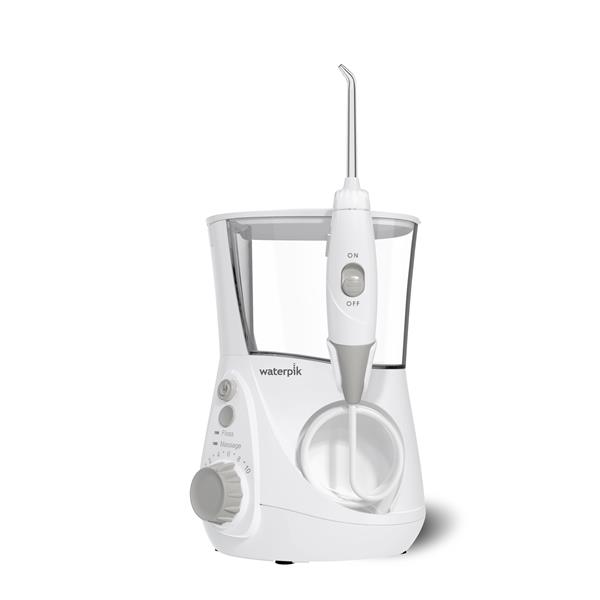
A water flosser comes down to three practical questions, and none of them is about the water itself. The first is pressure range. The jet's force is adjustable, and the number of settings decides how finely you can tune it — from a soft, low setting to a firmer one. The Waterpik Aquarius WP-660 offers ten distinct pressure levels plus separate Floss and Massage modes; the cordless Bitvae C6 gives you three modes and five intensity steps. More steps mean a gentler floor and finer control; a device with only one or two settings gives you little room to adjust.
The second is tank size, which sets how long you can run before a refill. The Aquarius carries a 22-ounce reservoir — roughly 90 seconds of continuous flossing, enough for a full mouth without stopping. Cordless units trade capacity for size: the COSLUS C20's 300ml detachable tank is generous for a portable but still empties faster at high pressure, and a smaller cordless like the Bitvae C6 may need a mid-clean top-up for a full pass. If refilling mid-session annoys you, buy tank capacity.
The third is where it lives. Countertop, plug-in units need a power outlet and permanent counter space, and in exchange give you the biggest tank and the widest pressure range. Cordless, rechargeable units run off a USB-charged battery — most last weeks per charge — and fit a small bathroom, a shower, or a travel bag, at the cost of a smaller reservoir. The Ranvoo AirJet X5 review is worth a look if the cordless side is where you are leaning.
Our recommendation: if you have the counter space and an outlet, a plug-in unit gives you the most tank and the most pressure steps. If your bathroom is tight or you travel often, a cordless with a detachable tank is the one that actually gets used.
5. Heads and Tips: the Ecosystem You Are Buying Into#
The handle is a one-time purchase; the heads and tips are forever, and they are where each brand locks you in. Every electric toothbrush and water flosser takes proprietary, click-on consumables designed to fit that maker's fitment and no other — Sonicare's click-on brush heads, Oral-B's round iO heads, and each flosser's own nozzle mount. Once you own a handle, you are committed to buying that brand's replacements for as long as you keep it.
The tip range that ships in the box hints at how deep the ecosystem runs. The Waterpik Aquarius includes seven tips, among them an orthodontic tip for braces and a Plaque Seeker for work around implants and crowns; the COSLUS C20 ships five nozzles covering standard, orthodontic and tongue-scraper duties; the Bitvae C6 comes with six jet tips. On the brush side, both Sonicare picks accept every click-on Sonicare head, including softer sensitive variants, and the iO takes round iO heads with gentle-care options. A broad tip catalogue means you can match the consumable to your mouth; a thin one means you take what the brand offers.
Then there is the replacement cadence. Brush heads are a roughly three-month consumable — bristles splay and clean less predictably with age — and flosser tips wear on a similar rota. Some handles help you track it: BrushSync on the Sonicare models monitors usage and signals when a head is worn, so you are not guessing. That reminder is a small convenience, but over the years it is the running cost, not the handle, that you actually pay.
Our recommendation: before you buy a handle, look at its replacement heads and tips and decide you are happy committing to them. A wear reminder is a nice-to-have; a proprietary consumable you resent restocking is the thing that quietly ends the habit.
Three Setups, Three Different Answers#
None of these is the right answer in the abstract; each resolves the brush-flosser-both question differently.
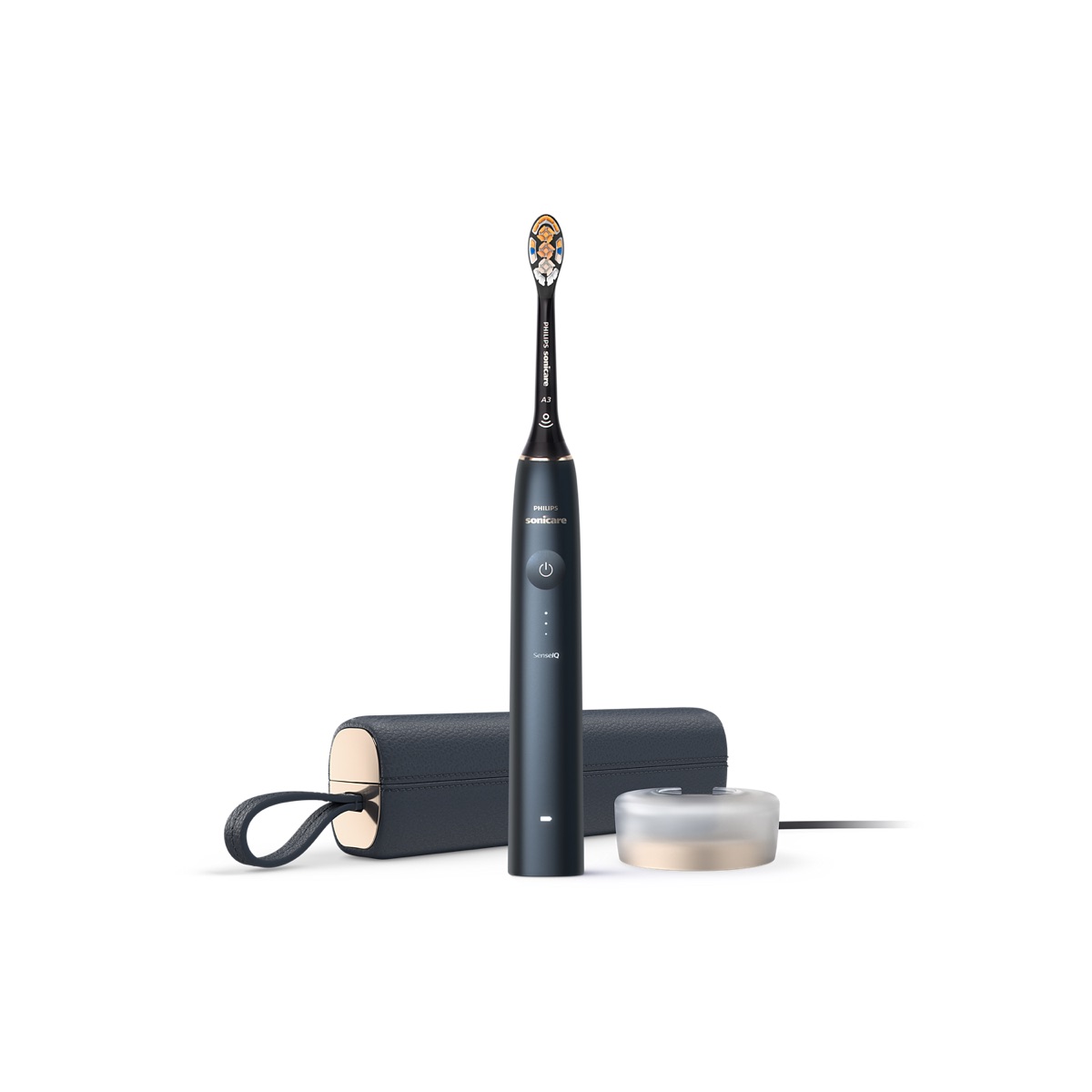
The brush-only setup is for someone with no hardware in their mouth who wants one device that covers the most surface. Here the pressure protection from the second decision matters most, and the adaptive kind takes the decision out of your hands entirely — the Sonicare 9900 Prestige reads your pressure many times a second and throttles itself, so heavy-handed brushing corrects without you thinking about it: View on Amazon
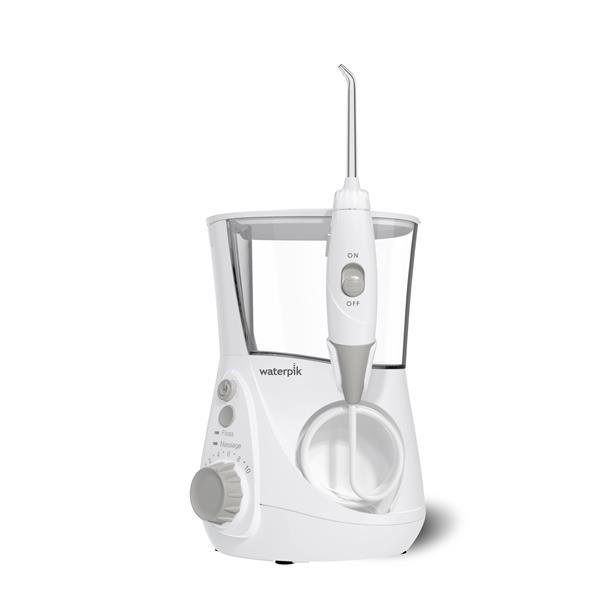
The flosser-only setup suits someone who already has brushing handled and needs to reach the gaps and gumline a bristle cannot — often because there is a bridge, an implant or braces in the way. With counter space and an outlet, a plug-in unit gives the biggest tank and the widest pressure range, which is the Waterpik Aquarius WP-660's whole case: ten pressure levels and a 22-ounce reservoir that runs a full mouth without a refill: View on Amazon
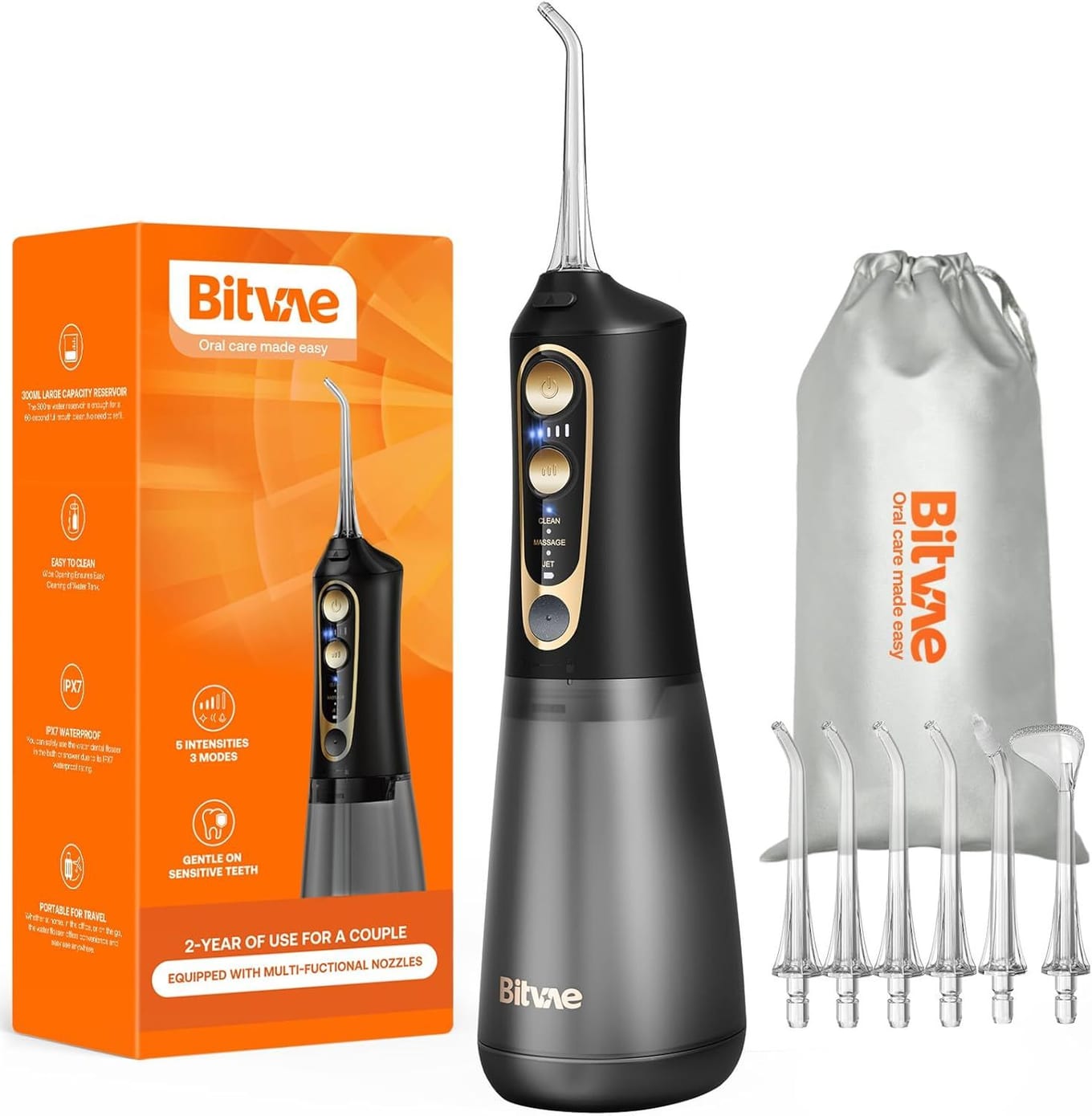
The two-device combo is the honest answer for most people with hardware or who simply want both surfaces covered: a brush for the tooth faces and a flosser for everything between and below. Pair the adaptive brush above with a cordless flosser so the second device fits the sink or a travel bag — the Bitvae C6 brings five intensity steps and a weeks-long battery to sit alongside the brush without demanding counter space: View on Amazon View on Amazon
How to Choose in Five Minutes#
Start with hardware. If you have braces, an implant, a bridge or crowns, the decision is already made — you want both devices, because a brush head cannot manoeuvre around fixed structures and a flosser cannot sweep the broad surfaces. Everyone else can start with a brush alone.
Then pick your pressure protection. Decide whether you want a warning you have to notice, a red-to-white light you watch, or an adaptive handle that throttles itself — and buy some version of it, because it is the one feature worth paying up for.
Then choose how the head should feel: a high-frequency sonic buzz, or a round oscillating head working tooth by tooth. If you can't decide, a combined-motion handle covers both.
If a flosser is in the mix, settle where it lives. Counter space and an outlet point you to a big-tank plug-in; a tight bathroom or frequent travel points you to a cordless with a detachable tank.
Finally, look at the heads and tips before you commit — the proprietary consumable on a roughly three-month cycle is the real long-term cost, so make sure the ecosystem is one you are happy restocking. If the answer came out "I want the most thorough, most adjustable clean at home and I have the counter for it", the plug-in Waterpik Aquarius is the one that clears the bar: View on Amazon