

At a Glance#
The five decisions : Physical size and whether it blocks the second outlet, which ecosystem it speaks, whether it measures power or only switches it, indoor versus outdoor, and the protocol — Wi-Fi, Matter, or Thread
The one most people get wrong : Buying a plug tied to a single ecosystem — an Alexa-only plug is inert the day you move to Google or Apple Home
The spec that matters instead : Matter support, which lets one plug answer to Apple Home, Alexa, Google Home, and SmartThings at the same time
The quiet dealbreaker : A fat body that covers both sockets of a duplex outlet, so one smart plug quietly costs you a normal one
Key Highlights:
- A compact or mini plug leaves the second outlet usable; a bulky square one hogs both
- A plug locked to one ecosystem is dead weight outside it; Matter keeps it portable
- Some plugs measure watts and kWh; most only switch power on and off
- Outdoor automation needs a weatherproof body, not an indoor plug on a porch
- Wi-Fi-direct crowds your 2.4GHz band as you add plugs; Thread runs on a mesh built for the job
Who This Is For#
Smart plugs look interchangeable in a listing photo, and that is exactly the problem. Two plugs that both "turn a lamp on from your phone" can differ on the things that decide whether you are still happy in a year: whether the body blocks the outlet next to it, whether it will still work after you switch phones, and whether it can tell you what a device costs to run.
This is a criteria comparison, not a ranking. It sits alongside the site's individual plug reviews and points to them, because the honest answer to "which smart plug" is "which decision matters most to you." Five plugs below resolve those decisions five different ways.
Especially useful if you are:
- A first-time buyer who has noticed that every plug claims to do the same five things
- A renter who wants app and voice control without a hub, wiring, or landlord permission
- Someone tracking a bill who needs the plug to measure power, not just switch it
- A mixed-ecosystem household juggling an iPhone, an Echo, and a Google speaker under one roof
1. Size and Whether It Blocks the Second Outlet#
A standard duplex receptacle has two sockets stacked vertically, and this is where a lot of smart plugs quietly fail before they are ever switched on. A fat, square body plugs into one socket and physically covers the other, so the moment you add one smart plug you have lost a normal one. Behind a couch or a nightstand where outlets are already scarce, that is a real cost.
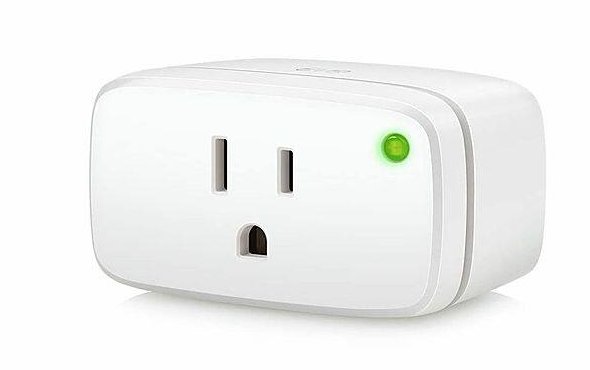
Compact and mini designs solve it. The Leviton Decora Smart Plug (D215P) is a true mini: it occupies roughly the top half of a duplex outlet, so a second identical unit fits neatly below it and you control two devices from one wall plate. The Kasa KP125M is one of the smallest plugs Kasa has made and covers only a single socket, so both plugs from its 2-pack sit side by side in one receptacle. The Eve Energy is a compact rounded block, roughly 70 x 39 x 60 mm, small enough that it rarely blocks the second outlet — a common failing of bulkier energy-monitoring plugs.
The trade-off is honest: the plugs that pack metering hardware tend to be larger. The Govee plug is a compact single-outlet block but is bigger than an ultra-slim plug precisely because it carries the energy-metering electronics, and it can crowd the second socket on some wall plates. Outdoors, the Wyze Plug Outdoor is bulky enough that it can crowd an adjacent socket on a duplex outdoor box.
Our recommendation: If your outlets are crowded and you want to smart-enable two devices on one plate, start from a true mini like the Leviton and stack two: View on Amazon
2. The Ecosystem It Speaks — and the Lock-In to Avoid#
Every smart plug answers to some combination of Amazon Alexa, Google Assistant, Apple Home (Siri), and Samsung SmartThings. The tempting mistake is to buy the cheapest plug that works with the assistant you own today and stop reading. That is how you end up with hardware you cannot use.
The clearest example of the trap is a plug tied to one ecosystem. An Alexa-only plug has no Google Home support and no Apple Home support — if you do not use Alexa, it is functionally useless, and if you switch away from Alexa later you are paying for software you can no longer reach. That is a warning, not a recommendation, so this section deliberately does not hand you a buy-link: the point is which plug not to build a house around.
Matter is the way out. A Matter-certified plug pairs once and appears in Apple Home, Alexa, Google Home, and SmartThings at the same time, so the same lamp answers to Siri on a phone and to an Echo in the kitchen without buying separate hardware. The Kasa KP125M and the Meross MSS315 ship with native Matter; the Leviton converts to Matter over Wi-Fi with a free firmware update; the Eve Energy reaches all four platforms through Matter over Thread. Some capable plugs still sit outside Matter — the Govee, the Emporia, and the Wyze outdoor all cover Alexa and Google but skip Apple Home — which is fine if you are certain of your ecosystem and a problem if you are not.
Our recommendation: Unless you are absolutely certain you will never leave your current assistant, buy Matter and keep the plug portable. Treat single-ecosystem lock-in as a reason to walk away, not a discount.
3. Does It Measure Power, or Only Switch It?#
This is the line that splits the category in two. Plenty of "smart" plugs only know two states, on and off. A metering plug measures actual current draw and reports live wattage, and often cumulative kWh and a running cost once you enter your electricity rate. That turns "I think the dehumidifier is expensive" into a number you can act on.
The distinction is easy to check. The Leviton is on/off only, no energy monitoring — deliberately, since it trades metering for size. The metering side is crowded and genuinely useful: the Govee reports live power, current, and voltage with history broken down by day, week, month, and up to a year; the Kasa KP125M shows real-time watts plus cumulative usage and adds an auto-off rule that cuts power above a wattage ceiling you set; the Eve Energy reports live watts, total kWh, and projected running cost. The strongest cases for metering are the plugs built around it: read the Emporia smart plug review for per-second watt, voltage, and kWh reporting with phantom-load detection that exposes standby waste, and the Meross MSS315 review for a built-in meter paired with cross-platform Matter.
One thing worth knowing: the devices most worth measuring are the high-draw ones, and cheap plugs often cap at 10A (1,200W). The metering plugs above mostly carry a 15A / 1,800W rating, which is what lets them run — and measure — a space heater or a window AC rather than just a lamp.
Our recommendation: If your goal is convenience, a switch-only plug is enough and usually smaller. If your goal is the bill, pay for the meter — a week of real data on your worst suspect usually settles the argument.
4. Indoor or Outdoor#
An indoor smart plug on a covered porch is a warranty claim waiting for the first storm. Weatherproofing is not a nice-to-have here; it is the entire spec. Outdoor automation — string lights, a fountain pump, a holiday display — needs a body rated to sit in rain, dust, and cold, and that rules out every indoor plug regardless of how good its app is.
The Wyze Plug Outdoor is the answer to this decision. Its IP64-rated housing is dust-protected and shielded against water splashing from any direction, it operates from -4°F to 120°F, and its two grounded sockets sit under hinged weatherproof flaps so cords stay sealed once seated. It carries two independently controlled outlets, so one device runs a walkway light on a dusk-to-midnight schedule while the other runs a pond pump on its own timer — one plug doing the work of two. A built-in ambient light sensor runs dusk-to-dawn lighting off local hardware, so the core schedule keeps firing even if the Wi-Fi drops, and dual antennas reach up to 300 ft for a plug at the back fence or a detached garage.
Our recommendation: Do not stretch an indoor plug outdoors. If the job is on a wall, a fence, or a deck, buy the weatherproof body from the start: View on Amazon
5. Wi-Fi, Matter, or Thread#
Underneath the ecosystem question is a quieter one about how the plug actually talks to your home, and it has three answers. Wi-Fi-direct plugs connect straight to your 2.4GHz router with no hub — simple, and the reason the Govee, the Emporia, and the basic Kasa line are so easy to set up. The catch is that every plug is one more device leaning on the same 2.4GHz band, so a house full of them crowds the network built for phones and laptops too.
Matter over Wi-Fi keeps the plug on your router but makes it cross-platform and adds local control, so schedules keep running through an internet outage — this is the Kasa KP125M and the Meross MSS315, and the Leviton once its firmware is updated. Thread is the third path: a low-power mesh built specifically for smart-home traffic. The Eve Energy speaks Matter over Thread and, because it is always powered, acts as a Full Thread Router node — every one you add relays and extends the mesh for every other Thread device nearby, and commands feel closer to instant than a cloud round-trip. The price of admission is a Thread border router (an Apple TV 4K, HomePod mini, or similar); without one, the Eve cannot reach your platform on its own.
Our recommendation: For a plug or two, Wi-Fi-direct is fine. If you are building a real mesh and already own a Thread border router, Thread is the more responsive, more reliable foundation: View on Amazon
Five Plugs, Five Different Answers#
None of these is better in the abstract. They resolve the five decisions differently, and the right one is the one whose answer matches your priority.
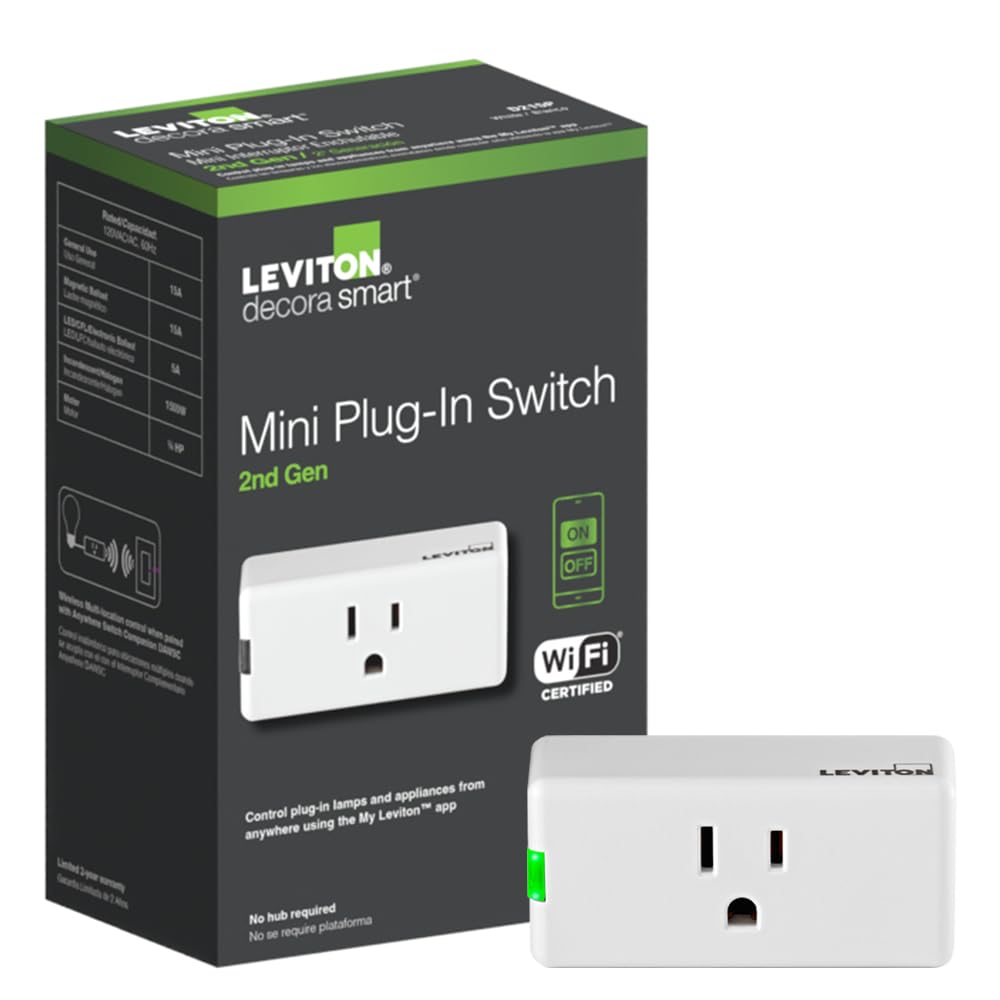
The Leviton Decora (D215P) is the outlet-saving answer: a true mini body that lets two units share one duplex plate, backed by a century-old electrical brand, with Matter after a firmware update — on/off only, no metering, by design: View on Amazon
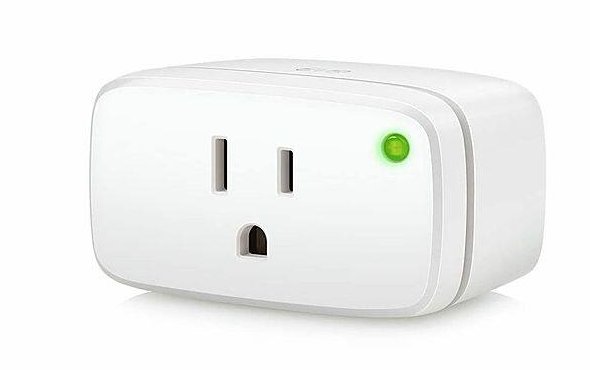
The Eve Energy is the Thread and privacy answer: Matter over Thread reaching all four platforms, a real power meter, and 100% local control with no account or cloud, provided you already run a Thread border router: View on Amazon
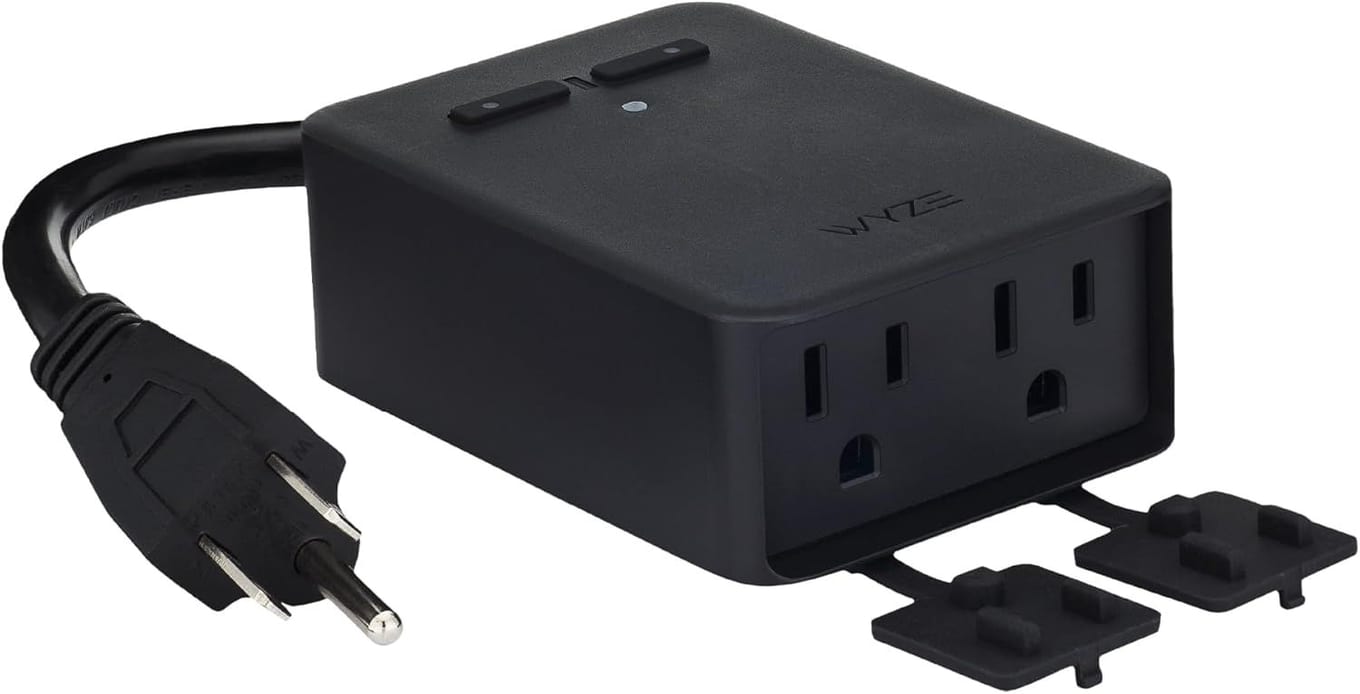
The Wyze Plug Outdoor is the outdoor answer: two independently controlled IP64 outlets, a local light sensor, and up to 300 ft of range, for the automation that lives on a wall or a fence rather than a nightstand: View on Amazon
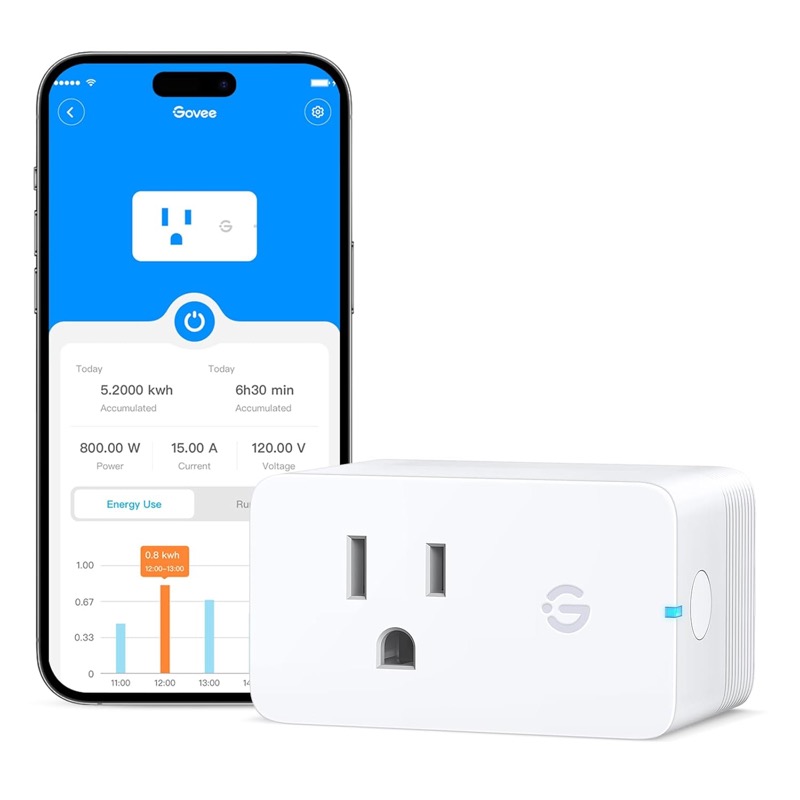
The Govee Smart Plug is the metering-on-a-budget answer: live watts, current, and voltage with up to a year of history and a 15A / 1,800W ceiling that fits the space heaters and window AC units actually worth measuring: View on Amazon
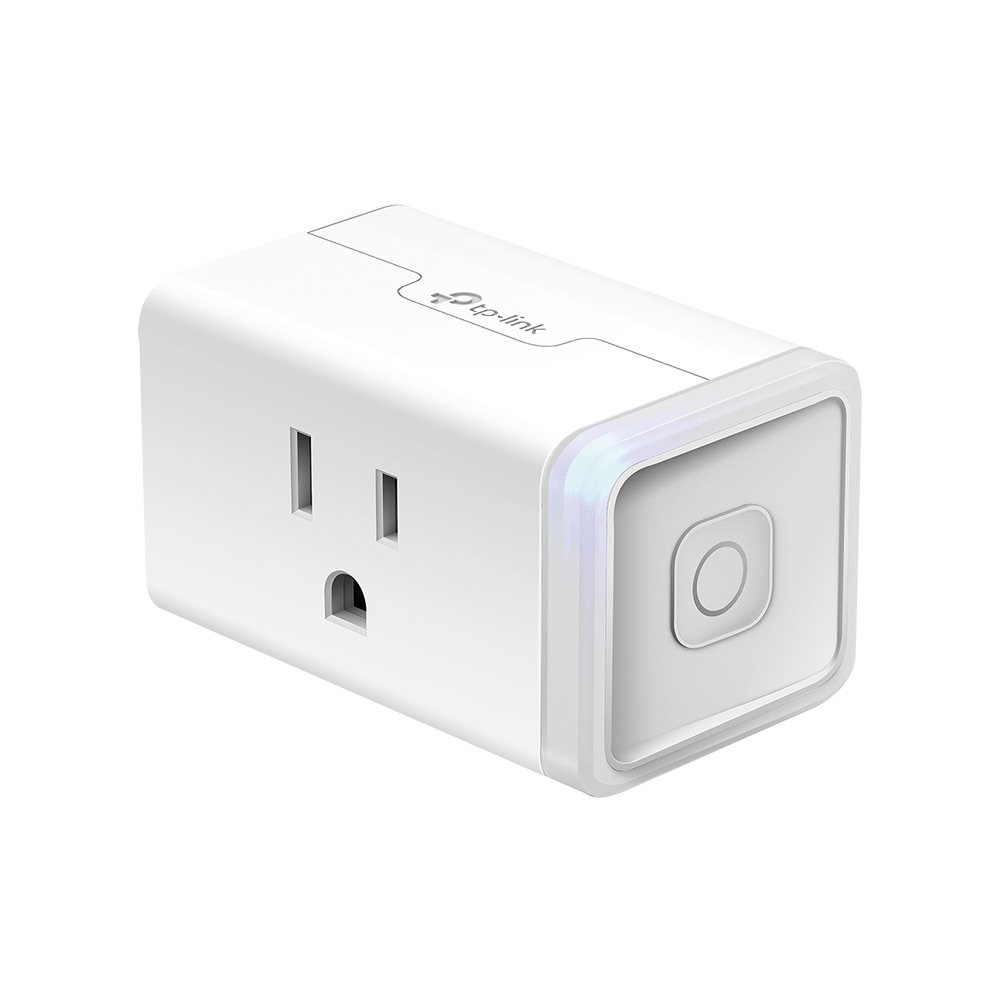
The Kasa KP125M is the Matter-plus-metering answer: native cross-platform pairing, real-time and cumulative energy data, an auto-off threshold, a compact one-socket body, and a 2-pack so you can meter two suspects at once: View on Amazon
How to Choose in Five Minutes#
Start with the outlet. If the receptacle is crowded or you want two smart devices on one plate, a true mini like the Leviton settles it before any other spec matters.
Then decide the ecosystem. If your household is mixed, or you are not sure which assistant you will commit to, buy Matter and refuse anything locked to a single ecosystem — that is the one mistake that turns a plug into dead weight.
Then ask whether you need to measure or only switch. If the goal is the electricity bill, pay for a metering plug and put it on your worst suspect for a week; if the goal is pure convenience, a switch-only plug is smaller and enough.
Then check where it lives. Anything on a porch, fence, or deck needs a weatherproof body — the Wyze — not an indoor plug pushed outside.
Finally pick the protocol: Wi-Fi-direct for one or two plugs, Matter for portability, Thread for a responsive mesh if you already own a border router. One caveat that outlives all five decisions — a smart plug only cuts power, it cannot press a device's button, so a gadget that boots to standby needs the wall test covered in the best smart plugs for apartment renters roundup. If you want a single, hub-free place to start that measures power and travels across every platform, the Matter-certified Kasa 2-pack clears the most decisions at once: View on Amazon