

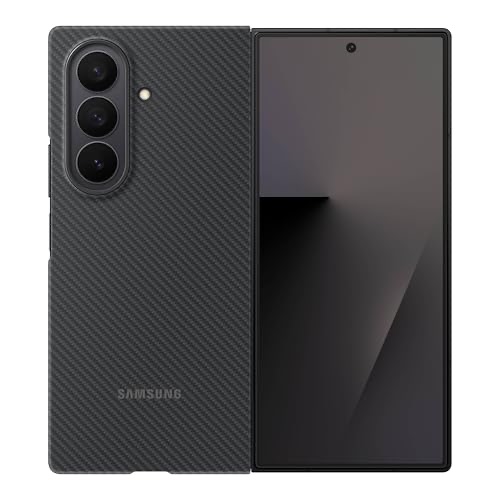
Foldable phones are expensive, comparatively delicate, and — because they open and close on a hinge — they can't just take any old case. A wraparound design that works on a normal slab would jam the fold or leave half the phone bare. So the safest buy is almost always the maker's own case, cut to the exact shape of the phone and tested not to stress the hinge. For the two big foldables covered here, that means the Samsung Galaxy Z Fold7 Carbon Shield case and the Google Pixelsnap case for the Pixel 10 Pro Fold. And if you're here because of Apple's first foldable — good instinct: Apple announced it on 9 September 2026 as the iPhone Duo (the foldable iPhone that searches still call the iPhone Fold), with pre-orders beginning 16 October and availability beginning 23 October in more than 70 countries; third-party cases for it are compared in our roundup of iPhone Duo cases, and four other accessories are in our iPhone Duo accessories guide.
The short version on why foldable cases are their own thing: a book-style foldable is two panels joined by a hinge that has to stay free, and the folded profile has to stay slim enough to shut flush without blocking the cameras or the cover screen. First-party makers solve that in two different ways, and the difference matters when you're choosing. Samsung's answer for the Z Fold7 is a shell for the back panel plus a film for the cover screen; Google's answer for the Pixel 10 Pro Fold is a two-piece case that wraps both halves. Both are legitimate — they just protect different things.
Who this comparison is for#
- New Galaxy Z Fold7 or Pixel 10 Pro Fold owners who want to protect a pricey phone without fighting the hinge.
- Buyers who've been burned by a cheap case that added bulk or stopped the phone closing flush.
- Anyone waiting on Apple's iPhone Duo and wanting to understand what makes a good foldable case first.
How we picked#
- Hinge-safe fit. A foldable case has to leave the hinge completely free. We favoured first-party designs built to the exact geometry so nothing binds when you open or close.
- Slim enough to still fold flush. Bulk is the enemy on a foldable — too much and the phone won't shut properly. Samsung publishes a figure here, 0.8 mm, and calls it the slimmest of its Z Fold7 cases; Google publishes no thickness claim for its case.
- Cameras, cover screen and ports clear. Cutouts have to line up on a device this complex; official cases are the safest bet for that.
- Doesn't break Pixelsnap. The Pixel 10 Pro Fold carries its Qi2 magnets in the phone itself, and Google warns that a non-magnetic or metal-laden case leaves you with weak or no magnetic attachment. On the Pixel side, a case designed for Qi2 is the whole point.
Samsung Galaxy Z Fold7 Carbon Shield Case (Best for the Z Fold7)#
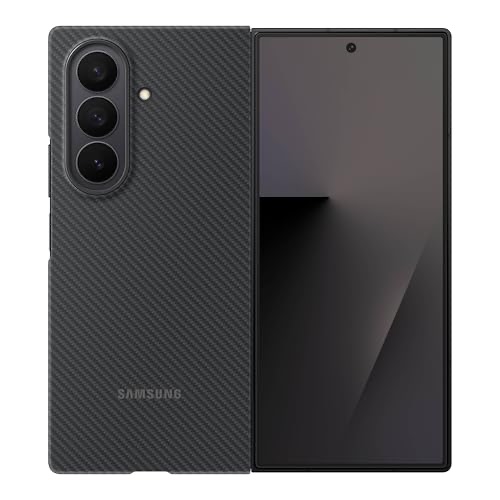
Samsung's own Carbon Shield case is the minimalist, safe choice for the Z Fold7 — and it's important to know what it is before you buy. Samsung describes it plainly: the case covers the back, and an Anti-reflecting Film goes on the front. It is not a shell for both halves. What you get is a 0.8 mm frame on the rear panel, which Samsung calls the slimmest of all its Z Fold7 cases, plus two films with an install kit in the box.
The material is aramid — what Samsung calls a durable carbon synthetic fiber — chosen for scratch resistance and for keeping its appearance rather than for bulk protection. Samsung's own framing is that it preserves "the same easy-to-grip feel of your phone with added protection", so treat it as a scratch-and-wear layer, not a drop case. If you want the Fold7 to stay as thin as Samsung built it and you accept that trade, this is the one to buy.
Key specs#
Fits : Samsung Galaxy Z Fold7 (official, EF-XF966)
Design : Rear-panel frame in aramid, 0.8 mm thin, hinge left free
Protection : Back cover only; front protected by the included Anti-reflecting Film
In the box : 1 case, 2 Anti-reflecting Films, install kit
Best for : Z Fold7 owners who want the thinnest official scratch protection
Bottom line. The slimmest official Z Fold7 case — aramid over the back, film over the front, nothing added to the folded thickness. Choose it for exact fit and scratch resistance, not for drop protection.
Google Pixelsnap Case for Pixel 10 Pro Fold (Best for the Pixel 10 Pro Fold)#
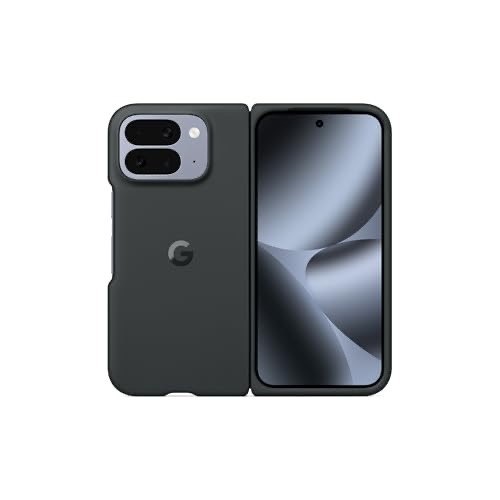
Google's Pixelsnap case is the match for the Pixel 10 Pro Fold, and unlike Samsung's it wraps both halves — Google says it's designed for the phone so it "perfectly hugs every curve, folded or unfolded". Amazon's listing gives the enclosure as polycarbonate with a microfiber lining, and Google says it has been drop-tested for hundreds of hours, with a stain-resistant finish and a share of recycled content.
The magnetic story is worth getting right, because it's the reason to buy the official case rather than a cheap one. The Pixel 10 Pro Fold is Pixelsnap-enabled on its own — the Qi2 magnets are in the phone, so you do not need a case to get magnetic charging. What a case has to do is not get in the way, and Google lists magnets among this case's own materials so the alignment carries through it. Google is blunt about the alternative: magnetic attachment "works best with no case or with cases designed for Qi2 wireless charging like the Google Pixelsnap cases", while non-magnetic cases "result in weak or no attachment and unreliable charging". Buy the wrong case and you lose Pixelsnap; this is the one that keeps it.
Key specs#
Fits : Google Pixel 10 Pro Fold (official)
Design : Wraps both panels, folded or unfolded; polycarbonate enclosure with a microfiber lining
Protection : Shock-absorbent, drop-tested for hundreds of hours per Google
Magnets : The phone is Qi2-enabled on its own, and Google lists magnets in the case's materials so alignment carries through it
Best for : Pixel 10 Pro Fold owners who use Pixelsnap chargers, stands or grips
Bottom line. Two-panel coverage plus a Qi2-friendly build that keeps Pixelsnap alignment intact. The right case for the Pixel 10 Pro Fold.
Which one should you buy?#
This one's simple: buy the case that matches your phone — there's no cross-shopping between them. If you have the Galaxy Z Fold7, the Carbon Shield case is the thinnest official option, and you should go in knowing it's a rear-panel frame plus a cover-screen film rather than a shell for both halves. Check current availability: View on Amazon
If you have the Pixel 10 Pro Fold, the Pixelsnap case wraps both panels and, just as importantly, is built not to interfere with the Qi2 magnets already in the phone.
Waiting on Apple's foldable? It has a name now: Apple announced the iPhone Duo on 9 September 2026, with pre-orders beginning 16 October and availability beginning 23 October in more than 70 countries, and announced two cases of its own with it — a two-part case and a folio with a kickstand. Third-party cases for it are compared in our roundup of iPhone Duo cases. For the two phones here, the checklist is unchanged: exact fit, a free hinge, a slim fold-flush profile, and clean cutouts.
FAQ#
Why can't I use a normal phone case on a foldable? : Because a foldable has two separate panels and a hinge that has to move freely. A standard wraparound case would either block the fold or leave half the phone unprotected. Foldable cases either come in two pieces that clip to each panel, as Google's does, or protect the back and hand the front over to a screen film, as Samsung's Carbon Shield does.
Are first-party foldable cases worth it over cheaper third-party ones? : Usually yes. On a phone this expensive and this precisely built, an exact fit matters — official cases guarantee the cutouts, hinge clearance and fold-flush thickness are right. Third-party cases can be fine, but the tolerances are a gamble, and a poor fit can stress the hinge. On the Pixel there's a second reason: Google states that cases not designed for Qi2 give weak or no magnetic attachment.
Does the Pixelsnap case add magnetic charging to the Pixel Fold? : It preserves it rather than creating it. The Qi2 magnets are built into the Pixel 10 Pro Fold itself, so the phone is Pixelsnap-ready bare; Google also lists magnets among this case's materials, so the alignment carries through. Google's guidance is that magnetic attachment works best with no case at all or with a case designed for Qi2 charging, like the Pixelsnap cases, while non-magnetic cases give weak or no attachment.
Will these cases make the phone too thick to fold? : Both are first-party designs cut to the phone, so neither stops it closing. Samsung is the one that publishes a number: the Carbon Shield is 0.8 mm and Samsung calls it the slimmest of all its Z Fold7 cases. Google publishes no thickness figure for its case, so treat it as the more protective, less minimal of the two.
What about cases for Apple's iPhone Duo? : Apple announced the iPhone Duo on 9 September 2026, with pre-orders beginning 16 October and availability beginning 23 October in more than 70 countries, and announced two cases of its own with it — a two-part case and a folio with a kickstand. This comparison covers the Galaxy Z Fold7 and the Pixel 10 Pro Fold; third-party cases for the Duo are compared in our roundup of iPhone Duo cases.