

For two-player game nights, 7 Wonders Duel is the best overall — deep strategy in 30 minutes. Jaipur is the best budget pick, a fast card duel that fits in a bag. Patchwork is best for relaxed couples who want a cozy, easy-to-learn puzzle. Here's how all three compare.
Who This Comparison Is For#
This roundup is built for two people who play together regularly — not a full game group. We picked games that are designed from the ground up for exactly two players, so there are no "dummy" hands or watered-down rules to work around.
- Couples who want a reliable after-dinner ritual that finishes in under 45 minutes
- Roommates and partners who travel and need at least one game small enough to pack
- New-to-modern-board-games duos who want a gentle on-ramp before tackling heavier titles
How We Picked#
Every game here is a proven, currently-available title with a long track record, not a flash-in-the-pan release. We weighed four things:
- True two-player design — each game is balanced specifically for two, not scaled down from a 4-player box
- Range of weight — one deeper strategy game, one quick card game, and one light puzzle, so there's a fit for every mood
- Replayability — variable setups, multiple paths to victory, or fast resets that invite "best of three"
- Value — all three land in an accessible price band for a quality boxed game, with no expansion required to enjoy them
7 Wonders Duel (Best Overall)#
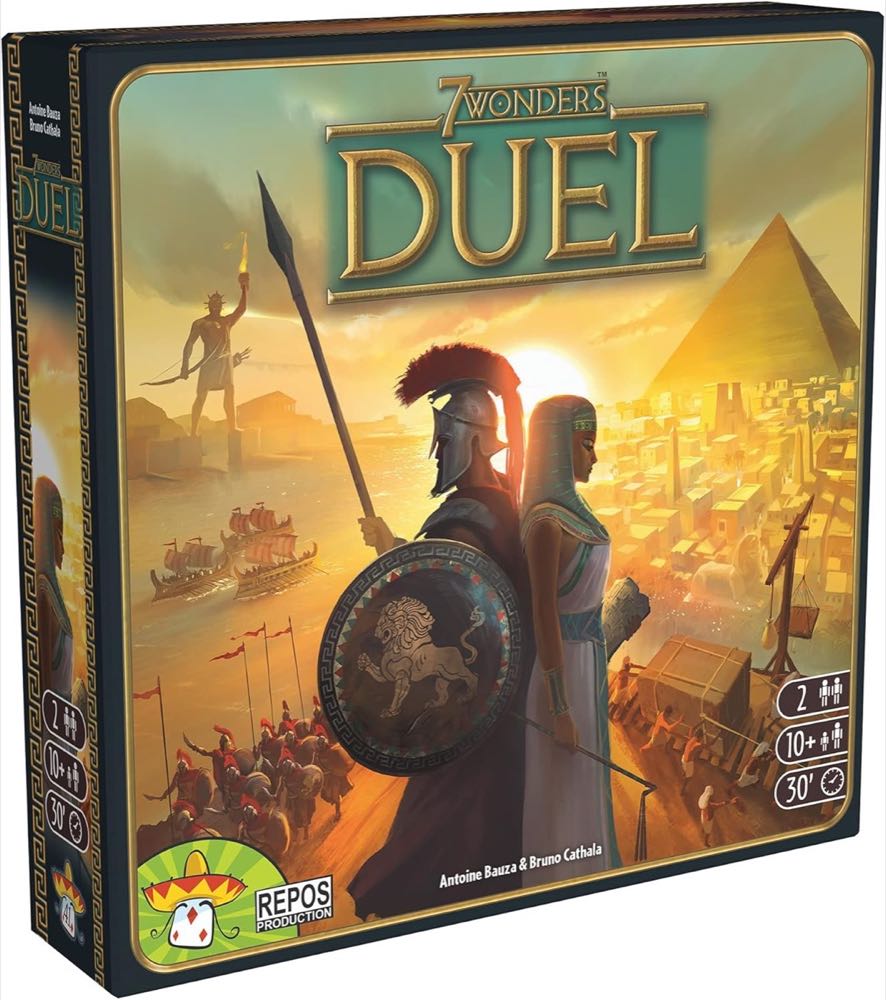
The 7 Wonders Duel is the gold standard for two-player strategy. It distills the acclaimed multiplayer card-drafting game into a tense, head-to-head ancient-civilization race that plays in about half an hour. You draft cards from a shared, shifting tableau, building science, military, and commercial engines while trying to deny your opponent the exact card they need.
What makes it the overall pick is depth without bloat. There are three ways to win — military dominance, scientific supremacy, or the most victory points at the end — and every game forces you to read which path your opponent is chasing and decide whether to block them or outrace them. That mind-games layer is why it consistently ranks among the best two-player games ever made.
It is also genuinely re-playable. The card pyramid is set up differently each age, the Wonders you build vary, and the two instant-win conditions keep every match tense right up to the final card.
Key Specs#
Players : 2 only
Playtime : About 30 minutes
Recommended Age : 10 and up
Designers : Antoine Bauza and Bruno Cathala
Core Mechanic : Card drafting with three victory paths (military, science, civilian)
Complexity : Medium — easy to learn, deep to master
Publisher : Repos Production / Asmodee
Bottom Line#
If you want one two-player game that will stay in rotation for years, this is it — strategic, tense, and over in 30 minutes.
Jaipur (Best Budget)#
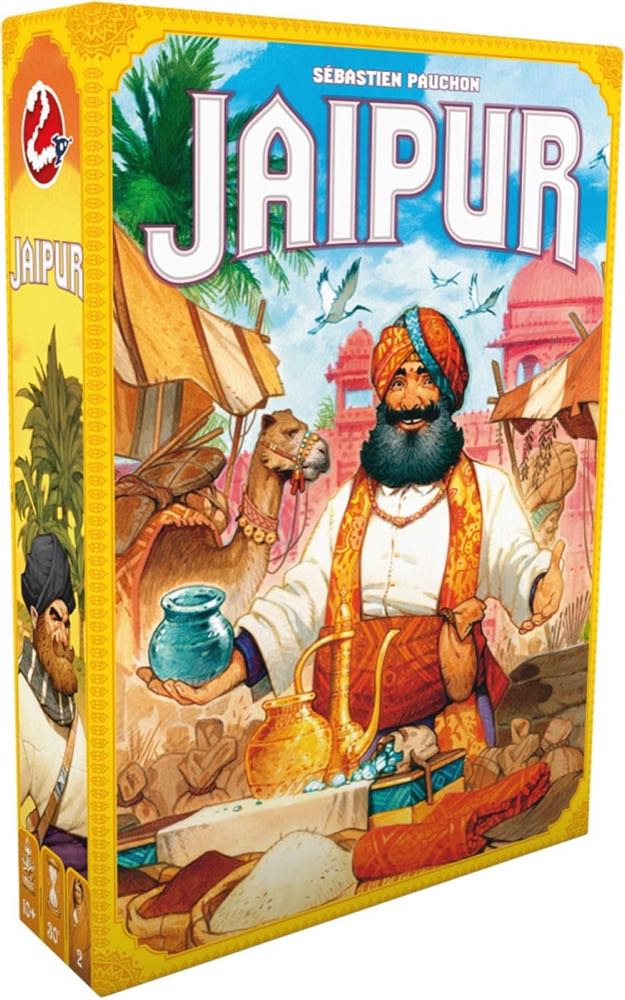
Jaipur is the best budget choice and the easiest to bring anywhere. It's a fast, almost entirely card-based duel where you play rival traders racing to earn the favor of the Maharaja. On your turn you either take goods from the market or sell them for rupees, with bigger same-type sales paying lucrative bonus tokens.
The brilliance is in the tension of timing. Selling early locks in safe money; holding for a bigger combo risks your opponent grabbing the bonus tokens first. Camels let you swap multiple goods at once but never score directly, so managing your "camel herd" becomes its own quiet sub-game. Matches are best-of-three, so a single bad round never sinks you.
It's light enough to teach in five minutes yet sharp enough that experienced players still agonize over every sell, and its compact box makes it the obvious pick for trips and small tables.
Key Specs#
Players : 2 only
Playtime : About 30 minutes (best of three rounds)
Recommended Age : 10 and up
Designer : Sébastien Pauchon
Core Mechanic : Set collection, hand management, and trading
Complexity : Light — learn it in one round
Publisher : Space Cowboys / Asmodee
Bottom Line#
The most portable, wallet-friendly pick here — quick to teach, endlessly re-playable, and ideal for travel.
Patchwork (Best for Relaxed, Easy-to-Learn Game Nights)#
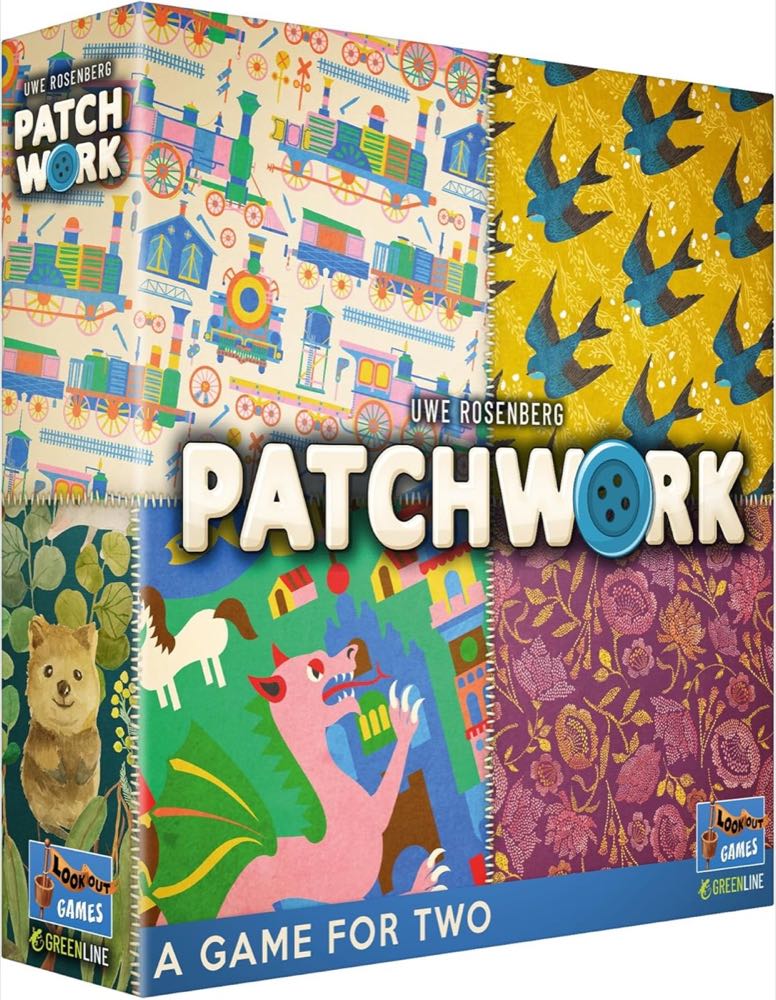
Patchwork is the pick for couples who want something cozy and low-stress that still rewards clever play. You and your partner compete to build the most attractive — and button-rich — quilt by buying oddly shaped fabric tiles and fitting them onto your personal board, Tetris-style. It's tactile, gentle, and quietly addictive.
The clever twist is the time track. Both players share a single timeline, and how far you advance depends on which tiles you buy. That turns a simple puzzle into a tug-of-war over tempo: do you grab a cheap tile now, or spend buttons (the game's currency) on a bigger piece that races you ahead? Leaving holes in your quilt costs you points at the end, so neat packing matters.
With no reading, no conflict, and a 30-minute play time, it's the friendliest entry point on this list — perfect for unwinding after work. If you enjoy this kind of spatial puzzle, see what to look for in a board game for the framework behind picking a tile-layer that works at two. The Revised Edition is the current in-print version, available in both the US and EU.
Key Specs#
Players : 2 only
Playtime : About 30 minutes
Recommended Age : 8 and up
Designer : Uwe Rosenberg
Core Mechanic : Polyomino tile placement with a shared time track and button economy
Complexity : Light — no reading, minimal rules
Publisher : Lookout Games (Revised Edition)
Bottom Line#
The most relaxing, beginner-friendly pick — a cozy spatial puzzle that's easy to teach and hard to put down.
Which One Should You Buy?#
All three are excellent, so the right choice comes down to how you and your partner like to play.
If you want one game that delivers real strategic depth and will stay interesting for years, buy 7 Wonders Duel. It rewards reading your opponent and plotting several turns ahead, and the multiple win conditions keep it fresh long after you've learned the cards.
If you're on a budget, travel often, or want something you can teach in a single round, get Jaipur. It's the smallest box, the lowest price, and the fastest to set up — yet it still delivers tense, meaningful decisions every turn.
If you want something calm and welcoming — especially if one of you is new to modern board games — pick Patchwork. There's no direct conflict, no reading, and no analysis paralysis; just a satisfying puzzle you build together over half an hour.
Honestly, many couples end up owning two of these: a deeper strategy game plus a quick filler. 7 Wonders Duel paired with Jaipur covers almost every mood.
FAQ#
Which is the best two-player board game for beginners?#
Patchwork is the most beginner-friendly — it has no reading, no conflict, and can be taught in a couple of minutes. Jaipur is a close second and adds a bit more strategic tension. Save 7 Wonders Duel for once you've both played a game or two and want more depth.
What's the best two-player game for travel?#
Jaipur is the clear winner for travel. It's primarily a card game in a small box, sets up in under a minute, and packs easily into a bag or suitcase. Patchwork and 7 Wonders Duel have more components and larger boxes.
Are these games good for couples specifically?#
Yes — all three are designed for exactly two players, so there are no awkward rule adjustments. Patchwork is the most relaxed and cooperative-feeling, Jaipur is a fast back-and-forth duel, and 7 Wonders Duel is the most strategic head-to-head experience.
How long does each game take to play?#
All three run about 30 minutes per game once you know the rules. Jaipur is played as a best-of-three, so a full match can run a little longer, while a single round is quicker. Patchwork and 7 Wonders Duel are typically one session of roughly half an hour.
Do I need any expansions to enjoy these games?#
No. All three are complete, standalone experiences out of the box. 7 Wonders Duel has popular expansions (Pantheon and Agora) if you later want more variety, but the base game is fully self-contained and is where everyone should start.
Which game has the most replay value?#
7 Wonders Duel offers the deepest long-term replayability thanks to its three victory paths and variable card layouts. That said, Jaipur and Patchwork are quick enough that you'll happily play several rounds in a sitting, which gives them strong replay value of a different kind.