

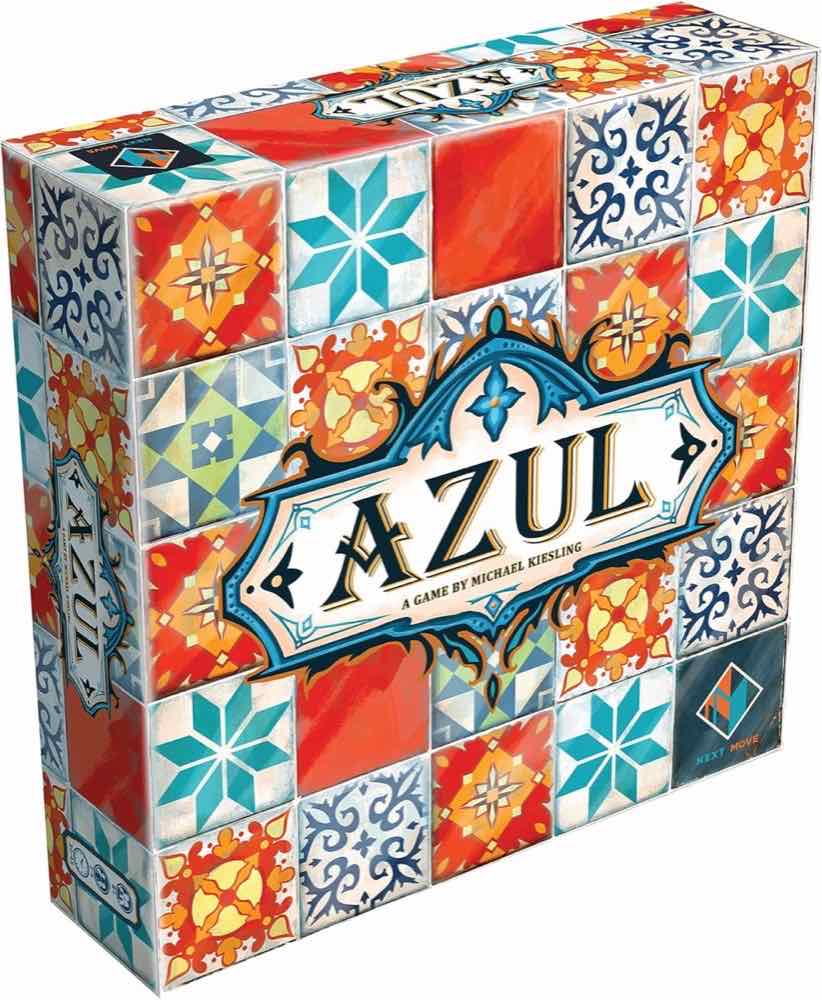
For family game night you want games that teach in five minutes and stay fun for years. Our three picks do exactly that: Azul is the best overall, a gorgeous tile-laying game that hooks kids and adults alike; Codenames is the best budget buy, a fast word game built for big, loud groups; and Ticket to Ride is the best for mixed ages, an easy train-route game that plays great from age 8 to grandparents.
All three are modern classics — each won the prestigious Spiel des Jahres (Game of the Year) award, each teaches in minutes, and each rewards repeat play without ever feeling like homework. Below we break down who each game is for, the exact specs, and which one belongs on your shelf first.
Who this comparison is for#
- Families with kids aged 8 and up who want games everyone can actually play together — not "kids' games" adults dread.
- Hosts of larger gatherings who need something that scales to six, eight, or more players without anyone sitting out.
- First-time board game buyers stepping beyond Monopoly and Uno and unsure which "gateway" game to start with.
How we picked#
- Easy to teach, hard to master. Every pick explains in under five minutes but offers real decisions that keep adults engaged.
- Wide age range. All three list an 8+ or family rating and genuinely work across generations at one table.
- Award pedigree and proven reviews. Each game is a Spiel des Jahres winner with tens of thousands of strong ratings — not a fad.
- Different strengths. We deliberately chose one strategy game, one party game, and one route-builder so the three cover every kind of game night.
- Reasonable price and availability. All three are stocked widely and sit in the affordable gateway-game range, not the collector's tier.
Product 1 — Azul (Best Overall)#
Azul is the game we hand to anyone who says they "don't like board games." Designed by Michael Kiesling and published by Next Move Games, it won the 2018 Spiel des Jahres — the hobby's top honor — and it earns that reputation the moment you open the box. The resin tiles feel like ceramic bathroom tiles, the colors pop, and the table looks beautiful before anyone has scored a point.
The rules are deceptively simple. On your turn you take all tiles of one color from a factory display, place them on your pattern lines, then move completed lines onto your mosaic wall to score. That's it. New players grasp it in one round, yet the decisions get genuinely tense: take the tiles you need and you might hand your opponent a better move, or leave excess tiles that pile up as penalty points. It's a pure, elegant brain-burner with zero reading and no luck-of-the-dice swings.
For family night, Azul hits the sweet spot. Kids as young as 8 can play the basic strategy while adults chase advanced column and color bonuses at the same table — nobody is bored and nobody is lost. Games run 30 to 45 minutes, short enough for a school night and good enough to immediately deal again.
If you want the deep dive on this one, read our full Azul review.
Key Specs#
Players : 2 to 4
Age : 8 and up
Playtime : 30 to 45 minutes
Game type : Tile-placement / abstract strategy
Top award : Spiel des Jahres 2018 (Game of the Year)
Designer / publisher : Michael Kiesling / Next Move Games
Reading required : None — fully language-independent
Bottom line#
The best all-around family game you can buy: stunning to look at, trivial to teach, and deep enough that adults keep coming back.
Product 2 — Codenames (Best Budget)#
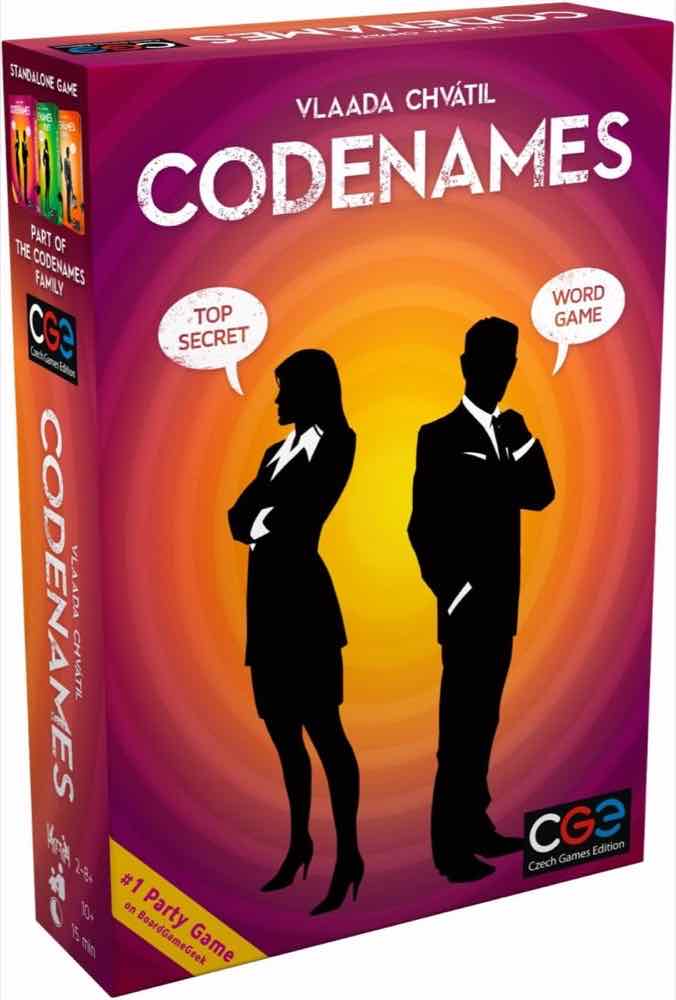
Codenames is the cheapest game on this list and, dollar for dollar, the most laughter you can buy. Designed by Vlaada Chvátil for Czech Games Edition, it won the 2016 Spiel des Jahres and has sold more than 18 million copies worldwide. There are no boards or pawns — just a grid of word cards and two competing teams — yet it produces some of the best moments of any game night.
Here's how it works. Each team has a spymaster who can see which words on the table belong to their team. The spymaster gives a single one-word clue plus a number, and their teammates try to guess which words it points to. Link "Apple," "Newton," and "Falling" with the clue "Gravity: 3" and you look like a genius. Point your team at the assassin word by accident and you lose instantly. The tension between being clever and being clear is the whole game.
For family night, Codenames is the great equalizer. It plays with as few as two (using the cooperative variant) but truly shines at six, eight, or more — split everyone into two teams and the whole room is involved. Rounds last about 15 minutes, so it works as a warm-up, a filler between bigger games, or the entire evening. The listed age is 14+, but word-savvy kids around 10 and up keep up fine on a team with adults.
Key Specs#
Players : 2 to 8+ (best with large teams)
Age : 14 and up (younger works on teams)
Playtime : About 15 minutes
Game type : Word association / team party game
Top award : Spiel des Jahres 2016 (Game of the Year)
Designer / publisher : Vlaada Chvátil / Czech Games Edition
Contents : 200 double-sided word cards, 40 key cards, timer
Bottom line#
The best value on this list and the only pick that scales to a whole room — buy it if your game nights are loud and crowded.
Product 3 — Ticket to Ride (Best for Mixed Ages)#
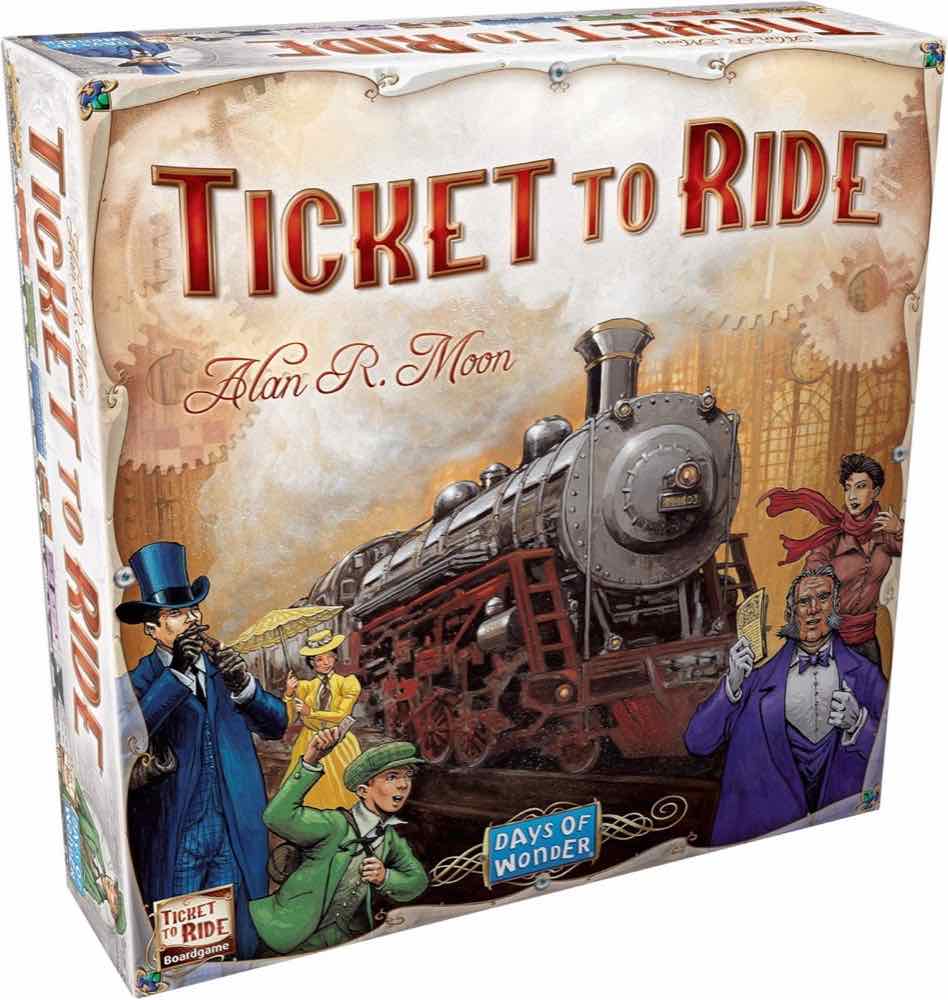
When the table spans an 8-year-old, two parents, and a grandparent, Ticket to Ride is the game that keeps everyone genuinely in it. Designed by Alan R. Moon for Days of Wonder, it won the 2004 Spiel des Jahres and effectively launched the modern gateway-game category. You collect colored train cards and spend matching sets to claim railway routes across a map of North America, racing to connect the cities on your secret destination tickets.
The genius is the difficulty curve. A child can play the whole game with one simple plan: collect cards, claim a route, repeat. Meanwhile an adult is calculating longer connections, blocking a rival's path through Denver, and weighing whether to risk a third destination ticket. Everyone uses the same rules, but each player engages at their own depth — and the chunky plastic trains make claiming a route feel satisfying every single time.
Ticket to Ride runs 30 to 60 minutes and supports up to five players, which suits a typical family gathering. There's a touch of "take that" when someone grabs the route you needed, but it never turns mean — it's the kind of friendly tension that makes the next game start immediately. If you want one box that pleases the widest possible age range, this is it.
Key Specs#
Players : 2 to 5
Age : 8 and up
Playtime : 30 to 60 minutes
Game type : Route-building / set collection
Top award : Spiel des Jahres 2004 (Game of the Year)
Designer / publisher : Alan R. Moon / Days of Wonder
Contents : 240 train cars, 110 train cards, 30 destination tickets, USA map board
Bottom line#
The most broadly accessible pick: one shared rulebook that an 8-year-old and a grandparent can both enjoy at the same table.
Which one should you buy?#
If you only buy one and want the best all-around experience, get Azul. It is the easiest to teach, the prettiest on the table, and the most replayable head-to-head — the safe pick that almost nobody dislikes.
If your game nights are big and loud — six or more people, lots of teenagers and adults, plenty of snacks — get Codenames. It's the cheapest option here, packs down small, and turns a crowded room into two competing teams in seconds.
If your table mixes young kids with adults and grandparents, get Ticket to Ride. The shared, simple ruleset lets everyone play at their own depth, so no one is babied and no one is overwhelmed.
Still torn? Start with Azul for two-to-four-player strategy nights, add Codenames the first time you host a crowd, and keep Ticket to Ride on hand for multi-generational gatherings. The three barely overlap, so together they cover almost any group you'll ever seat at the table.
FAQ#
Which of these three is best for young kids?#
Ticket to Ride and Azul both list an age of 8 and up and are the friendliest for children, because neither requires reading skill — Azul is purely visual and Ticket to Ride uses simple card collection. Codenames is rated 14+ and leans on vocabulary, so younger players do best paired with an adult on a team.
What's the best board game for a large group on family night?#
Codenames is the clear winner for big groups. It officially supports two teams of any size and genuinely improves with more people, easily handling eight or more players. Azul caps at four and Ticket to Ride at five, so for a crowded room Codenames keeps everyone involved.
Are these games good for just two players?#
Azul and Ticket to Ride both play very well with two — Azul in particular is a tight, tense duel for couples. Codenames technically supports two using its cooperative mode, but it is designed around competing teams and shines with larger groups, so it is the weakest two-player choice of the three.
Do you need to read or speak English well to play?#
Azul is completely language-independent — there is no text on any component, so it works for any language and for pre-readers. Ticket to Ride only requires reading city names on the map. Codenames is built entirely around English words and clues, so it needs comfortable language skills.
How long does each game take to play?#
Codenames is the fastest at about 15 minutes per round, making it ideal as a warm-up or filler. Azul runs 30 to 45 minutes, and Ticket to Ride takes 30 to 60 minutes depending on player count. All three fit comfortably into a single evening, and shorter games like Codenames can be replayed several times back to back.
Which game is the easiest to teach first-timers?#
All three are gateway games, but Azul is the easiest to teach by actions — you can demonstrate a full turn in under a minute and new players grasp it immediately. Ticket to Ride is nearly as simple. Codenames takes slightly longer to explain because of the spymaster role, but most groups understand it within one practice round.