

At a Glance#
The five decisions : How much capacity you actually need, whether the bag holds its shape when half empty, where the laptop sits, how the zippers lock, and what you pack inside it
The one most people get wrong : Buying the biggest bag on the shelf — past about 40 litres you have quietly bought a checked bag, not a carry-on
The spec that matters instead : Structure — a boxy, structured bag keeps its full footprint whether it is packed to the lid or half empty
The quiet dealbreaker : A main compartment that cannot be locked shut when you walk away from it
Key Highlights:
- 40L is the ceiling for most carry-on limits; bigger means checking it or fighting the gate agent
- A structured shell holds its volume even half empty, which protects contents but never shrinks
- A laptop compartment that opens flat can speed screening, but removal rules vary by airport and country
- Lockable zippers deter a grab-and-go thief; a padlock is a deterrent, not a vault
- The bags inside the bag decide whether 40 litres stays organised or becomes one deep pit
Who This Is For#
Travel-backpack listings are written to make every bag sound like the last one you will ever buy, and the specifications that actually decide the trip — how the bag behaves half empty, where security wants your laptop, whether you can lock it in a hostel — are rarely the ones on the front of the box.
This page compares three real bags that answer the same question in three different ways, plus the two accessories that go inside them.
Especially useful if you are:
- A one-bag traveller trying to cover three to five days without touching a baggage carousel
- A remote worker who packs a large laptop, a charger and a few days of clothes into a single bag
- A hostel or city hopper who leaves a bag in a shared dorm and wants it lockable
- A commuter with occasional travel who wants one bag that is not absurd on a Tuesday and still works for a weekend
1. Capacity: 40L Is the Ceiling, Not the Target#
Capacity is the first number people shop on and the easiest one to get wrong, because bigger always looks safer on a screen and always costs you at the gate.
For most carry-on rules, 40 litres is roughly the top of what stays a carry-on. The tomtoc Navigator-T66 sits right on that line at 40L: roomy enough for three to five days of clothing plus work gear, yet still shaped around flight-approved use rather than a checked duffel. Go much past it and you have bought a bag you will end up checking, which defeats the point of a travel backpack in the first place.
The Cotopaxi Allpa 35L sits deliberately under that ceiling. Thirty-five litres clears most domestic and international carry-on limits with room to spare — though even at 35L a fully packed bag can exceed the stricter budget-airline personal-item allowances, so "carry-on" and "free personal item" are not the same test.
At the other end is the everyday answer: a 20L daypack that expands between roughly 17 and 20 litres. That is not a several-days bag; it is a one-bag-for-the-day bag that happens to travel well. Naming the three sizes matters because the right capacity is the smallest one that fits the actual trip, not the largest one that fits the airline rule.
Our recommendation: treat 40L as a hard ceiling, then size down from there. A 35L structured pack covers most one-bag trips; step up to 40L only if you genuinely pack for five days, and drop to a 20L daypack if the "trip" is really a day out with a laptop.
2. The Volume You Carry When the Bag Is Half Empty#
This is the criterion nobody prints on the box, and it is the sharpest one in the comparison: a bag's real-world size is not what it holds when stuffed, but what footprint it insists on when it is half empty.
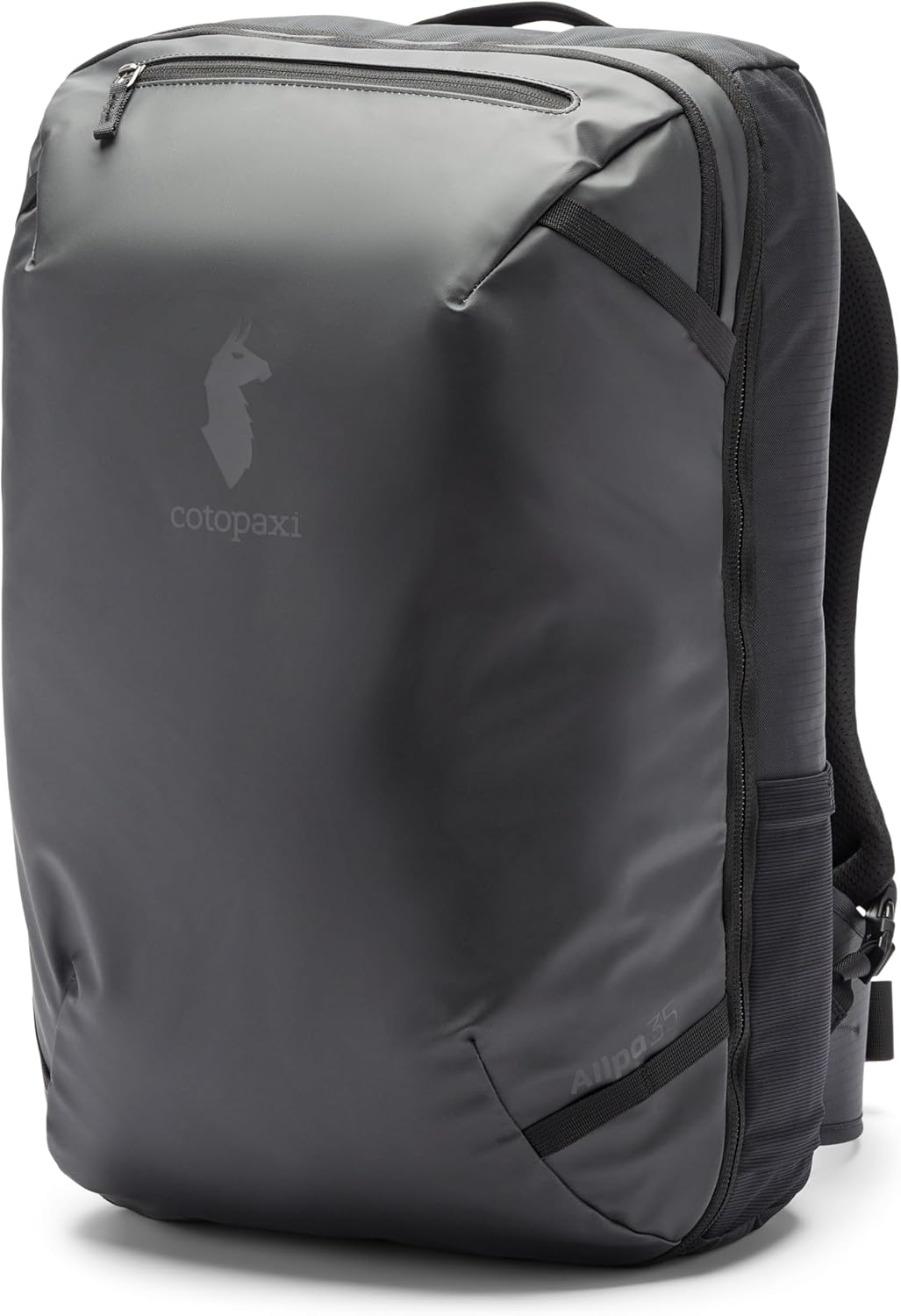
A structured, boxy bag holds its shape no matter how little is inside it. The Allpa 35L uses exactly that boxy, structured shape — it holds its form and protects what is inside, which is why it packs and unpacks like a hard-shell suitcase. The trade is spelled out plainly in its own weak spots: the structured boxy shape holds its full volume even when half empty. That is a feature and a limitation in one sentence. It will never compress down into a small parcel on a light day, because it is not built to.
The same truth shows up on the 20L daypack. It is a structured bag, and that is both a strength and a trade-off: it protects contents well and keeps its shape, but it does not collapse down like a soft daypack when lightly packed. Structure is a promise the bag makes to its contents — I will keep my shape around you — and the cost of that promise is that it keeps its shape around empty air too.
Contrast that with a softer-sided bag. The tomtoc's soft-sided structure offers less protection than a more rigid pack, but the flip side is that a soft bag can slump and give back some of its bulk when it is not full. Neither behaviour is correct; they are opposite answers to the same question. If you want a bag that guards a laptop and a camera and always opens flat like a suitcase, you want structure and you accept that it is always "there." If you want a bag that disappears once the gear comes out, you want the soft one and you accept less protection.
The practical move is to picture the bag at its emptiest realistic moment — arriving at a hotel, gear unpacked, the bag sitting in a corner — and decide whether you want it to hold that space or give it back.
Our recommendation: if the bag will usually ride full and protect fragile gear, buy the structured shell and stop wishing it would shrink. If it will often ride half empty and you hate a bag that takes up a room, buy the softer one and give up some crush protection.
3. Where the Laptop Lives#
A travel backpack is also a laptop bag, and where the laptop lives decides how the bag behaves at security and how protected the machine is the rest of the time.
The tomtoc puts its emphasis on access: the laptop compartment is built to open 180 degrees, folding flat for airport screening, and it takes machines up to 17.3 inches — more generous than many travel bags in its class. A compartment that lays flat can make screening smoother where a laptop has to be scanned on its own. What it cannot do is promise you anything about the rules, because laptop-removal requirements vary by airport and by country: some checkpoints want the laptop out and in its own tray, others let you leave it in a compliant bag, and it changes over time and between lanes. Treat a flat-opening compartment as a convenience that helps when a laptop must come out, not as a guarantee that it will not have to.
The other two bags treat the laptop as cargo to protect rather than to present. The Allpa carries a padded sleeve for up to a 15-inch laptop with a separate tablet pocket beside it, kept in a back sleeve so the electronics stay flat and easy to pull. The 20L daypack has a dedicated rear compartment for a 15-inch laptop or a 16-inch MacBook Pro plus a tablet and papers, deliberately separated so work gear does not end up buried under clothing.
So the real choice under "laptop" is orientation of the whole bag. A bag built to open the laptop flat is a bag optimised for frequent screening. A bag built to sleeve the laptop against the back panel is optimised for protection and quick grab. Match it to which one you do more often.
Our recommendation: if you go through security constantly with a large machine, prioritise the flat-opening laptop compartment and the larger size ceiling — while remembering the rules themselves vary by airport. If the laptop mostly rides between home and a desk, a padded back sleeve with a separate tablet pocket serves it better.
4. Locks, and What a Zipper Cannot Do#
Security is where a travel bag either lets you walk away from it or does not, and the deciding hardware is the humble zipper.
The Allpa closes both main compartments with burly YKK zippers whose pulls meet at lash points you can secure with a small TSA-style padlock. That is the rare feature that lets you lock the main clamshell shut and leave the bag — in a hostel dorm, a shared locker, or a luggage room — which most travel backpacks simply cannot do. Both compartments lock, not just one, so there is no soft underbelly left open while the front is secured.
The honest limit belongs in the same paragraph as the feature. A padlock through two zipper pulls stops the casual grab: it turns an easy target into a meaningfully harder one and buys peace of mind. It does not make the bag theft-proof. Fabric can be cut, zippers can be forced, and a determined thief with time is a different threat than an opportunist walking past a dorm bunk. Lockable zippers raise the effort and the noise required to get in; that is their whole job, and it is worth having, but it is a deterrent rather than a safe.
The tomtoc uses the same class of YKK hardware for durability, but leans on organisation — a hidden quick-access front entry and multiple pockets — rather than a lock-the-whole-thing-shut design. That is a legitimate different priority: fast reach for a passport and a power bank at the gate, versus lock-and-leave when you are staying somewhere shared.
Our recommendation: if you will ever leave the bag unattended among strangers, insist on lockable zippers on every main compartment and carry the small padlock that unlocks the feature. Then treat the lock as what it is — a deterrent that buys effort and time, not a guarantee — and keep the truly irreplaceable items on your body.
5. The Bags Inside the Bag, and the One Beside It#
A 35 or 40 litre main compartment is only as organised as what you put inside it, and this is where two accessories earn their place — not as the main bag, but as the system that keeps it from becoming one deep pit.
Inside the main compartment, a packing cube does the sorting the bag itself cannot. The Peak Design Packing Cube Small expands from roughly 4.5 litres compressed to 9 litres opened, so it stays trim for a disciplined outbound pack and swallows the extra layers a return trip collects — real compression, not a floppy soft pouch. Its tear-away UltraZip peels open faster than the long horseshoe zipper on ordinary cubes, and an internal divider keeps clean clothes on one side and worn ones on the other, so one cube often covers a whole weekend's clothing without a second laundry bag. At about 109 grams it adds organisation without eating meaningful luggage weight: View on Amazon
Beside the cube, in the small-items role, sits the Field Pouch V2 — the pouch that lives inside the bag on travel days and becomes a small sling once you arrive. It expands from 1.5 to 3 litres and carries one zippered pocket plus eight stretch pockets, enough structure to keep cables, batteries, cards and a passport from vanishing to the bottom of the bag, without turning rigid. A weatherproof 400D nylon shell shrugs off light rain and rough bag transfers, and the included strap converts it from an in-bag organiser into a walk-around bag in seconds. Packed light, the two organisers together come in around 280 g — the roughly 109 g cube plus the 170 g pouch — a small tax for turning a single cavity into a sorted system: View on Amazon
The distinction to keep straight is that these are accessories, not answers. Neither one replaces the travel backpack; they multiply what a good one is worth. A structured 35L pack with a cube and a pouch inside is a packing system. The same pack with everything loose is a sack.
Our recommendation: budget for at least one packing cube in the main compartment and one small pouch for the loose essentials before you decide the main bag is not organised enough. Most "this bag is a mess" complaints are really "this bag has no cube in it."
Three Bags, Three Different Answers#
None of these is the best bag in the abstract; each resolves the five decisions differently.
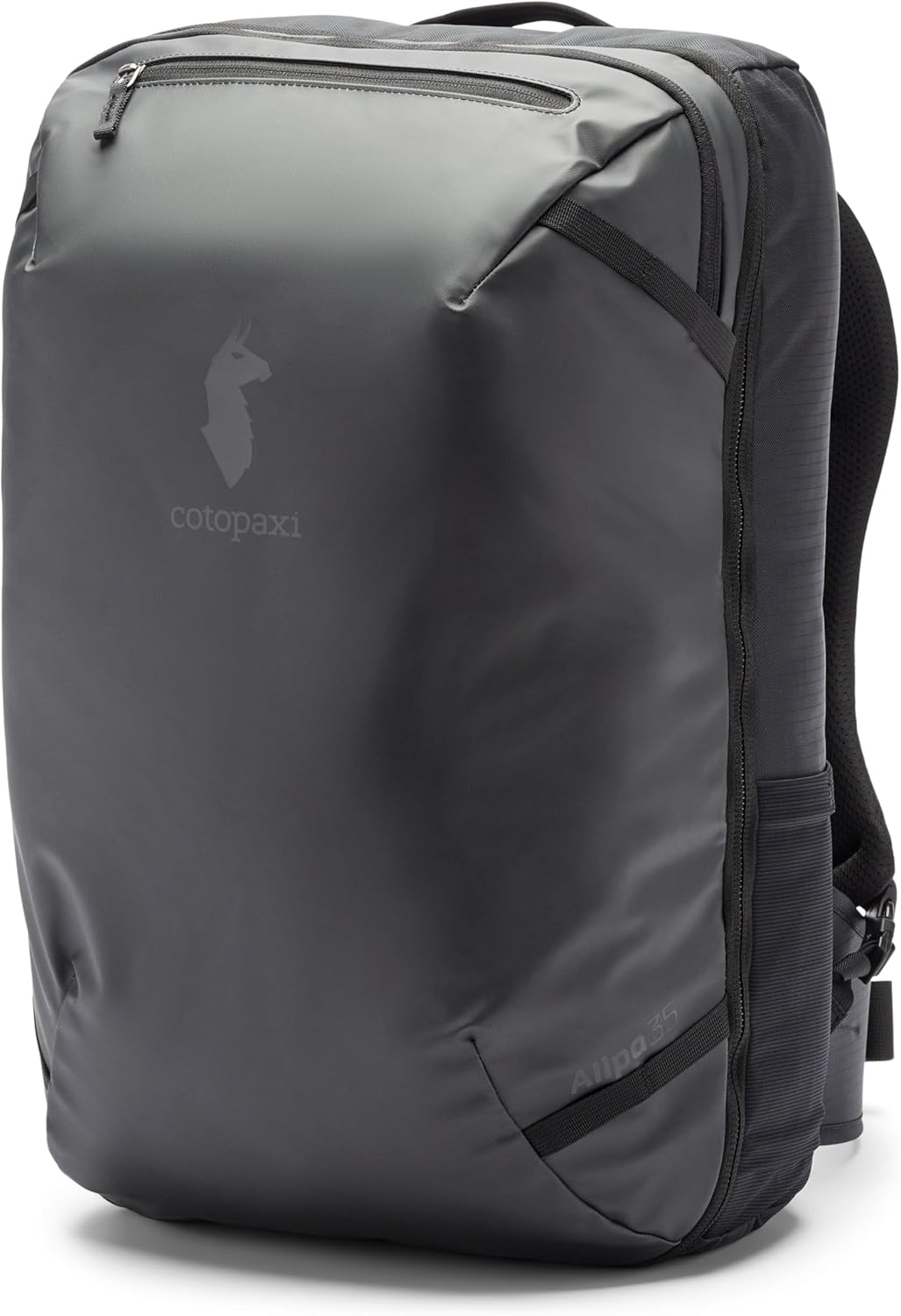
The Cotopaxi Allpa 35L is the lock-and-leave, pack-like-a-suitcase answer. Its structured shell opens into a full clamshell, both main compartments lock with YKK zippers, and a stowable harness hides away for clean stowage or checking. It stays under the carry-on ceiling at 35L and always holds its shape — which is exactly why it protects a load and exactly why it never shrinks on a light day. If your priority is suitcase-style organisation you can lock and walk away from, this is the shape that solves it: View on Amazon
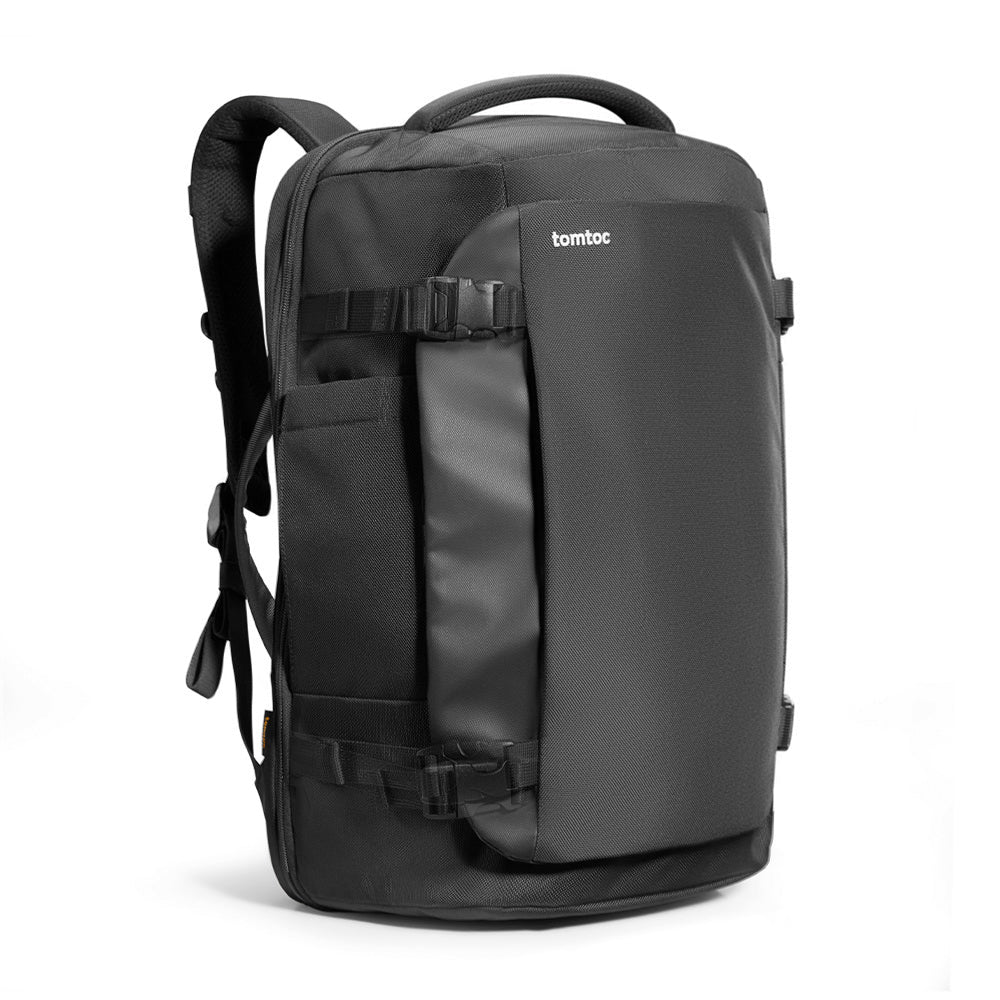
The tomtoc Navigator-T66 40L is the frequent-flyer answer. It sits right on the 40L carry-on ceiling, opens clamshell-flat, folds its laptop compartment to 180 degrees for screening and takes machines up to 17.3 inches, with a hidden quick-access entry for the things you grab at the gate. Its soft-sided build protects a little less than a rigid pack, but gives you the largest usable capacity here and the fastest airport handling: View on Amazon
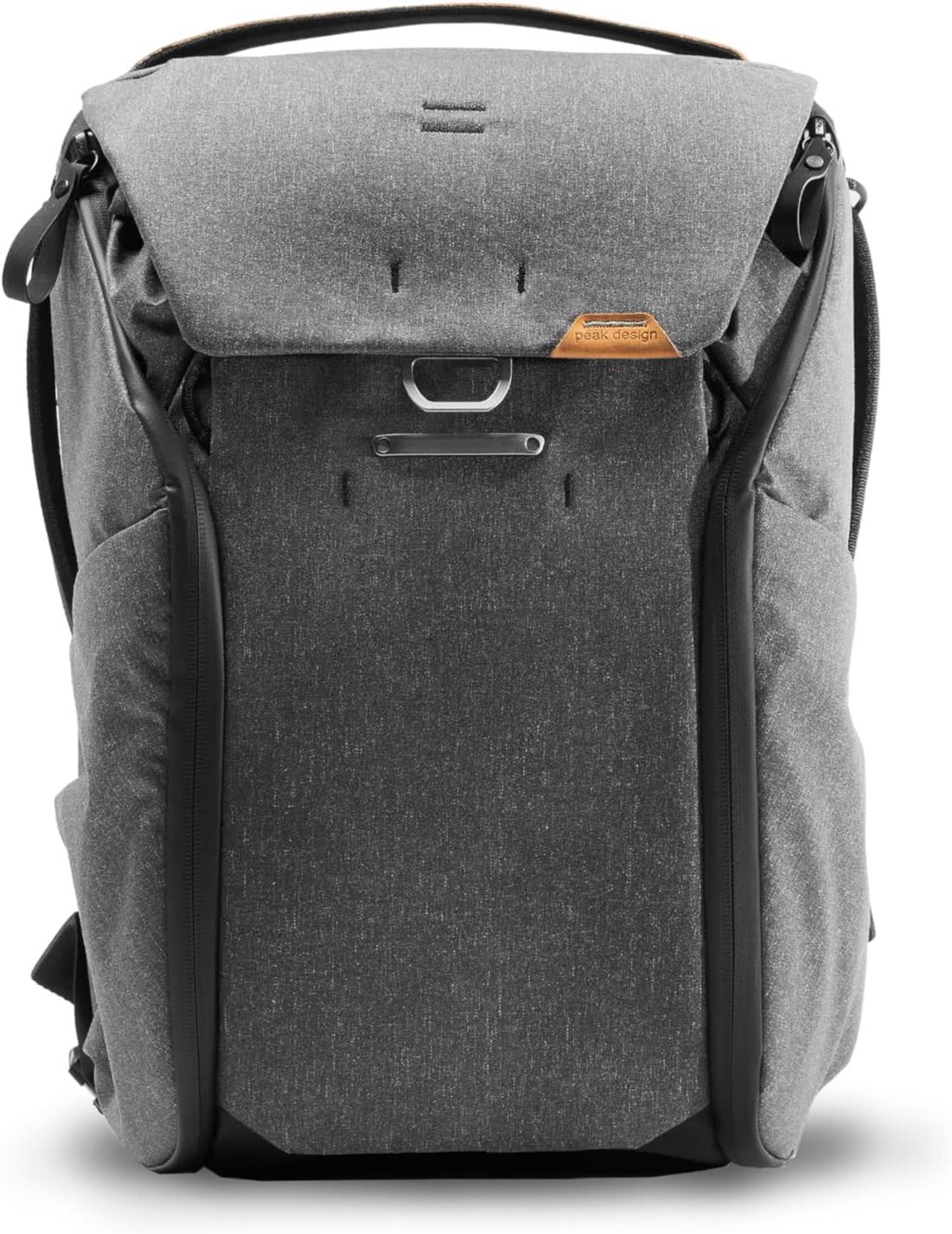
The Peak Design Everyday Backpack 20L is the daypack answer, and it carries no affiliate link here because it is the third size, not a one-bag-travel pack. Expanding between about 17 and 20 litres, it is the structured everyday bag that takes a 15-inch laptop or 16-inch MacBook Pro plus a tablet, and like the Allpa it does not collapse down like a soft daypack when lightly packed. It is the answer when the "trip" is really a long day with gear, not five days of clothes.
How to Choose in Five Minutes#
Start with capacity. Count the actual days. Three to five days one-bag points at 40L and no higher; most one-bag trips are happier at 35L; a day out with a laptop wants a 20L daypack, not a travel pack shrunk down.
Then decide how it should behave empty. If it will ride full and guard fragile gear, buy the structured shell and accept that it never shrinks. If it will often ride half empty and you resent a bag that hogs space, buy the softer one and accept less crush protection.
Then place the laptop. Constant screening with a big machine favours the flat-opening compartment and the larger size ceiling — while remembering removal rules vary by airport and country. Desk-to-home mostly favours a padded back sleeve with a separate tablet pocket.
Then check the locks. If you will ever leave the bag among strangers, insist on lockable zippers on every main compartment, carry the padlock, and remember it is a deterrent rather than a safe.
Finally, sort the inside. Add a packing cube for the clothes and a small pouch for the loose essentials before you blame the bag for being disorganised — because a structured pack with a cube and a pouch is a system, and the same pack empty is just a sack.