

At a Glance#
The five decisions : What the waterproof rating actually certifies, whether the pairing is an open standard or a vendor's own, the codec, the mechanism behind the bass floor, and how the speaker attaches to you
The one most people get wrong : Reading the wattage figure as the outdoor-loudness answer — that number is already settled by any roundup, and it tells you nothing about whether two of these speakers will ever talk to each other
The spec that matters instead : The pairing standard printed in the manual — an open one and a proprietary one are not the same purchase even when both say "pair two speakers"
The quiet dealbreaker : An IP67 badge read as "survives anything wet" — it certifies a still-water dunk, not a poolside jet, and it says nothing about floating or a shell that survives the drop
Key Highlights:
- IP67 is a fresh-water immersion test, not a promise about pressurised jets, salt, or a fall onto rock
- Auracast is a public Bluetooth standard; PartyBoost and SimpleSync are each one company's own system
- A spec sheet that never names a codec usually means SBC, but a maker's support page can say otherwise
- A passive radiator and a port are two ways to buy the same low end; a sealed box buys none of it
- The attachment — integrated carabiner, fabric loop, or nothing — decides whether the speaker rides outside the bag or inside it
Who This Is For#
Portable-speaker spec sheets flatter the easy numbers. Watts and battery hours are printed large; the rating's fine print, the pairing standard, and the codec sit in a table nobody reads. Yet those are the lines that decide whether the speaker survives the specific thing you were worried about, whether it will ever pair with the one you buy next year, and whether it sounds like music or like a slightly bigger phone.
This page is deliberately not a loudness or battery comparison — those are answered elsewhere, and answered well. It is about the four or five spec-sheet lines that a headline number quietly talks you out of reading.
Especially useful if you are:
- A first-time buyer who has noticed that "IP67" and a wattage figure are on every box and stopped being able to tell the boxes apart
- Someone who already owns one speaker and wants the second one to actually pair with it
- A pool, beach, or shower user who needs to know exactly what the waterproof badge does and does not cover
- A careful listener deciding whether a compact speaker's bass limit is a marketing choice or a law of physics
1. What the Waterproof Rating Actually Certifies#
Nearly every rugged speaker now carries the same badge, so the badge has stopped being a differentiator and started being a place people stop thinking. IP67 is two separate claims. The 6 is the dust digit: fully sealed, dust-tight. The 7 is the water digit: tested by immersion in fresh water to one metre for thirty minutes. That is the whole certificate. It is a static dunk in clean water, and everything people casually assume it covers is somewhere outside it.
Two things fall outside it in particular. First, jets. Resistance to a pressurised jet is a different test — IPX6 — and IP ratings are not cumulative. A device certified for immersion has not been certified against a jet, because the two are separate assessments and a maker only prints the ones it ran. In practice most good speakers are fine at a poolside, but "it passed the dunk test" is not the sentence that tells you so. Second, the test uses fresh water; salt water and pool chemistry are corrosion questions the rating does not speak to at all.
This is why two features that feel like part of "waterproof" are actually separate purchases. Floating is one: a speaker that floats does so because of how it is built, not because of its IP number, and only one of the three speakers here says it floats. A tough shell is the other: surviving a drop onto rock, or rust, is a durability property sitting entirely beside the water rating. Read the badge as exactly what it is — a sealed, clean-water dunk — and treat buoyancy and impact-survival as things you confirm one line further down the page.
Our recommendation: Do not pay a premium for a higher-sounding IP badge. Confirm IP67 for peace of mind around water, then decide the questions the badge never answered — does it float, and will its shell survive the drop — as their own line items.
2. The Pairing Standard, Not Just "Pairs Two Speakers"#
Every speaker in this class advertises multi-speaker pairing, and the words all sound interchangeable. They are not, and the difference is a standard versus a brand. Auracast is part of Bluetooth LE Audio — a public specification any manufacturer can build to. PartyBoost (JBL) and SimpleSync (Bose) are proprietary: each is defined, and only ever extended, by the company that owns it, and each links that company's own compatible models.
Among the folded picks this splits cleanly. The compact JBL leans on Auracast, the open standard. The Flip 6 uses JBL's proprietary PartyBoost. The Bose links only to compatible Bose speakers, in Stereo or Party Mode, and to Bose smart soundbars and speakers over Bose's proprietary SimpleSync. The honest way to read that is not to predict a specific failure between any two units — pairing behaviour depends on firmware and the exact models — but to notice that "pairs two speakers" is describing three different commitments. A proprietary system ties your future purchases to one vendor's roadmap; an open standard is defined in a public spec that more than one brand can implement. Notably, even inside a single brand, an older proprietary system and a newer open one are different mechanisms — owning two JBL speakers is not, on its own, a guarantee they share a pairing method.
If you never intend to own more than one speaker, this criterion costs you nothing and you can skip it. The moment you imagine a second one, it becomes the first thing to check, because it is the one decision a firmware update cannot undo after the fact.
Our recommendation: Decide now whether you are buying one speaker or starting a collection. For one, ignore the pairing badge entirely. For a collection, choose the standard before the speaker — commit to an open one, or commit to a single vendor's proprietary one, and buy within that lane deliberately.
3. The Codec, Which Almost Nobody Prints#
Here is a line that is usually missing, and the absence is itself the information. Every Bluetooth speaker must support SBC, the mandatory baseline codec. Better fidelity comes from optional codecs — AAC, which Apple devices favour, or aptX on many Android phones. When a spec sheet names one of those, it is advertising it. When it names none, the answer is usually SBC, though a maker's support page can say more than its spec sheet.
Watch the sleight of hand on these three sheets. Two list a Bluetooth profile — "A2DP 1.4", "A2DP 1.3" — and no codec. A2DP is the profile that carries stereo audio at all; its version number is not a codec and says nothing about fidelity. The Bose product page names no codec either, but Bose's support page for the second-generation Flex says a Snapdragon Sound-certified device, such as a compatible Android phone, streams to it with the aptX Adaptive codec. The only speaker in this wider family whose spec prints the word is the budget JBL, and what it prints is "SBC" — no AAC, no aptX. So a silent sheet is a question, not an answer: for the JBLs it most likely means SBC, for the Bose it does not.
How much this matters scales with the speaker. On a single small driver the codec is nearly moot — the transducer is the bottleneck long before the codec is, and SBC is fine. It starts to matter as the speaker grows, and for AAC listeners on iPhones who would otherwise get a cleaner stream. On a pocket speaker, treat a missing codec line as "SBC, and it does not matter here." On anything you are buying partly for sound, treat the missing line as a question worth asking before you buy.
Our recommendation: Do not chase a codec on a compact single-driver speaker; SBC is not the weak link there. Only start weighing AAC or aptX once the speaker is large enough and the source good enough for the codec to be the thing holding the sound back.
4. The Mechanism Behind the Bass Floor#
The low-frequency number on a spec sheet — where the frequency response stops, such as "63 Hz" or "95 Hz" — is real, but it is an outcome, not a design. What produces it is the enclosure, and there are three approaches. A sealed box is the simplest and gives up the most low end. A ported (bass-reflex) enclosure adds a tuned vent that lets internal air motion reinforce the lowest notes. A passive radiator does the same job with a tuned, coil-less diaphragm driven by the pressure inside the cabinet instead of an open hole. Both the port and the passive radiator exist to buy low end that a sealed box of the same size cannot reach.
You can watch this in the numbers. The cylindrical mid-size JBL carries dual passive radiators — the visible discs on each end — and its response reaches down to about 63 Hz. The compact carabiner JBL, without that machinery, floors out around 95 Hz. That roughly one-octave gap is not a quality verdict; it is the physical cost of the smaller sealed body against the radiator-loaded one. The Bose is the one to read twice: Bose's own product page publishes no frequency floor, while its product listing gives 40 Hz with no mechanism named beside it — a number you cannot check, which you should weigh as "unknown", not as "good".
So the low-frequency spec is worth reading twice: once for the number, once for the mechanism that had to be present to reach it. A deep floor on a tiny sealed speaker would be the claim to distrust; a deep floor backed by visible radiators or a stated port is a claim with a mechanism behind it.
Our recommendation: Do not compare bass on the frequency number alone. Match the claimed low end to a visible mechanism — passive radiators or a stated port — and treat a low figure with no mechanism, or no published figure at all, as unproven.
5. How It Attaches to You#
The last decision is the one that never reaches the audio section, and it is the one you interact with every single time: how the speaker connects to a bag, a strap, or a hand. The three folded here answer it three different ways, and the answer changes where the speaker rides.
The compact JBL is built around an integrated carabiner — a load-bearing metal clip that is part of the body, on a roughly 285-gram package. That is a speaker designed to hang on the outside of a pack, clipped to a strap or a belt loop, where it is grabbed without opening anything. The cylindrical mid-size JBL, at 550 grams, has no attachment point at all; its whole carry story is that the cylinder drops neatly into a water-bottle pocket and rides inside the bag. The Bose, around 590 grams, splits the difference with a fabric utility loop — enough to slip over a carabiner or a branch, but a soft loop, not a structural clip you would trust to bounce on a strap all day.
None of these is better in the abstract; they suit different carries. If the speaker lives clipped to the outside of a day pack, the integrated metal carabiner is the only one of the three actually engineered for that. If it lives inside the bag anyway, the attachment is irrelevant and weight and shape decide. A fabric loop is the hedge — occasional hanging, not permanent clipping. The mistake is buying the loop expecting the carabiner, or buying the bottle-pocket cylinder expecting to clip it on.
Our recommendation: Picture the exact spot the speaker will ride before you compare anything else. Outside the pack means an integrated carabiner; inside the pack means the attachment does not matter and you should weigh and shape instead; occasional hanging is what a fabric loop is for.
Three Speakers, Three Different Answers#
None of these is the winner in the abstract. They resolve the five decisions differently, and the right one is whichever set of answers matches how you will actually carry and use it.
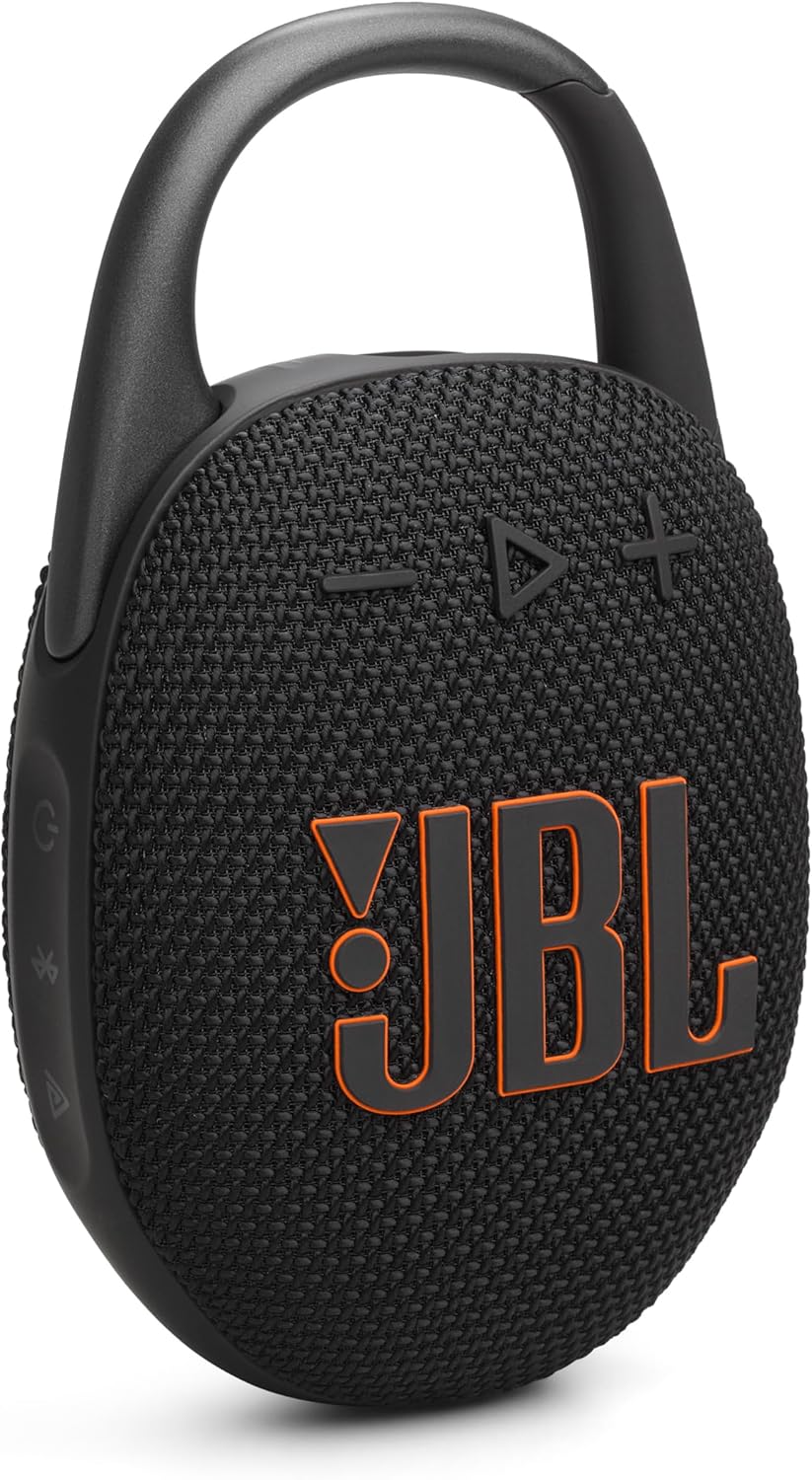
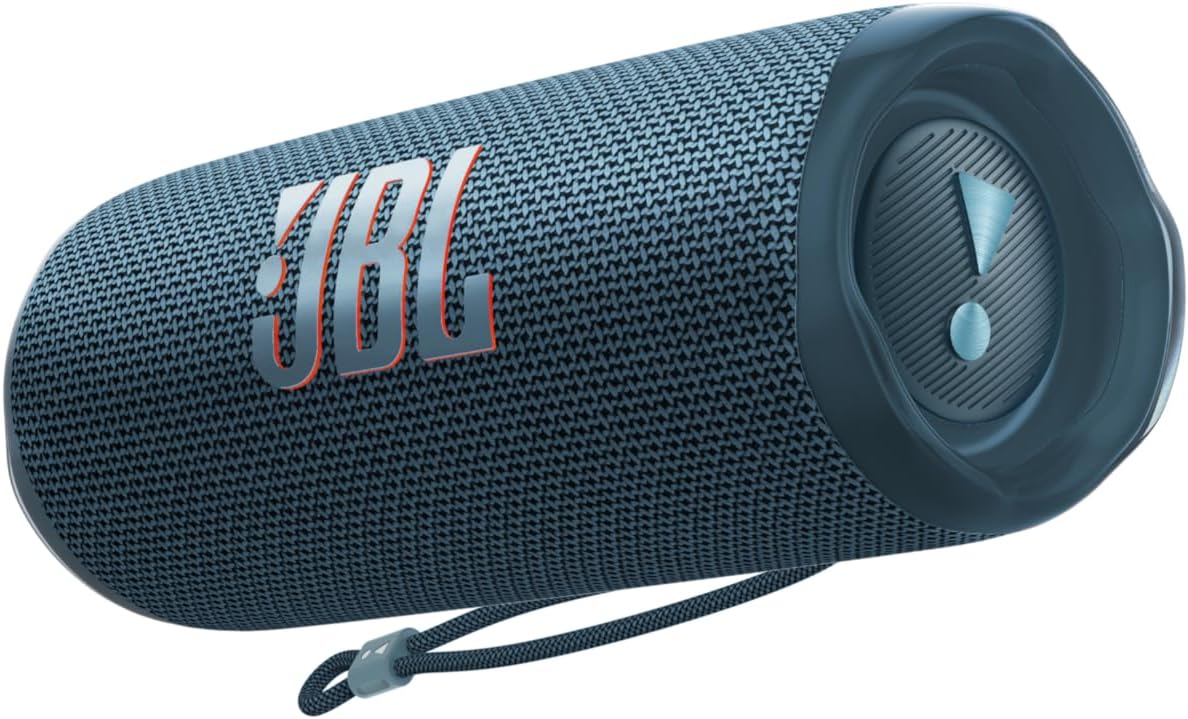
The JBL Clip 5 is the ride-outside answer. Its integrated metal carabiner is the only genuinely load-bearing clip of the three, it leans on Auracast — the open pairing standard rather than a proprietary one — and its roughly 95 Hz sealed body is honest about what a package this small can do for bass. If the speaker's job is to hang on a strap and be grabbed without a second thought, this is the shape built for it: View on Amazon
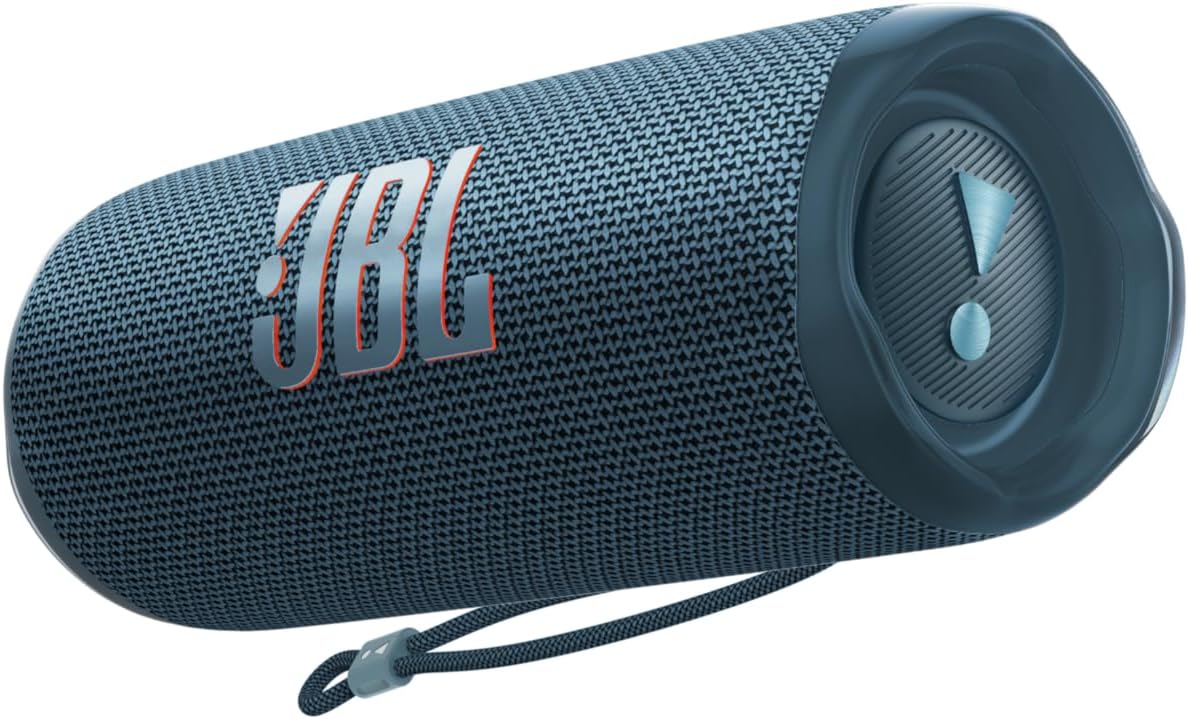
The JBL Flip 6 is the mechanism-backed sound answer. Its dual passive radiators are the visible reason its response reaches down near 63 Hz, roughly an octave lower than the compact model — a low end with a mechanism behind it rather than a bare number. Its pairing is JBL's proprietary PartyBoost, so it is a commitment to one vendor's ecosystem if you grow a collection: View on Amazon
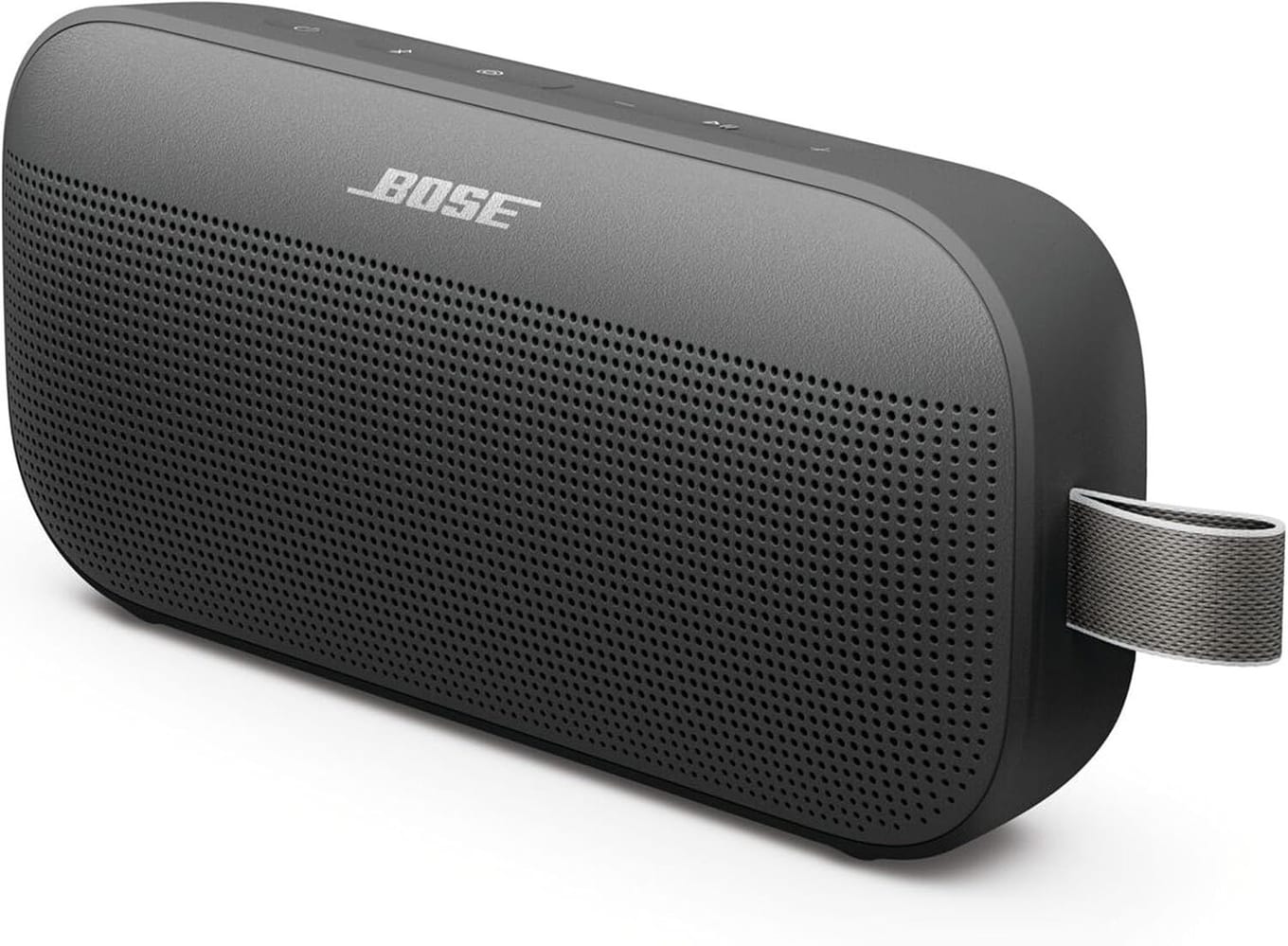
The Bose SoundLink Flex (2nd Gen) is the durability-and-water answer, on its own terms. Bose says it floats — something its IP badge does not certify — though not that it is designed to be used in the water, and calls its silicone-wrapped body drop, shock, and rust-resistant, which answers the drop question the rating never did; after salt or chlorinated water, Bose says to rinse it in fresh water. It links only to compatible Bose speakers and soundbars, and the 40 Hz on its product listing comes with no mechanism beside it, so read its bass floor as "unknown, judge by ear": View on Amazon
How to Choose in Five Minutes#
Start with the rating's fine print. Confirm IP67 for the dunk, then separately confirm the two things the badge never covered — whether it needs to float, and whether its shell has to survive a fall onto rock or a season of salt.
Then settle the pairing question by answering one thing: one speaker, or a collection? For one, skip it. For a collection, pick the lane — an open standard or a single vendor's proprietary system — before you pick the speaker.
Then read the codec line; a missing one usually means SBC, but check the maker's support pages before you assume it. On a compact speaker that is fine; only chase AAC or aptX once the speaker is big enough for it to be the bottleneck.
Then check the bass floor against its mechanism — a low number with visible passive radiators or a stated port is earned; a low number or no number on a bare sealed box is not.
Finally, picture the exact spot it will ride, because an integrated carabiner, a fabric loop, and no attachment at all are three different products.