

At a Glance#
The five decisions : Fit and seal, how noise is handled, device switching, battery reality, water and sweat rating
The one most people get wrong : Fit — a poor seal destroys both bass and noise cancelling, and no setting recovers it
The spec that sells but rarely matters : Codec support, unless you already own hardware that uses it
The quiet dealbreaker : Multipoint — without it you re-pair by hand every time you switch phone to laptop
Key Highlights:
- A sealed tip is what makes bass and noise cancelling work; the wrong size undoes both
- Open-ear designs deliberately give up the seal to keep you aware of traffic and colleagues
- Battery numbers on the box include the case — the figure that matters is hours per charge
- ANC is not one feature: flattening a train carriage and muting an office are different jobs
- IPX4 survives rain and sweat; it does not survive being dropped in water
Who This Is For#
Earbuds are the product category with the widest gap between what marketing emphasises and what you actually notice. This page is for anyone comparing two pairs whose spec sheets look identical and wondering what the price difference buys.
Especially useful if you are:
- A commuter deciding whether noise cancelling is worth paying for on your particular route
- Someone who runs or cycles outdoors and has been told to avoid sealed earbuds entirely
- Anyone juggling a phone and a laptop who is tired of re-pairing several times a day
- A first-time buyer who wants to know which specs to ignore
1. Fit and Seal: The Decision Everything Else Depends On#
Almost every complaint about earbuds traces back to fit. Thin bass, noise cancelling that "doesn't work", buds falling out on a run — these are usually a seal problem wearing a different costume.
A sealed tip does two jobs at once. It blocks outside noise passively, before any electronics are involved, and it creates the closed volume that lets a tiny driver produce bass at all. Break the seal and you lose both, and no amount of EQ brings them back.
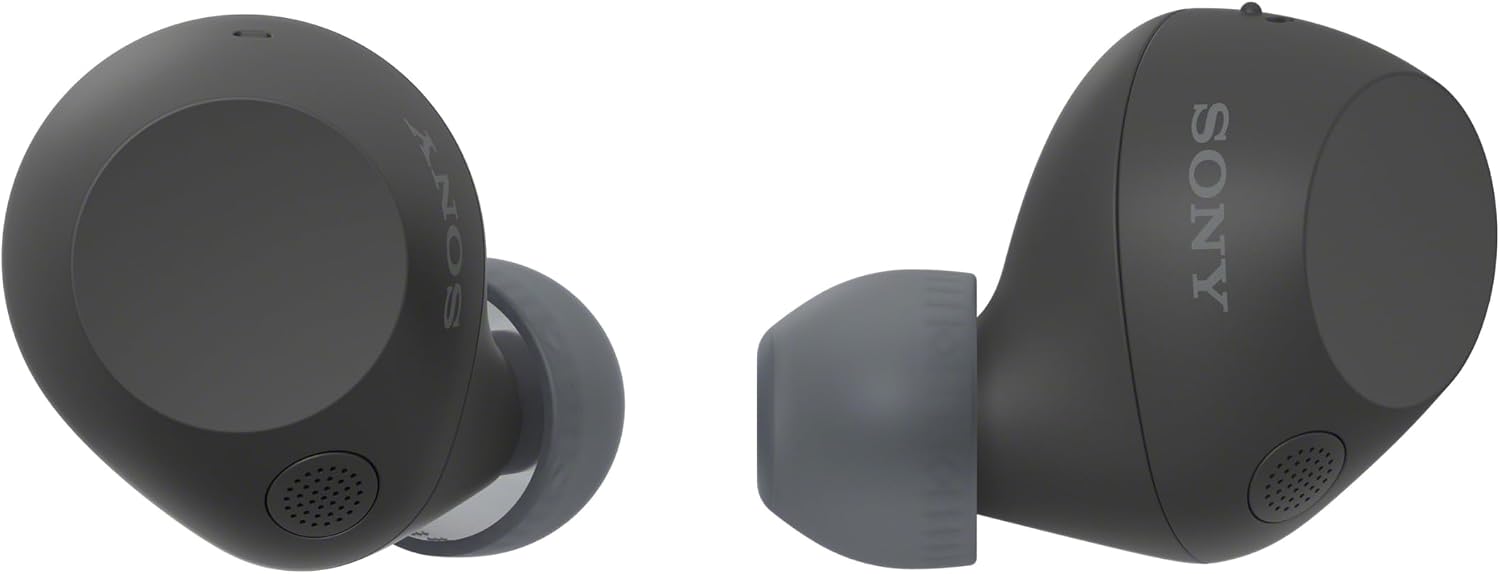
This is why weight matters more than it sounds like it should. The Sony WF-C710N weighs about 5.2 grams per bud by Sony's figure, with the medium tips fitted, and Sony's listing calls them lightweight and comfortable. Light buds stay sealed because they are not slowly working themselves loose: View on Amazon
There is a deliberate exception. Open-ear designs give up the seal on purpose so you can hear traffic, announcements and colleagues. You lose passive isolation and deep bass; you gain awareness and the ability to wear them all day without ear fatigue. Shokz built the OpenFit Pro around this trade and then narrowed it, layering active noise reduction onto an open design — awareness without simply surrendering to the noise. Set expectations honestly: Shokz quotes no reduction figure of its own, and the one published measurement found attenuation peaking around 13dB, concentrated in the midrange and falling away to nothing in the deep bass. That is a meaningful dent in a hum, not the wall of silence a sealed bud gives you: View on Amazon
Our recommendation: try every tip size in the box, including the ones you assume are too big. Most people are wearing tips one size too small. If the buds are mainly for training, fit stops being one criterion among five and becomes the whole decision.
2. What "Noise Cancelling" Is Actually Doing#
ANC is sold as a single feature and is really several, each better at a different problem.
It works best on low, constant sound — the drone of a train, an aircraft cabin, a bus engine, air conditioning. That is where the technology genuinely feels like magic, and it is why commuters rate it so highly.
It works poorly on sudden, high sound — a voice, a door, a keyboard. If your goal is to mute a chatty office, ANC will disappoint you; what actually helps there is a good seal plus something playing.
Adaptive ANC samples the room and shifts the cancellation curve rather than running flat out. The Anker Soundcore Liberty 4 NC does this well, tapering off in a quiet office and applying the full effect in a carriage without you noticing the transition — which is the whole point of it being adaptive: View on Amazon
Transparency or ambient mode is the reverse: microphones feed the outside in so you can hold a conversation without removing a bud. If you switch between these constantly, check how quickly and how easily the pair does it — a mode you have to hunt for in an app is a mode you stop using.
Our recommendation: match this to your actual environment. If your noise is voices rather than engines, spend the money on fit and battery instead.
3. Device Switching: The Feature Nobody Advertises#
Multipoint lets earbuds hold a connection to two devices at once and move audio between them automatically — the laptop call takes over from the phone podcast and hands it back when the call ends.
It sounds minor until you live without it. Without multipoint, every switch is a manual re-pair through a Bluetooth menu, several times a day, and the practical result is that you stop switching and just leave them on one device.
All four pairs here support it — the Sony WF-C710N, the Liberty 4 NC, the budget P30i, and the OpenFit Pro over Bluetooth 6.1. It is common enough now that its absence is the thing to check for, particularly on cheaper pairs where it is the first feature cut.
Our recommendation: if you own both a phone and a laptop, treat multipoint as required rather than a bonus.
4. Battery: Read the Second Number#
Battery claims are quoted two ways and the impressive one is the less useful one.
Total with case is the headline. The Liberty 4 NC and the OpenFit Pro both reach roughly 50 hours this way. It tells you how often you plug in the case, which for most people is about once a week regardless of the pair.
Hours per charge is the number that decides whether the buds die mid-flight, and it is the one to read in the state you will actually use. The OpenFit Pro is quoted at about 12 hours with its noise reduction off and roughly 6 with it on; the Liberty 4 NC around 10 off and 8 on. Anything under about 5 in your working state means a long journey needs a case break.
Two things the box will not tell you. ANC costs battery — anywhere from a fifth to a half of the per-charge figure, and the spread is wide even inside this handful of pairs: the Liberty 4 NC gives up about a fifth, the Sony a little under a third (8.5 hours against 12), while the OpenFit Pro drops from 12 hours to 6 and the P30i from 10 to 6. And which state the quoted number refers to varies by brand, so it is worth checking rather than assuming: Sony headlines its ANC-on figure, while Soundcore and Shokz headline the ANC-off one. Finally, quick charge matters more than total capacity for daily use — ten minutes in the case before you leave is worth more than an extra five hours you never reach.
Our recommendation: work out your longest single listening session and compare that against hours-per-charge with ANC on. The total-with-case number is close to irrelevant.
5. Water, Sweat and What the Rating Means#
The IP rating is two digits and only the second one concerns most buyers. IPX4 means splash resistant from any direction — rain and sweat are fine, submersion is not. That covers the gym and a wet walk home, and it is what the Sony WF-C710N carries.
IP55, as on the OpenFit Pro, adds meaningful dust protection alongside stronger water resistance — the difference matters if you train outdoors, work on a site, or live somewhere genuinely dusty.
The point worth internalising: sweat is more corrosive than rain, and it is what kills gym earbuds. If they are going to the gym, do not go below IPX4, and be sceptical of any pair that omits a rating entirely.
Our recommendation: buy for the wettest thing you will actually do, not the wettest thing you can imagine.
Four Pairs, Four Different Answers#
None of these is the best pair in the abstract. Each resolves the five decisions differently, and that is the useful way to read them.
The Sony WF-C710N, which What Hi-Fi? describes as the replacement for Sony's WF-C700N, answers the fit question. Sony puts each bud at about 5.2 grams with the medium tips and calls the pair lightweight and comfortable, and it adds multipoint, an ambient sound mode, Sony's DSEE processing and IPX4. Start here if fit and seal are what went wrong with your last pair: View on Amazon
The Anker Soundcore Liberty 4 NC answers the commute question. Adaptive ANC that genuinely flattens a carriage, LDAC for Android, multipoint, and 8 hours per charge with the ANC running — 10 with it off, 40 and 50 respectively with the case. Its app includes a hearing test that maps EQ to your own hearing curve, which pulls the default bass-forward tuning closer to neutral where podcasts and calls live: View on Amazon
The Shokz OpenFit Pro answers the awareness question. Open-ear, so nothing is sealed into your ear canal, but with active noise reduction layered on — the one published measurement puts the reduction at a midrange peak near 13dB, so read it as taking the edge off rather than shutting the world out. Bluetooth 6.1, about 12 hours per charge with the reduction off and 6 with it on (50 and 24 with the case), IP55, and Dolby Atmos optimisation with a 10-band EQ. If you run on roads or need to hear a room, this is the category: View on Amazon
The Soundcore P30i answers the budget question, and it does it without giving up noise cancelling — Soundcore rates it at up to 42dB with adaptive level selection and a transparency mode. What you give up is elsewhere: battery drops from about 10 hours to 6 with ANC running, and the tuning is less refined than the Liberty 4 NC's. If those trade-offs suit you: View on Amazon
How to Choose in Five Minutes#
Start with where you will wear them. On roads or in a room where you must hear people, you want open-ear and the rest of the list barely applies. Everywhere else, you want a seal.
Then ask what your noise actually is. Engines and drone reward noise cancelling heavily. Voices and keyboards barely respond to it, and the money is better spent on fit and battery.
Then check multipoint, because if you use a phone and a laptop its absence will annoy you daily for as long as you own them.
Then read hours per charge with noise cancelling on, not the total-with-case headline, and compare it against your longest journey.
Finally match the water rating to what you really do — IPX4 for rain and the gym, IP55 if outdoors and dust are part of your week.
If you want one pair that handles a commute without further research, the Liberty 4 NC is the one that clears all five: View on Amazon