

At a Glance#
The five decisions : Which of the three machines the job needs, what the motor actually buys you, container size and where it will live, what the machine can physically process, and how you control and clean it
The one most people get wrong : Shopping on wattage — a high number does not settle whether a blender can crush ice, and a personal blender's watts and a countertop machine's watts are not the same currency
The spec that matters instead : Form factor — a full-size jar, a personal single-serve, and an immersion wand are three different tools, and the right one is decided by the job before any number on the box
The quiet dealbreaker : A full-size container that stands over 20 inches tall and will not fit under your upper cabinets, so it lives out on the counter whether you wanted that or not
Key Highlights:
- "Blender" is really three machines — a countertop jar, a personal single-serve cup, and an immersion wand — each winning a different job
- Wattage is a weak predictor of results; the sources show a 900-watt personal cup and a roughly 2-horsepower Vitamix are not comparable on watts alone
- A full-size jar can stand over 20 inches tall assembled and often will not fit under standard cabinets
- An immersion blender needs no jar at all — you blend the soup in the pot it cooked in
- A personal blend cup doubles as the travel cup you drink from, which is the whole point of single-serve
Who This Is For#
Blender specifications flatten three genuinely different machines into one wattage figure, and that figure hides the decision that actually matters. Before you compare motors, you have to decide which of the three shapes fits your kitchen and your routine — because the strongest full-size blender is still the wrong buy if what you make is one shake before the gym, and the cheapest personal cup cannot puree a stockpot of soup.
Especially useful if you are:
- A daily smoothie drinker deciding between a family-sized pitcher and a single-serve cup you blend and drink from
- A gym-goer or traveler who needs blending without a wall outlet and cannot spare counter space
- A soup and sauce cook who wants to blend in the pot rather than ladle hot liquid into a countertop jar and back
- A small-kitchen buyer weighing a tall counter machine against something that stores in a drawer
- Anyone tempted by a big wattage number who wants to know what that number does and does not buy
1. Form Factor Decides More Than Any Spec#
Two blenders with similar motors can be useless at each other's jobs, because the shape of the machine determines the job it is built for. This is the decision that comes before all the others, and it splits three ways.
A full-size countertop jar is the batch machine. A 72-ounce Ninja pitcher or a 64-ounce Vitamix container blends for a household, crushes frozen fruit and ice, and — on the strongest units — grinds nut butters and even mills grain. It is the machine you buy when you blend for more than one person, or when you want the smoothest possible result and will give it permanent counter space.
A personal single-serve is the one-drink machine. You load a cup, blend, and drink from the same cup, so a smoothie can go straight from base to bag with no second container to wash. Corded personal blenders like the NutriBullet live by an outlet; the cordless, USB-C portables — the Ninja Blast, BlendJet 2, and Beast GO — go in a gym bag with no outlet in sight. The trade is capacity: you are making one or two servings per cycle, not a family batch.
An immersion (hand) blender removes the jar entirely. You bring the blade to the food, pureeing soup directly in the pot it cooked in and emulsifying a dressing in the beaker you measured it in. It stores in a drawer instead of owning a corner of the counter, and it is the answer when your blending is soups, sauces, and small batches rather than smoothies.
Our recommendation: picture the last three things you actually blended. If they fed more than one person, you want a full-size jar; if they were one drink on the move, a personal cup; if they were soup or sauce in a pot, an immersion wand. Settle the shape first, then compare inside that category.
2. Motor Power, and What It Actually Buys#
Wattage is the number every box leads with, and it is the least trustworthy one across categories. A 900-watt personal blender, a 1400-peak-watt Ninja, and a roughly 2-horsepower Vitamix are not points on one scale — power only means something compared like-for-like, inside a single form factor.
Within the full-size class, more genuine power does buy smoother results on hard ingredients. The Vitamix's roughly 2-horsepower motor liquefies fibrous kale stems and frozen chunks into a texture the mid-range Ninja's 1400 peak watts gets close to but does not quite reach, and both leave a personal cup behind on the hardest loads. What power buys here is the ability to crush ice and frozen fruit without babysitting the jar or stopping to stir.
In the portable class, voltage tells the story better than watts. The Beast GO's 3-cell, 11.1-volt battery is roughly double the voltage of the budget picks, and that is why it copes best with thick, protein-heavy, frozen-loaded blends. But every compact battery blender shares one limit the sources are blunt about: pack a cup with dry frozen fruit and no liquid and any of them will struggle. The real lever on a small machine is liquid, not wattage — a good splash of water or milk is what lets it blend ice at all.
Immersion power is about torque and control rather than a headline figure. The budget Mueller's 500-watt copper motor purees soup and crushes small batches of ice; the premium Braun wins not on a bigger number but on its ACTIVEBlade flexible shaft, which flexes to add roughly 250% more active cutting surface for a smoother puree in fewer passes.
Our recommendation: never compare wattage across form factors. Inside the full-size class, more real power buys smoother ice-crushing; inside portables, look at voltage and always add liquid; for immersion, torque plus blade design beats the raw number.
3. Container Size and Where It Will Live#
The blender you buy has to physically fit the space you have, and this is where a lot of buyers get caught. Container size is not just about how much you blend — it decides whether the machine lives on the counter, in a drawer, or in a bag.
A full-size jar is tall, and the tallest are taller than people expect. The Vitamix 5200's 64-ounce container stands over 20 inches high when installed, so it frequently will not fit under standard upper cabinets and has to sit out on the counter or be lifted into place for each use. The Ninja's 72-ounce pitcher needs vertical clearance too, at roughly 17 inches assembled. If your counter lives under cabinets, measure before you buy — this fit fact quietly rules out the biggest machines for many kitchens.
A personal cup solves the space problem by being the whole appliance. The NutriBullet's base stores in roughly the space of a large coffee mug and tucks under any cabinet; the portables are smaller still, the BlendJet 2 standing about 9 inches tall and weighing around 1.34 pounds. Capacity ranges from the BlendJet's 16-ounce jar up to the Beast's 670 mL (about 22.6-ounce) vessel — enough for one generous smoothie, not a family batch.
An immersion blender needs no dedicated container at all. The jar is whatever pot or beaker you are already using, and the wand itself stores flat in a drawer. What matters instead is reach: a shaft long enough for a deep stockpot, like the Braun's roughly 8.3-inch shaft or the KitchenAid's removable 8-inch arm.
Our recommendation: if your counter sits under cabinets, measure the clearance and treat any "over 20 inches" machine as counter-only. If space is tight, a personal cup or an immersion wand sidesteps the problem entirely.
4. What the Machine Can Actually Process#
Beyond a plain smoothie, the three shapes diverge sharply on what they can handle — hot liquids, ice and frozen fruit, and dry or thick jobs. Match this to what you cook, not to a feature list you will never use.
Hot liquids are where immersion and full-size split cleanly. An immersion blender purees soup directly in the pot, on the stove, with no transfer of hot liquid at all — that is its signature job, and a bell-shaped guard plus starting at low speed keeps it from splashing your stovetop. A full-size Vitamix can also make steaming soup, but by a different route: run long enough on high and blade friction heats the ingredients right in the container. A personal cup does neither.
Frozen and ice favor the powered machines. The full-size jars crush ice and frozen fruit into a drinkable texture, the Vitamix the smoothest of all. Portables manage frozen fruit only with enough liquid, and the higher-voltage Beast copes best with dense frozen loads. Immersion blenders handle light, small-batch ice crushing, with the corded models' torque giving them the edge over the cordless one.
Dry and thick jobs are the full-size machine's territory. The Vitamix grinds nut butters, whips sauces and dressings, and even mills grains into flour; the Ninja's presets extend to ice cream and frozen drinks. The immersion kits reach sideways instead of down into heavy loads — the Braun's EasyClick Plus system swaps the shaft for a whisk, masher, and chopper bowl, doubling as a hand mixer and a small food processor.
Our recommendation: if you make soup, weigh an immersion blender's blend-in-the-pot ability heavily — nothing else here matches it. If you want nut butters, flour, or the smoothest frozen blends, only a strong full-size machine delivers. A personal cup is for smoothies and shakes, and asking more of it is asking too much.
5. Controls, Cleanup, and the Accessory Ecosystem#
The last decision is how the machine feels to use every day, and it is the one that determines whether a good blender stays in service or gets left in a cupboard. Three things matter: controls, cleanup, and what comes in the box.
Controls trade precision against simplicity. The Vitamix's variable speed dial, running 1 through 10 plus a High switch and Pulse, gives fine manual control — start slow to draw ingredients in, ramp to full for a smooth finish — that the preset-driven Ninja and button-free NutriBullet do not offer. The Ninja instead automates the guesswork with three Auto-iQ programs; the NutriBullet strips control down to push-and-twist. On immersion blenders, a pressure-sensitive trigger like Braun's Easy SmartSpeed lets you ease into a hot pot without splashing, while the Mueller gives nine speeds plus a turbo button.
Cleanup rewards fewer parts. A personal blender quietly wins the daily battle: no separate pitcher and lid to disassemble, just rinse the cup and unscrew the blade, and the cup doubles as the travel tumbler. Full-size machines are dishwasher-safe in their parts, and the Vitamix self-cleans with a drop of soap, warm water, and 30 to 60 seconds on high. Every immersion blender here detaches its shaft for the dishwasher — with the rule that the motor housing is only ever wiped, never submerged.
The accessory ecosystem decides how many other tools the blender replaces. The Braun's 3-in-1 kit adds a whisk, masher, and chopper; the Beast GO ships a storage lid, drinking lid, straw cap with two straws, blade cover, and brushes to be lived out of on the road; the NutriBullet includes multiple cup sizes.
Our recommendation: if you blend every day, weight cleanup and controls heavily — a personal cup's rinse-and-go simplicity or a Vitamix's self-clean will do more for your routine than any spec. If you want one appliance to replace several, an immersion kit with a whisk and chopper earns its keep.
Three Blenders, Three Different Answers#
None is better in the abstract; each resolves the five decisions for a different job.
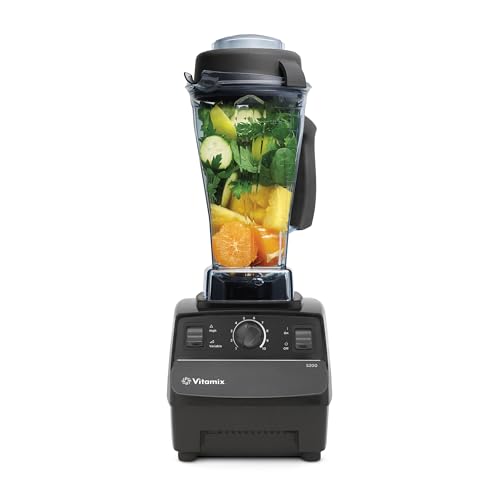
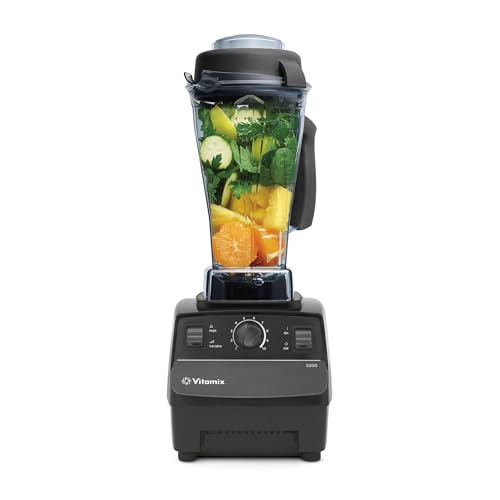
The Vitamix 5200 is the full-size answer. Its roughly 2-horsepower motor blends the smoothest of anything here, the variable speed dial gives real manual control, and it doubles as a soup maker, nut-butter grinder, and grain mill — backed by a 7-year full warranty and a reputation for lasting well over a decade. The catch is the fit: the 64-ounce container stands over 20 inches tall installed and often will not go under a cabinet, so buy it only if you have the counter space and blend hard enough to justify it: View on Amazon
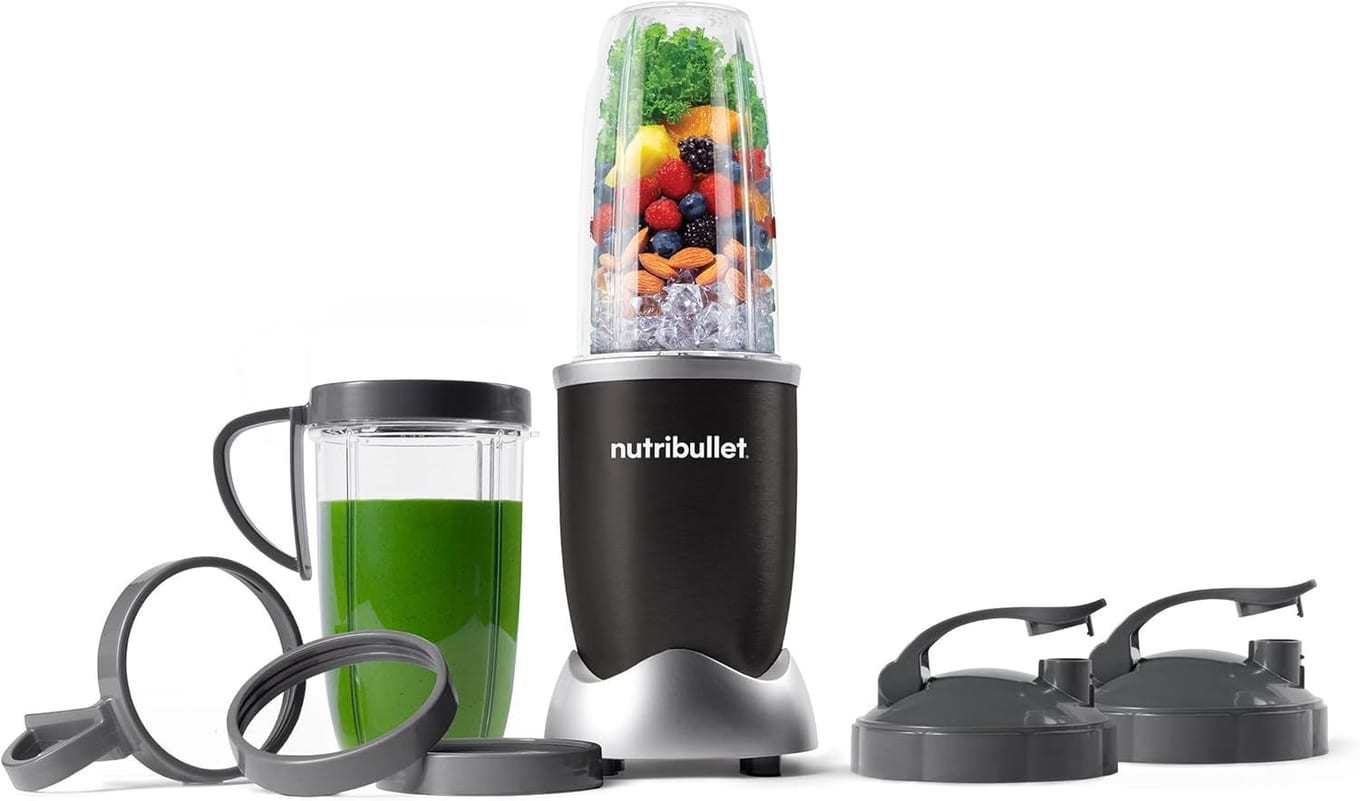
The NutriBullet Pro 900 is the personal single-serve answer. It strips blending to the essentials — a 900-watt motor, a tall extractor cup, load and twist and press — and the cup you blend in is the cup you drink from, so a smoothie goes straight from base to bag. It stores in the space of a large coffee mug and fits under any cabinet. Accept the single-or-double-serving ceiling and the occasional shake-and-repeat on icy blends, and for one person's daily smoothie it does everything needed: View on Amazon
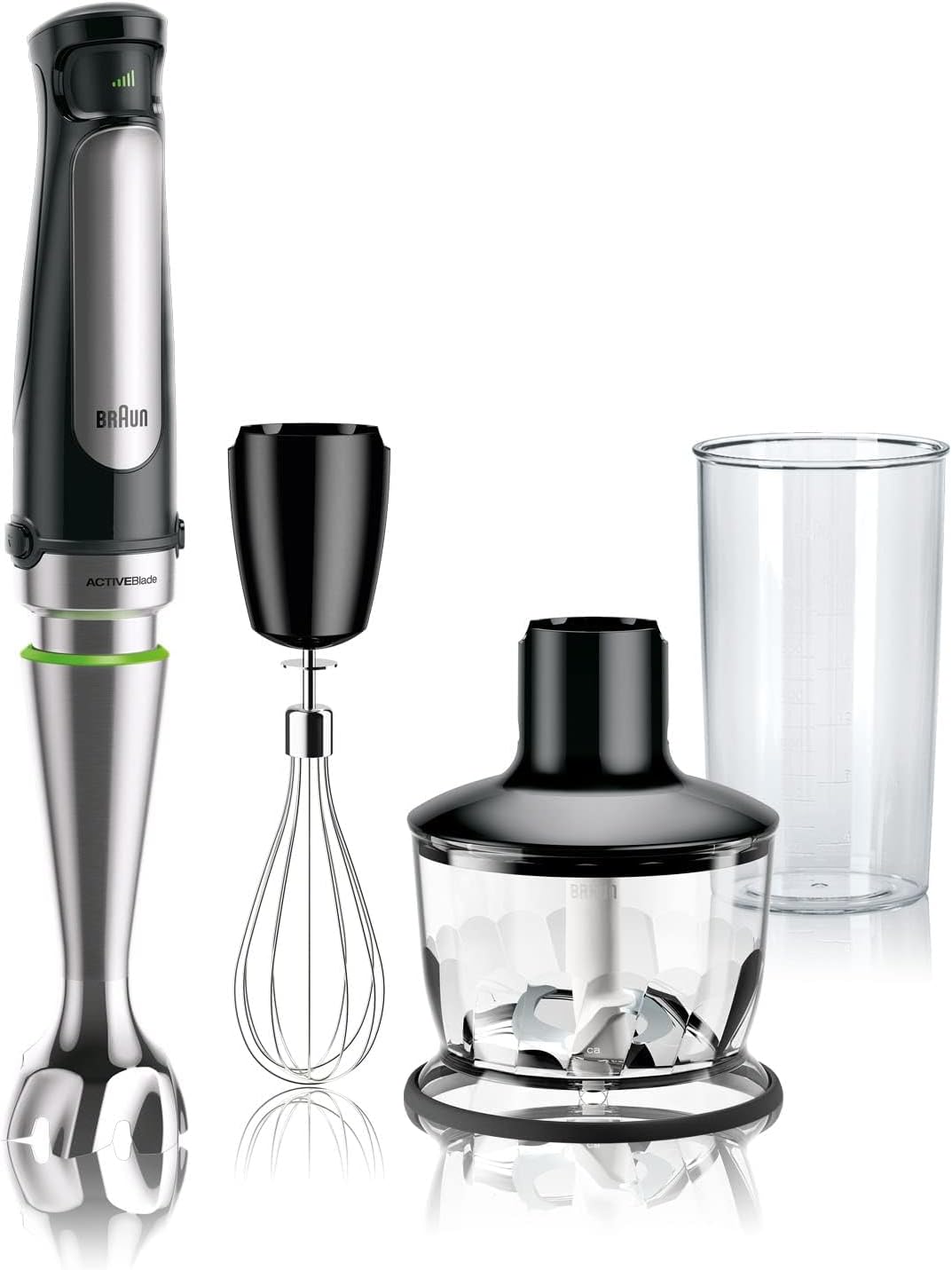
The Braun MultiQuick 7 is the immersion answer. It purees soup smooth directly in the pot, emulsifies a dressing in seconds, and its ACTIVEBlade flexible shaft adds roughly 250% more cutting surface for a smoother result in fewer passes — while the pressure-sensitive trigger keeps hot soup from splashing. The bundled whisk, masher, and chopper make it a genuine three-in-one, and the whole thing stores in a drawer: View on Amazon
How to Choose in Five Minutes#
Start with the job, not the machine. If you blend for a household or want the smoothest possible result, you are shopping full-size. If you make one drink at a time, you want a personal cup. If you make soup and sauce in a pot, you want an immersion wand. That single choice eliminates most of the market before you read a spec.
Then ignore the wattage across categories. Compare power only within one shape, and remember that on a personal blender the real lever is adding liquid, not chasing volts.
Then check where it will live. Measure the clearance under your cabinets before buying any full-size jar — the tallest stand over 20 inches and simply will not fit. If space is tight, a personal cup or an immersion blender sidesteps the problem.
Then match what it must process — hot soup in the pot points to immersion, nut butters and the smoothest frozen blends point to a strong full-size machine, plain smoothies and shakes point to a cup.
Finally weigh controls and cleanup, because a blender that is a chore to clean is a blender you stop using. If the answer came out "one drink, out the door, no outlet, nothing extra to wash" — and especially if it is going in a gym bag — a cordless personal blender like the Ninja Blast, at 18 ounces with a one-handed sip lid and USB-C charging, is the shape that clears it: View on Amazon