

At a Glance#
The five decisions : Pliers or blades, how the tools come out, blade steel, what is in the box, and which tools rather than how many
The one most people get wrong : Buying on tool count — "20-in-1" is the number chosen to sell the box, and it predicts almost nothing about whether you keep the tool on you
The spec that matters instead : How the blade deploys and what steel it is — the two things you interact with every single time
The quiet dealbreaker : A premium tool that ships bare, so the sheath or clip that makes it carriable is a second purchase you did not budget for
Key Highlights:
- Tool count is the number that sells; which tools and how you reach them is the number you live with
- Blade steel climbs a short ladder: 420HC sharpens easily, 154CM holds an edge longer, MagnaCut adds corrosion resistance on top
- How a tool opens — dig-a-fingernail slot, thumb stud, or magnetic detent — decides whether you ever use it one-handed
- Whether a sheath or clip is in the box is a real cost most listings quietly leave off the spec sheet
- The best multi-tool is the one you actually carry, and carry is decided after the spec sheet ends
Who This Is For#
Multi-tool spec sheets are built around one flattering number — the tool count — while the specifications that decide whether you keep the thing in your pocket sit further down the page: how the blade opens, what steel it is, and whether you can even carry it out of the box. This page is that subtraction, from the marketing number down to the four or five decisions that actually predict satisfaction.
Especially useful if you are:
- A first-time buyer who has noticed that "20-in-1" tells you nothing about whether you will use it
- Someone upgrading from a bargain tool whose blade dulled fast or whose stiff slot shredded a thumbnail
- An everyday-carry user who wants the tool reachable one-handed and actually on them, not left in a drawer
- A gift buyer who wants to choose on the things that matter rather than the biggest number on the box
1. Pliers or Blades#
The first fork is philosophical: does the tool build outward from a pair of pliers, or from blades and fine tools? Pliers-based designs grip, bend, cut wire, and turn fasteners; blade-first designs skip pliers entirely for knives, saws, scissors, and openers. Neither is better in the abstract — they answer different weeks.
This is settled ground on the site, so rather than re-argue it: the everyday-carry multi-tool roundup walks the pliers-versus-no-pliers split directly, setting a pliers-based Leatherman against a pliers-free Victorinox, and the Leatherman Wave+ review shows what a pliers-first full-size tool actually covers across a normal week.
Our recommendation: if you regularly grip, bend, or cut wire, start from a pliers-based tool and read the roundup for the trade against a blade-first design. If you never touch wire, the pliers are dead weight — and the rest of this page, which is about how pliers-based tools differ from one another, matters less to you than the blade selection a Swiss Army pattern gives.
2. How the Tools Come Out#
Once you are looking at pliers-based tools, the mechanism that gets each implement into your hand is a three-rung ladder, and it decides more about daily use than any tool on the list.
The bottom rung is the fingernail slot. The oldest pattern: each blade sits in a nail-nick and you pry it out with a thumbnail. It works, but not one-handed, not in gloves, and not in the dark — and a stiff slot is exactly what shreds a fingernail on a cold morning. If a tool you owned ended up unused, this mechanism is often why.
The middle rung is the thumb stud and outside access. Better tools move a blade to the outside of the frame and add a stud or hole, so you flick it open with a thumb while the tool stays folded — one motion instead of unfolding the whole pliers frame just to reach a knife. This matters, but the site already makes the case for why in full: the Wave+ review covers outside-accessible blades in detail, so this page takes it as read. The Skeletool CX is a minimalist example of the rung — a thumb stud on its single blade for one-handed opening.
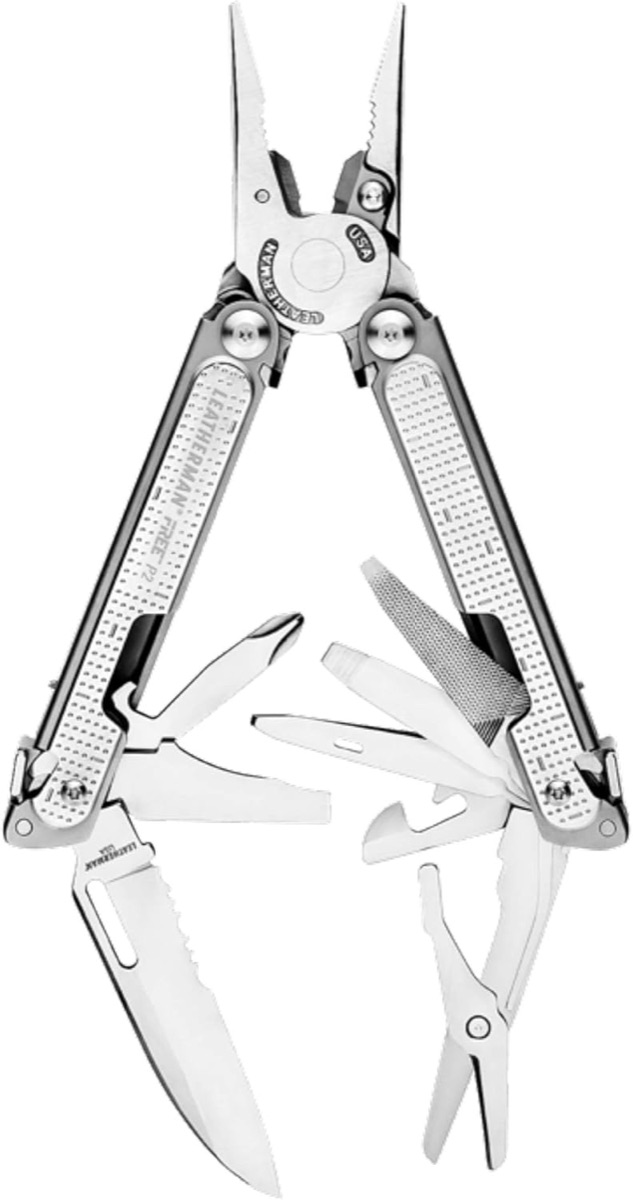
The top rung is the magnetic detent, and it is the reason the Free P2 belongs here. Instead of a friction slot or a stiff spring, each tool rides a magnet: it stays shut until you pull it, then snaps fully open with a clean click, and the same magnet pulls it closed again so nothing rattles half-deployed in a pocket. The payoff is that opening by feel — gloved, one-handed, in the dark — stops being a fiddle, and the fingernail-shredding slot of the bottom rung disappears entirely. If the way a tool deploys is what makes you actually reach for it, the magnetic detent is the top of this ladder: View on Amazon
One clause on locking, since the Wave+ and the roundup own the subject in full: whatever the opening mechanism, confirm each tool locks open before you bear down on it — the roundup covers locking versus slip-joint safety directly.
Our recommendation: decide how often you will open the tool one-handed. If the answer is "constantly, often with the other hand full," pay for the magnetic detent. If it is "occasionally," an outside-accessible thumb-stud blade already clears the bottom rung and is plenty.
3. Blade Steel#
Blade steel on a multi-tool runs a short, legible ladder, and the site already documents the bottom of it — so this section is really about the top two rungs.
420HC is the bottom rung and the default across most of the category. Its virtue is not edge-holding but recovery: it sharpens back to keen with a pull-through or a few passes on a stone, and resists rust well enough for pocket carry. The Wave+ review makes the full case for why easy-to-sharpen 420HC is the right trade for a working tool, so this page will not repeat it.
154CM is the middle rung — the upgrade on the Skeletool CX's blade and on the Free P2's replaceable wire cutters. It holds an edge noticeably longer than 420HC, so you go weeks rather than days between sharpenings under regular use. The cost is that it is a little more work to bring back once it finally does dull. For most people who cut daily, this is the sensible step up: View on Amazon
MagnaCut is the new top rung, and it is why the ARC is here. It is a modern powder steel engineered to refuse the usual either/or of knife steels: it holds an edge like a hard, wear-resistant steel and resists corrosion like a stainless one, rather than trading one for the other. On a multi-tool that matters more than on a dedicated knife, because the blade is the feature you use most and it lives in sweaty-pocket, wet-weather, boat-and-campsite conditions — exactly where edge retention and corrosion resistance normally pull against each other. In practice MagnaCut means the fewest sharpenings and the least babying of the three, enough that you stop feeling you need a separate pocket knife riding alongside the tool: Leatherman ARC on Amazon
Our recommendation: match the rung to how much you actually cut. Occasional cutting, and 420HC with easy sharpening is fine. Cut daily and dislike sharpening, climb to 154CM. Want the blade to be a genuine knife you never think about, MagnaCut is the top of the ladder and the reason to pay for it.
4. What Is in the Box#
Here is the decision no spec sheet frames for you, and the one that quietly adds cost after you have already chosen: whether the tool arrives ready to carry, or whether the way you carry it is a separate purchase you make later. It matters for a blunt reason — a multi-tool you cannot comfortably carry is a multi-tool you leave in a drawer. There are three states.
Carry built into the tool. Some designs make the question disappear by integrating it. The Skeletool CX is the clean example: a removable pocket clip and a carabiner are part of the frame, so it clips to a pocket, a belt loop, or a pack strap straight out of the box with nothing else to order. Nothing to lose, nothing to budget for, nothing sold separately for basic pocket carry. For a minimalist tool whose whole pitch is that it actually gets carried, building the clip into the frame is the point: View on Amazon
Carry included in the box as an accessory. Some listings bundle a sheath with the tool. The Leatherman Bond, sold as a tool-and-sheath bundle, is the pattern: the medium nylon sheath ships in the box, so belt or bag carry is solved on day one without a second order. The bundle exists precisely because the bare tool does not include one — buying the bundle is buying the carry decision already made, which is often the difference between a tool that lives on your belt and one that jangles loose in a drawer.
Carry sold separately. This is now the default at the premium end, and it genuinely surprises people. The Free P2, the ARC, and the Wave+ all ship as the tool alone — the sheath and pocket clip are add-ons you buy on their own. That is not a flaw, but it is a real, unlisted cost. The ARC's own product listing notes that accessories and the sheath are sold separately; the Free P2's pocket clip is likewise a separate buy. A seven-to-nine-ounce tool loose in a pocket is exactly the tool that stops getting carried, so the sheath or clip is not an optional extra — it is the thing that makes an expensive tool worth owning.
Our recommendation: decide how you will carry the tool before you buy it, not after it lands on the doorstep. If you want zero further decisions, an integrated-clip design settles carry in the frame. If you want belt carry ready to go, look for a bundle that includes the sheath. And if you are buying a premium tool that ships bare, add the sheath or clip to the same order and treat it as part of the price — because carry is what turns a spec sheet into a tool you actually have on you.
5. Which Tools, Not How Many#
The number on the front of the box — 12 tools, 18, 20 — is the one engineered to sell, and it is the least useful figure in the category. A tool you never deploy is weight; a tool you reach for weekly is the whole point. Two questions cut through the count: which specific implements match your real week, and how many of them you will genuinely use.
The site already argues this at length, so rather than re-assert it: the Wave+ review breaks down which of its tools earn their place and covers the bit-driver question in full — including the catch that the driver takes proprietary flat bits rather than standard hex, worth understanding before you count a bit driver as a win. The everyday-carry roundup sets a high-count tool against a keychain-size twelve to show how little the raw number predicts.
Our recommendation: list the three or four jobs you actually hit in a normal week, then buy the smallest tool that covers them well rather than the one with the highest count. A focused seven-tool minimalist you carry beats a twenty-tool flagship you leave at home.
Three Tools, Three Different Answers#
None is better in the abstract; they resolve the decisions differently.
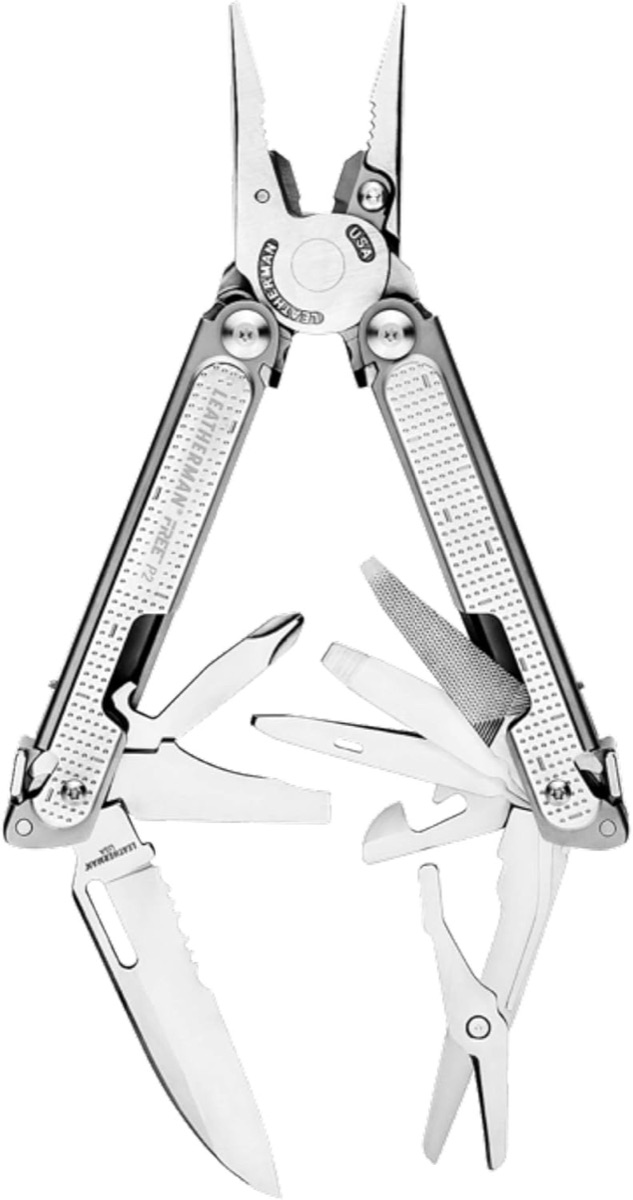
The Leatherman Free P2 is the mechanism answer. Its magnetic detent sits at the top of the how-it-comes-out ladder: every tool snaps open by feel and pulls itself shut, so one-handed, gloved, dark-pocket access stops being a fight. If the reason your last multi-tool went unused was that it was a chore to open, this is the one that fixes it — just budget for the pocket clip, which ships separately: View on Amazon
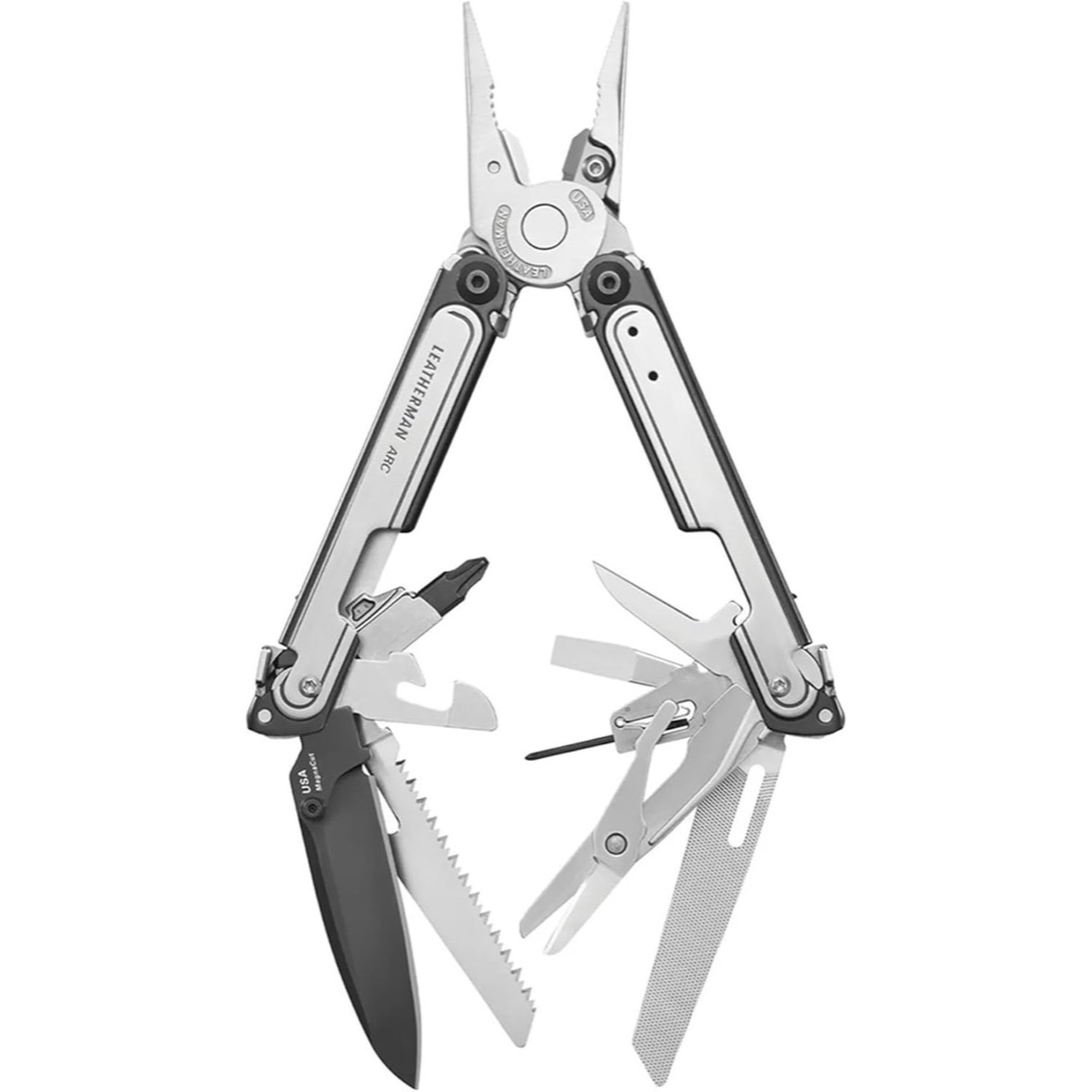
The Leatherman ARC is the steel answer. Its MagnaCut blade sits at the top of the steel ladder, pairing edge retention with corrosion resistance instead of trading one for the other, so the blade behaves like a genuine knife you stop thinking about. It is the pick when the cutting edge is the feature you use most and you are tired of sharpening — sheath sold separately, so add one at checkout: Leatherman ARC on Amazon
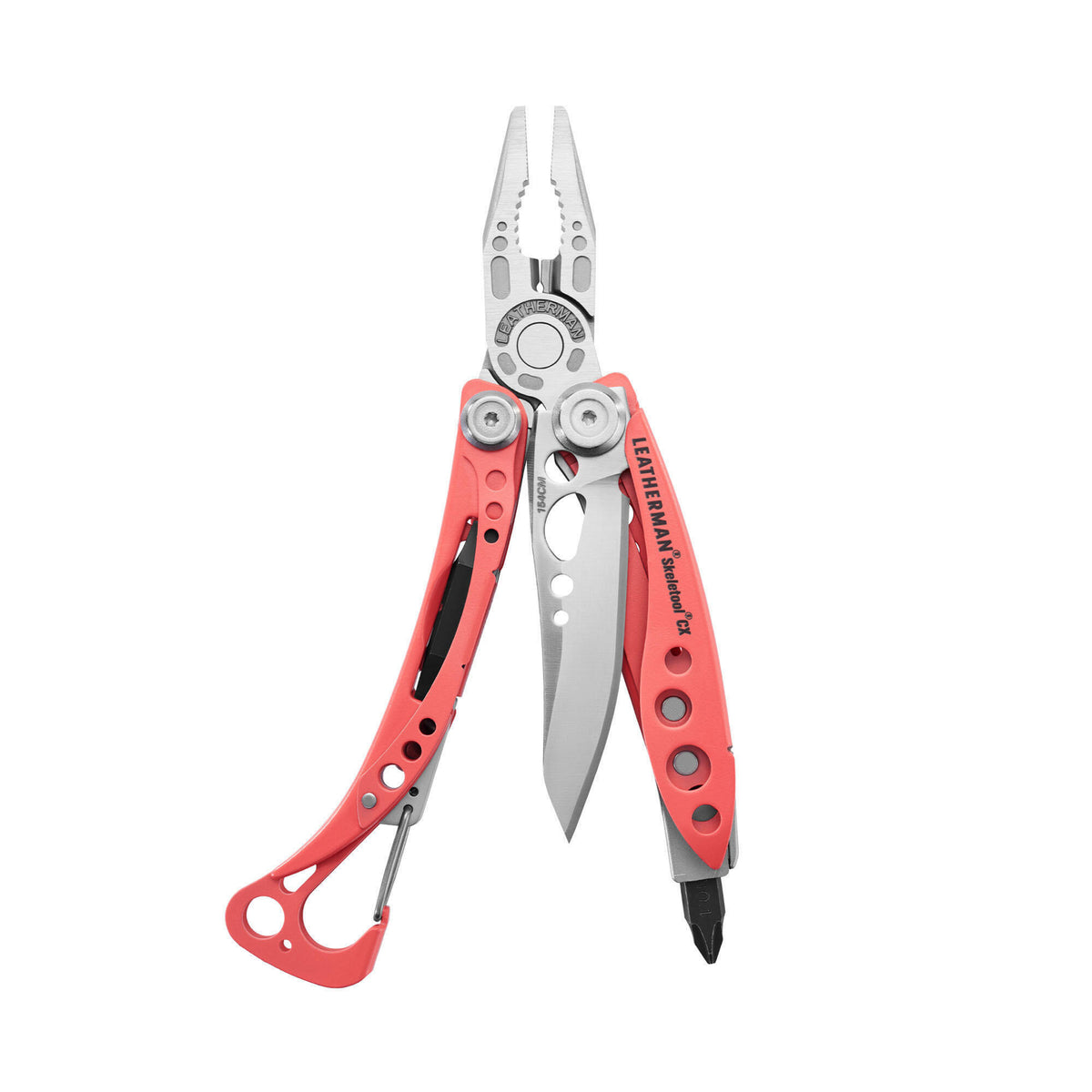
The Leatherman Skeletool CX is the carry answer. It settles the what-is-in-the-box decision inside the frame — an integrated pocket clip and carabiner mean it carries out of the box with nothing else to order — and its 154CM blade is the middle rung of the steel ladder, a real upgrade over the default. If your problem was leaving heavier tools at home, the minimalist that clips straight to a pocket is the one that actually gets carried: View on Amazon
How to Choose in Five Minutes#
Start with pliers. If you grip or cut wire, buy a pliers-based tool; if you never do, the pliers are dead weight and a blade-first design serves you better.
Then decide how it comes out. If one-handed, by-feel opening matters, climb to a magnetic detent; if not, an outside-accessible thumb-stud blade is plenty.
Then pick a rung on the steel ladder by how much you cut — 420HC for occasional use, 154CM for daily cutting, MagnaCut when the blade is the point.
Then check what is in the box. If you want carry solved with no second purchase, choose an integrated clip or a bundled sheath; if you buy a bare premium tool, add the sheath or clip to the same order.
Finally, ignore the tool count and name the three jobs you actually do — then buy the smallest tool that does them well. If that came out "one refined tool I will open one-handed and actually carry," the Free P2 is the one to start with: View on Amazon