

If you've been holding off on a new graphics card "until the next generation," here's the news that changes the maths: NVIDIA isn't launching any new gaming GPUs this year. Nothing new appeared at CES 2026, and the leaks point to the next generation — the RTX 60 series, built on the Rubin architecture — arriving in 2027 at the earliest, with some reports suggesting 2028. In other words, the current RTX 50 series is the top of the range, and the next NVIDIA generation is not a 2026 story at all. The nearest thing on the horizon is a mid-generation RTX 50 SUPER refresh, and the reporting on it has swung all year between indefinitely postponed and a CES 2027 announcement, with a July 2026 report putting the silicon at board partners but still with no launch date. Waiting doesn't get you a better card sooner; it gets you at least the rest of this year, and quite possibly a great deal longer, on whatever you're running now. So if you need a GPU, the right move is to buy the right RTX 50 card today — and here are the four that make sense, from 1440p to no-compromise 4K.
One honest note before the picks, because graphics cards are their own kind of market: prices and stock swing a lot, and the same card can be a good buy one week and marked-up the next. We don't quote prices here (they'd be wrong by the time you read this) — instead, check the live price on the listing and make sure it's sold by a reputable seller before you buy. With that said, here's the right card for each kind of gamer.
Who this comparison is for#
- Gamers who've been waiting for "next gen" and just realised it's a 2027+ story.
- Anyone building or upgrading a PC now who wants the current top tier, not last year's leftovers.
- Players who want a clear pick for their resolution — 1440p, 4K, or everything-maxed — without overthinking it.
How we picked#
- By what you actually play at. GPUs make most sense sorted by target resolution, so we picked one clear card per tier: 1440p, 1440p-to-4K, high-end 4K, and no-compromise.
- Current-generation features. Every pick is an RTX 50-series card with DLSS 4 (including multi-frame generation), the feature set that will keep these cards relevant right through the wait for RTX 60.
- Real, in-stock listings. We linked mainstream board-partner cards (ASUS, MSI, Gigabyte) that Amazon actually stocks — not obscure SKUs. Because GPU pricing moves, we deliberately don't quote a price; check the live listing before buying.
- Enough VRAM for the tier. We weighted memory appropriately — more matters at 4K and for future titles — so each pick has the right amount for its job.
Gigabyte RTX 5070 Gaming OC — Best for 1440p#
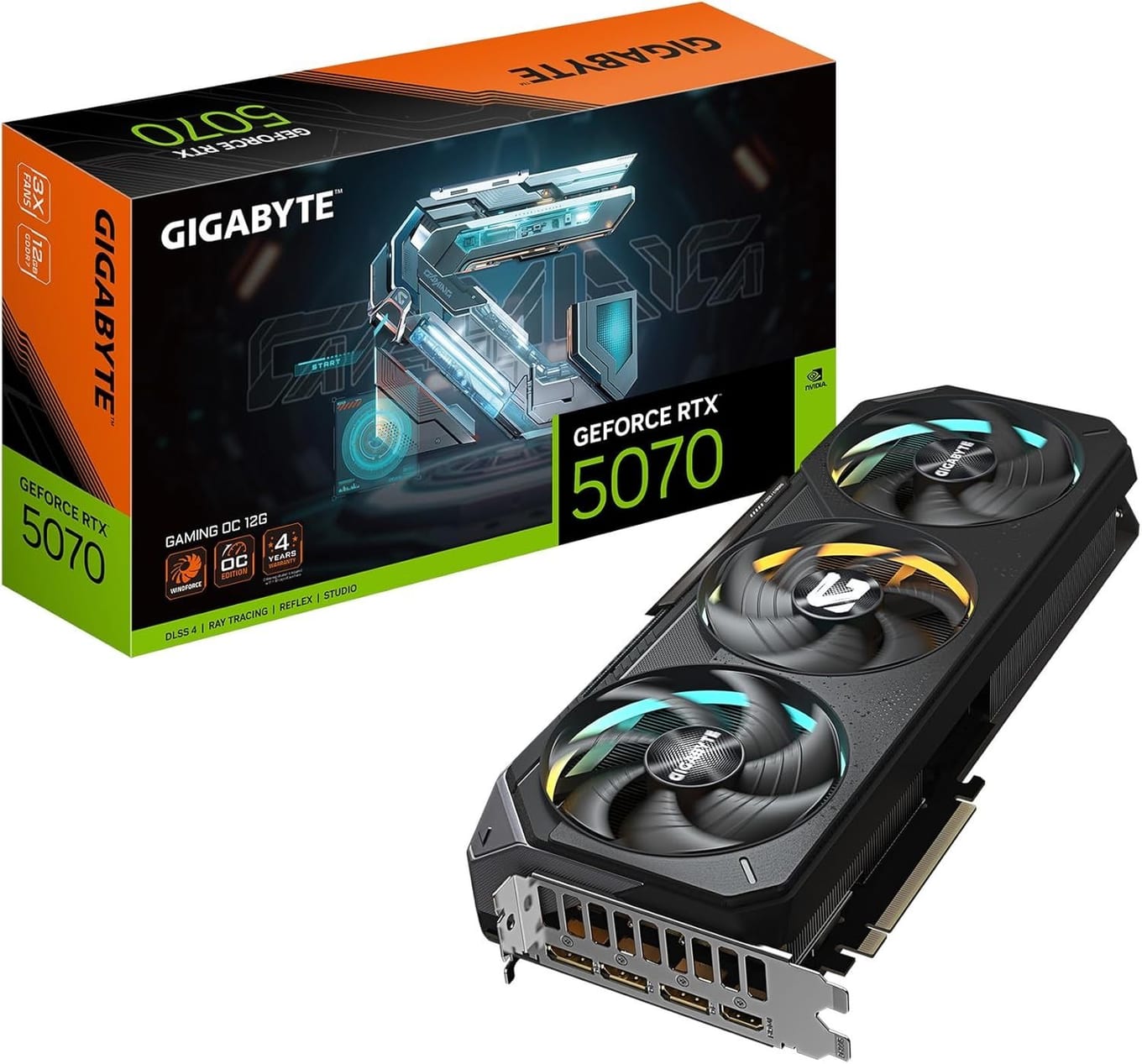
The RTX 5070 is the entry point to the current generation, and it's the card most 1440p gamers should buy. With 12GB of fast GDDR7 and DLSS 4 on board, it drives high-refresh 1440p comfortably and can stretch to 4K with DLSS doing the heavy lifting. Gigabyte's Gaming OC version is a well-cooled triple-fan card that runs quiet and factory-overclocked, so you get the most out of the chip without fuss.
If your monitor is 1440p — the sweet spot for most gamers right now — this is all the card you need, and it's current-gen, so DLSS 4 and its frame-generation tricks are yours. It's the sensible "I want the new generation without overspending" choice.
Key specs#
Memory : 12GB GDDR7 (192-bit)
Features : DLSS 4 with multi-frame generation
Best resolution : High-refresh 1440p (4K with DLSS)
Best for : 1440p gamers who want current-gen without overspending
Bottom line. The 1440p sweet-spot card of the current generation — 12GB GDDR7, DLSS 4, quiet triple-fan cooling. The sensible entry into RTX 50.
MSI RTX 5070 Ti Gaming Trio OC Plus — Best 1440p-to-4K Sweet Spot#
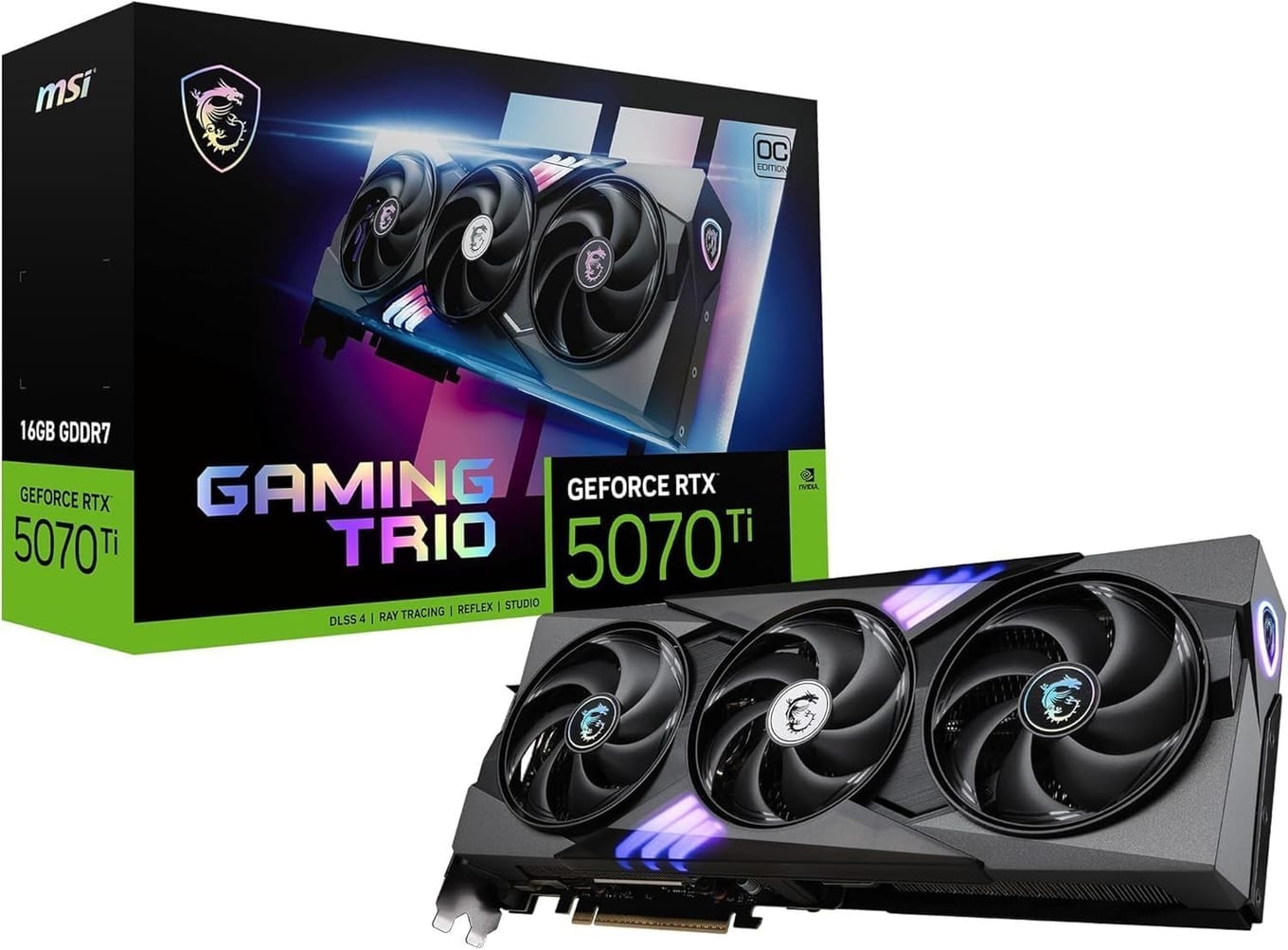
Step up to the 5070 Ti and you get the card that quietly satisfies almost everyone: enough power for maxed-out 1440p and very playable 4K, with 16GB of GDDR7 that gives it real headroom the 5070 doesn't have. It's the tier where "future-proof" starts to mean something, and MSI's Gaming Trio OC Plus is a premium, seriously-cooled version that holds high clocks under load.
For a lot of builders this is the smart place to land — noticeably more capable than the 5070 for high-refresh play and light 4K, without stepping into flagship territory. If you want one card that won't feel slow for years, and you don't need to max every 4K setting, this is it.
Key specs#
Memory : 16GB GDDR7 (256-bit)
Features : DLSS 4 with multi-frame generation
Best resolution : Maxed 1440p and playable 4K
Best for : The do-it-all pick with real VRAM headroom
Bottom line. The value-to-power sweet spot: 16GB GDDR7, strong 1440p and capable 4K. The card that will still feel fast years into the RTX 60 wait.
ASUS TUF Gaming RTX 5080 OC — Best High-End 4K#
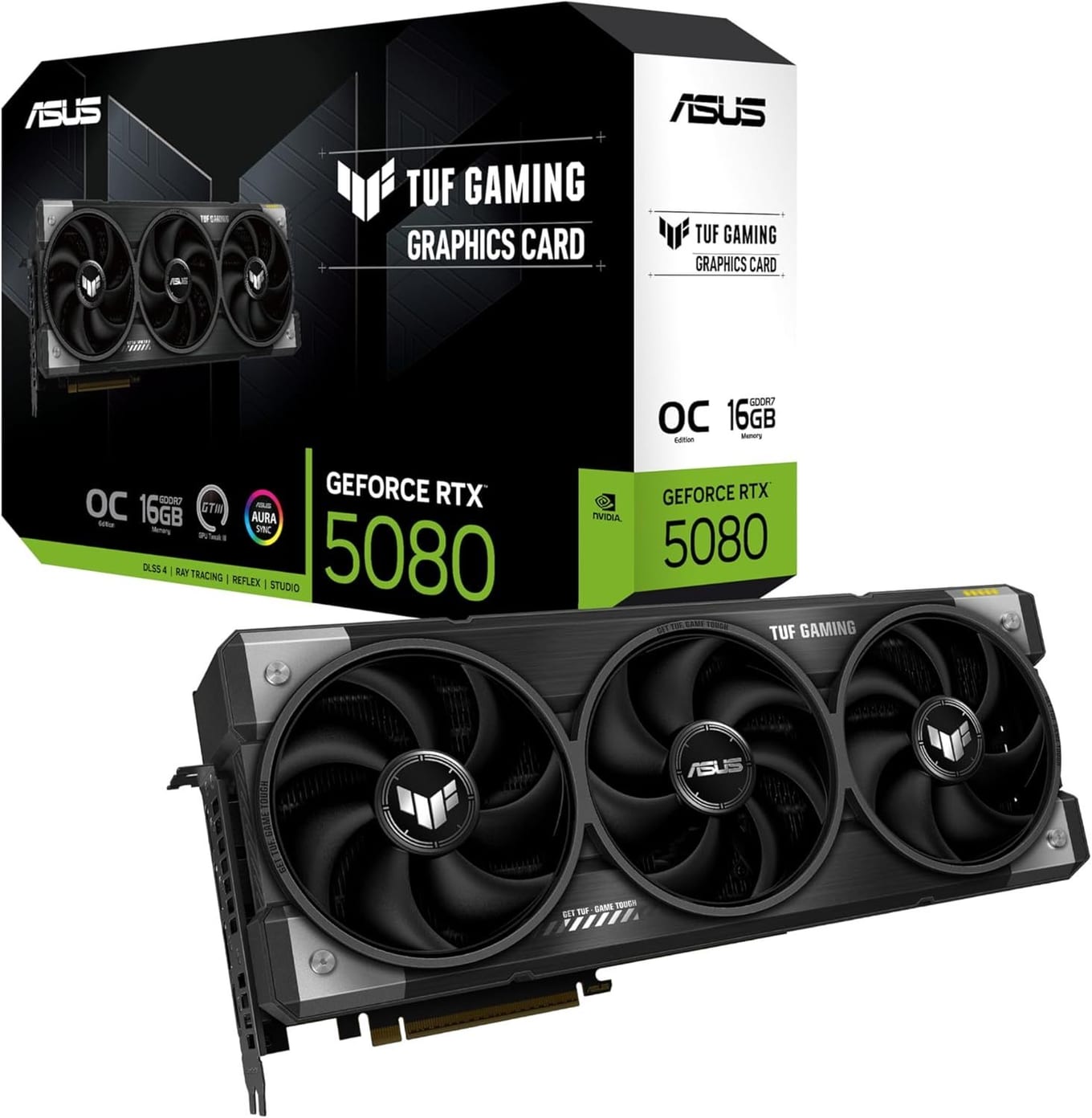
When you want proper 4K gaming — high settings, high frame rates — the RTX 5080 is the card to get without going all the way to the halo tier. It pairs serious raw power with 16GB of GDDR7 and DLSS 4, so demanding titles run smoothly at 4K, and ASUS's TUF Gaming build is a tough, over-cooled triple-fan design meant to run hard for years.
This is the enthusiast pick for a 4K display: fast enough that you're not compromising, without paying the premium the 5090 commands. If your monitor is 4K and you want everything to just work at high refresh, the 5080 is the sensible flagship.
Key specs#
Memory : 16GB GDDR7 (256-bit)
Features : DLSS 4 with multi-frame generation
Best resolution : High-refresh 4K
Best for : 4K gamers who want flagship performance without the halo price
Bottom line. Real high-refresh 4K with DLSS 4 and a rugged TUF cooler. The enthusiast's 4K card, one step below no-compromise.
MSI RTX 5090 Gaming Trio OC — Best No-Compromise#
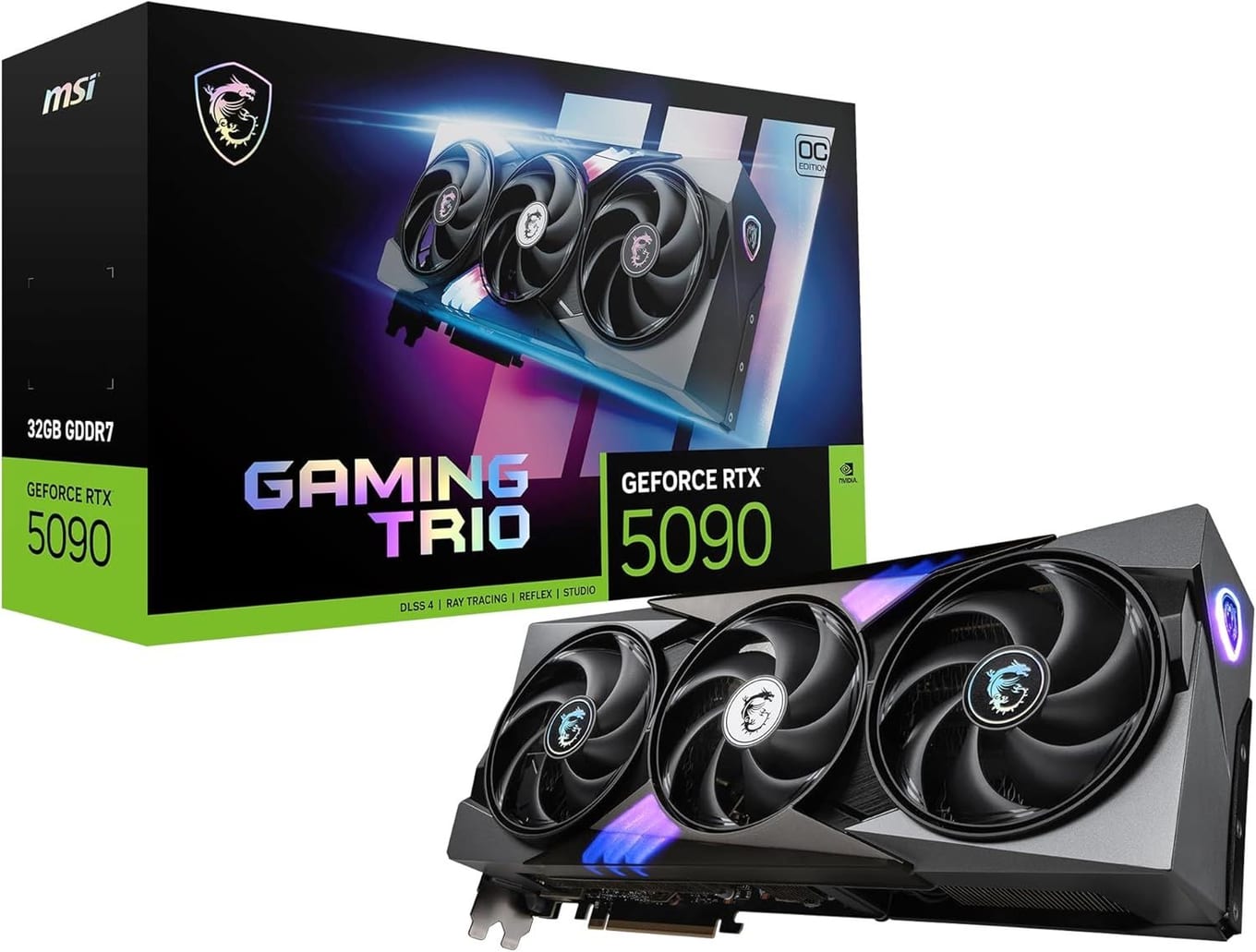
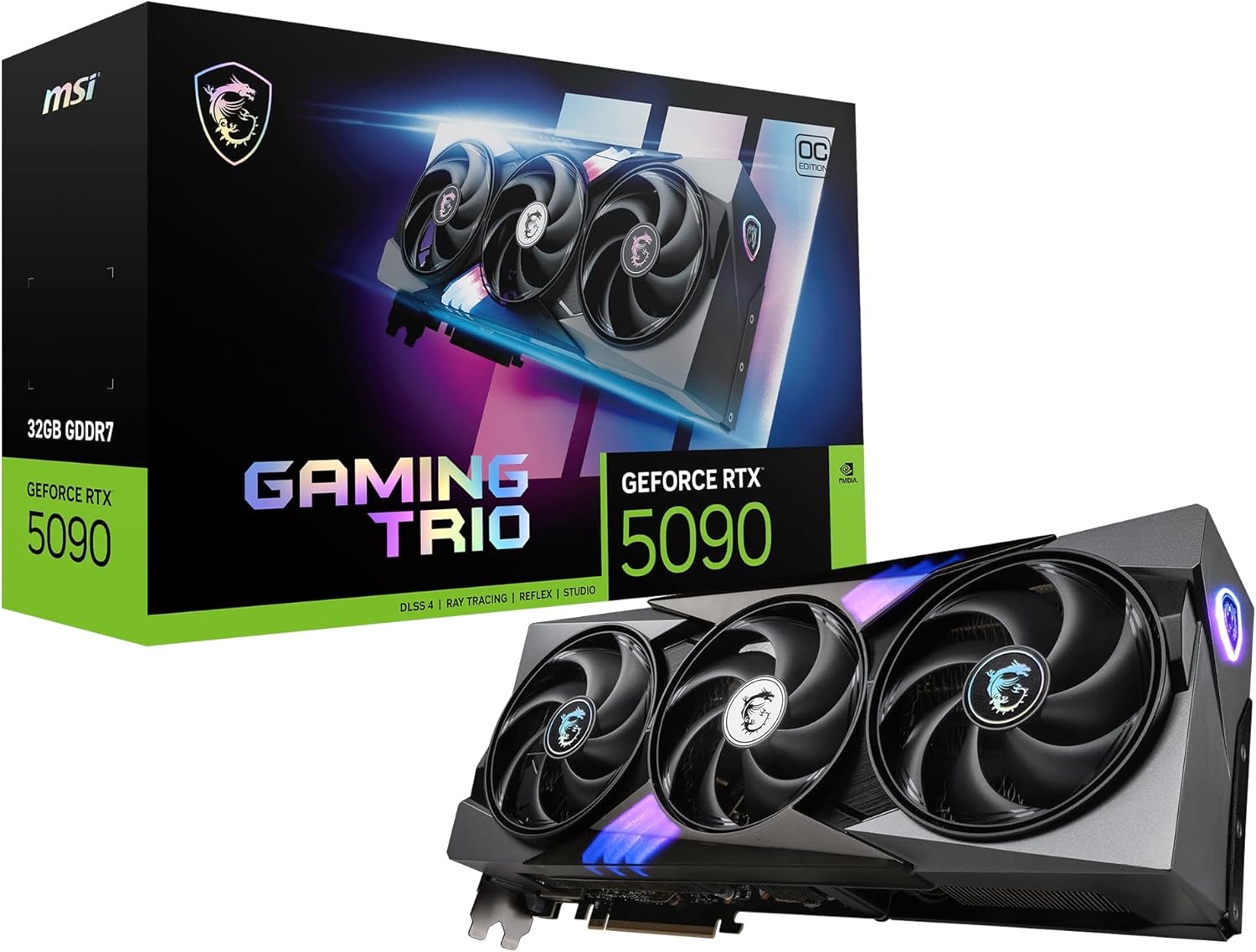
If you want the fastest gaming GPU there is — and the fastest there will be until 2027 — it's the RTX 5090. With a massive 32GB of GDDR7 and the full weight of the current architecture, it maxes 4K, drives high-refresh ultrawide and 8K, and chews through creator workloads like rendering and AI. MSI's Gaming Trio OC is a huge, heavily-cooled card built to let the chip stretch its legs.
It's overkill for most people, and it's priced accordingly — but that's the point: this is the no-limits option, and no card in the reported SUPER refresh sits above it either, so buying it now buys you the top of the stack for the whole wait. If you want the best, full stop, this is it.
Key specs#
Memory : 32GB GDDR7 (512-bit)
Features : DLSS 4 with multi-frame generation
Best resolution : Maxed 4K, ultrawide, 8K and creator work
Best for : The fastest gaming GPU available, no compromises
Bottom line. The undisputed top card — 32GB GDDR7, everything maxed, and nothing faster until 2027. Overkill for most, perfect for those who want the best.
Which one should you buy?#
Match the card to your monitor. On 1440p, the RTX 5070 is all you need and the smart-money pick. If you want one card that stays fast for years and dabbles in 4K, step up to the RTX 5070 Ti — it's the sweet spot for most builders. For a 4K display where you want high settings and high frame rates, the RTX 5080 is the sensible flagship. And if you simply want the fastest thing money can buy, the RTX 5090 is it, and will stay it until the next generation lands.
Whichever you choose, remember the two things this comparison is really about: you're not missing out by not waiting — the next generation is a 2027-or-later story, and the mid-cycle SUPER refresh is reported for CES 2027 too — and GPU prices move, so check the live listing and buy from a reputable seller rather than overpaying in a spike. Buy the right card for your resolution now, and you're set for the whole wait.
FAQ#
Is NVIDIA releasing a new RTX GPU in 2026? : No new gaming GPUs have been announced or shown for 2026 — NVIDIA presented nothing new at CES 2026. The next generation, the RTX 60 series on the Rubin architecture, is expected in 2027 at the earliest according to industry leaks, with some reports pointing to 2028. The mid-generation RTX 50 SUPER refresh has slipped as well: reporting in June 2026 pointed to a CES 2027 announcement for it.
So is now a good time to buy a graphics card? : Yes — precisely because nothing newer is confirmed. Buying an RTX 50-series card now gets you the current top tier through the rest of 2026. The reporting on the mid-cycle SUPER refresh has been contradictory all year, from indefinitely postponed to a CES 2027 announcement to silicon already sitting with board partners without a date, and none of it is a next-generation card in any case. Waiting means sitting on older hardware for a launch nobody can put a date on.
What is DLSS 4? : DLSS 4 is NVIDIA's latest upscaling and frame-generation technology, available on the RTX 50 series. It boosts frame rates — including multi-frame generation — so these cards perform better in supported games and stay relevant longer, which matters given the long wait for the next generation.
How do I avoid overpaying for a GPU? : Graphics-card prices swing with demand and stock, so check the live price on the listing before buying and confirm it's sold by a reputable seller (ideally shipped and sold by Amazon), not marked up by a third-party during a spike. Because prices change so fast, we deliberately don't quote them here.
Which card is right for my resolution? : For 1440p, the RTX 5070; for maxed 1440p and light 4K, the 5070 Ti; for high-refresh 4K, the 5080; and for the absolute fastest — 4K maxed, ultrawide, 8K or creator work — the 5090. Match the card to your monitor and you won't overspend on power you can't use.