

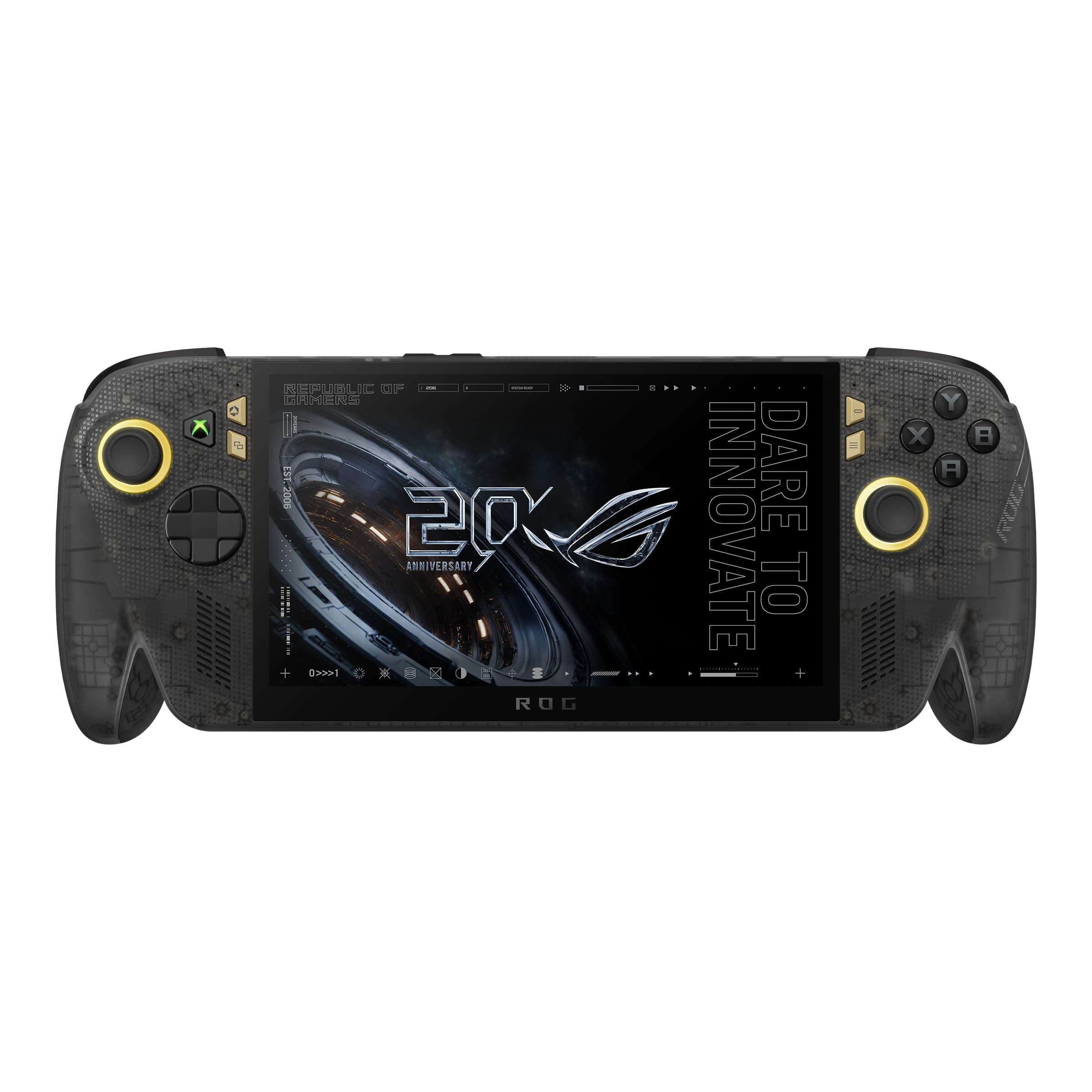
The ROG Xbox Ally X20 has one card slot, and ASUS's own row lists it as a microSD Express card reader. Searchers have asked whether the earlier handheld takes microSD Express too — does rog xbox ally x support microsd express — and this article does not answer it for that machine. What is left, on the X20, is which microSD Express card. Four are below, each ranked on what its own sources publish, with every figure about a card taken from that card's own listing or its maker's own page.
At a Glance#
Best overall : SanDisk microSD Express 512GB View on Amazon
Best with a drive-health check : Samsung P9 Express 512GB
Best 1TB : Lexar PLAY PRO 1TB
Best 256GB : PNY microSD Express 256GB
Key Highlights:
- ASUS lists the X20's slot as a microSD Express card reader that supports up to SD v8.0, PCIe® Gen4 x1; UHS-I with DDR200 mode
- Only SanDisk publishes a minimum sustained write speed in MB/s: 220 MB/s for the 512GB card, based on internal testing
- Samsung's listing names Dynamic Thermal Guard and says it helps reduce overheating for fast, smooth gameplay
- Lexar's listing puts 1TB in a microSD Express card and calls it backwards-compatible with UHS-I and UHS-II (at UHS-I speeds) host devices
- PNY's card carries an A1 Application Performance rating, which its listing says allows users to run gaming apps directly from the microSD card
Who this comparison is for#
- You are buying a ROG Xbox Ally X20 and want the card this roundup ranks first.
- You want the maker's own tool for checking the card is genuine and healthy, and you run Windows or macOS.
- You want the 1TB card, because the size of the library is what decides it — ASUS lists the X20's own storage as a 1TB PCIe 4.0 NVMe drive, and a card is what you add to it.
- You want 256GB from a listing whose compatibility field names a card slot as well as a console.
- You want to know what the four makers actually publish before you pick on a headline number.
How we picked#
- The four are not a survey of the market. They are the microSD Express cards we could check twice: a retail listing that names microSD Express, and a page from the maker covering the same card. Anything we could not check on both is not here.
- Figures come from that card's own sources. Where a maker's page prints a second, differently scoped figure, both are printed with their scopes.
- Not one of the nine captured product pages — four card listings and five maker pages, one of them a SanDisk family page this article quotes for nothing — names the ROG Xbox Ally X20 in its own fields. The device side of this article is ASUS's own specification page for the X20.
- Nothing here was tested in an X20. No captured source measured any of these cards in the handheld, so what links them is what ASUS's own row and the makers' own descriptions say: a microSD Express reader, and microSD Express cards.
- No prices, and no ranking by price. Each card is ranked on what its own sources publish.
The four cards side by side#
| Card | Capacity | Rated read | Write floor | Warranty | Buy |
|---|---|---|---|---|---|
| SanDisk microSD Express 512GB | 512 GB | Up to 880 MB/s, compatible device required | 220 MB/s, internal testing | Lifetime limited; 30 years in some regions | View on Amazon |
| Samsung P9 Express 512GB | 512 GB | Up to 800 MB/s, on a PCIe test board | none labelled | 3 Year Limited Warranty | View on Amazon |
| Lexar PLAY PRO 1TB | 1 TB | Up to 900MB/s, max in Express host | V30 mark, no figure | Limited lifetime; 10 years in some regions | View on Amazon |
| PNY microSD Express 256GB | 256 GB | Up to 890MB/s, compatible host required | V30 mark, no figure | lifetime limited warranty | View on Amazon |
SanDisk microSD Express 512GB — Best overall#
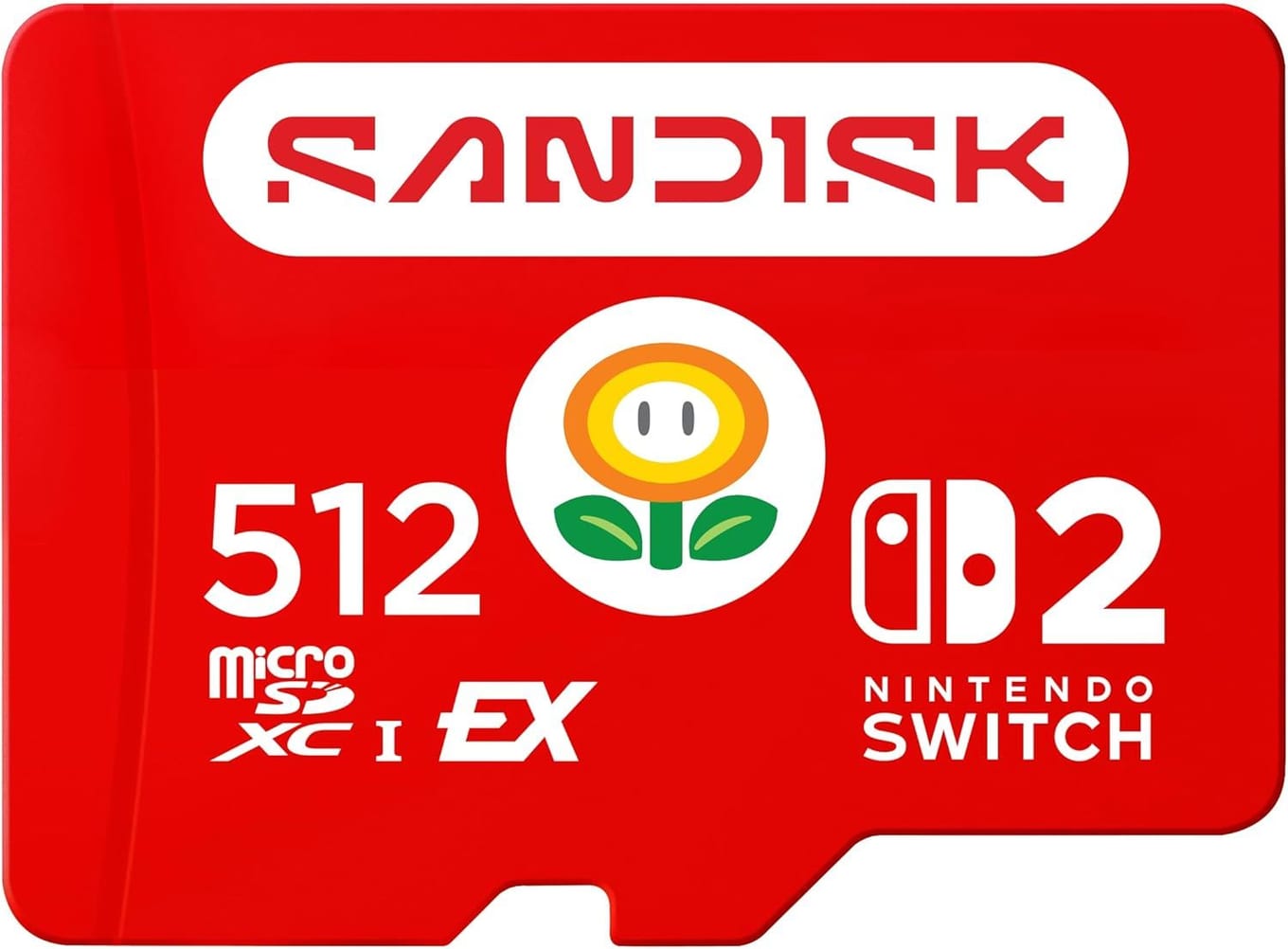
Only SanDisk publishes a minimum sustained write speed in MB/s. For the 512GB card its own page gives up to 880 MB/s read speeds and up to 650 MB/s write speed, and then adds 220 MB/s minimum sustained write speed. The first two are what the card can reach; the third is the figure SanDisk states as a minimum, and it is why this card leads here.
SanDisk's own note on those figures reads: Compatible device required capable of reaching such speeds. Based on internal testing; performance may be lower depending upon host device, interface, usage conditions and other factors. So the floor is SanDisk's own test result, not a guarantee. SanDisk also says card temperatures stay within operating limits with SANDISK ThermAdapt technology.
One thing to read alongside that floor: Lexar's and PNY's listings carry the V30 mark and print no sustained-write figure in MB/s, and neither Samsung's listing nor Samsung's own page carries a figure labelled as a write speed. What the other three publish is a rated maximum; what SanDisk adds is a minimum.
Its listing's Additional Features field reads "Limited Lifetime Warranty, Officially licensed for Nintendo Switch 2", its Compatible Devices field reads "Nintendo Switch 2", and its Model Name field reads "SANDISK microSD Express Card for Nintendo Switch 2". SanDisk's own page caps that lifetime the way Lexar's does: a 30-year warranty in Germany, Canada and regions not recognizing lifetime warranty. SanDisk's Compatible Devices field names a single device; Samsung's and Lexar's each name five, and PNY's names a card slot as well as a console.
Key Specs
Capacity : 512 GB
Rated read : up to 880 MB/s read speeds
Rated write : up to 650 MB/s write speed
Minimum sustained write : 220 MB/s
Scope SanDisk puts on all three : compatible device required; based on internal testing; performance may be lower depending upon host device, interface, usage conditions and other factors
Thermal : SANDISK ThermAdapt
Warranty : Limited Lifetime Warranty, with a 30-year warranty in Germany, Canada and regions not recognizing lifetime warranty
Model Number : SDSQXFN-512G-GR6ZN
Bottom line. SanDisk is the pick if a published minimum matters more to you than a published maximum.
Samsung P9 Express 512GB — Best with a drive-health check#
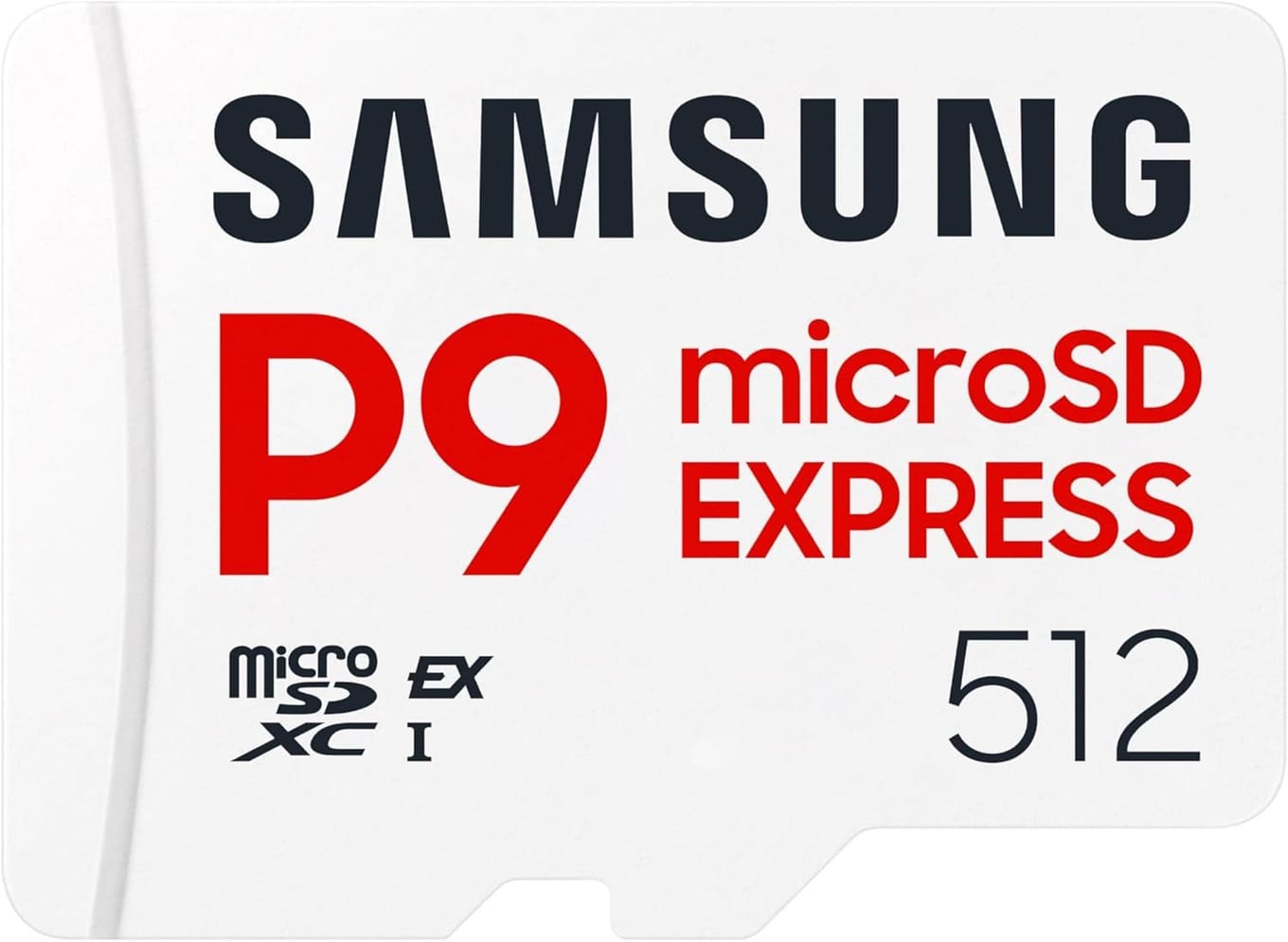
Samsung's case is the software that comes with the card. Its listing names Samsung Magician Software, which includes product authenticity verification and drive health monitoring — a way to check that the card is what it says it is, and how it is holding up. Samsung's footnote scopes it: the software is available on Windows and macOS, and it requires Windows 10 and higher, or macOS High Sierra (10.13) and higher.
The rated read is sequential read speeds up to 800 MB/s, the lowest of the four rated reads here, and the footnote on the listing puts that figure on a PCIe test board and adds that actual speeds may vary depending on host device, interface, usage conditions, and other factors. Neither Samsung's listing nor Samsung's own page carries a figure labelled as a write speed; the listing's Media Speed row reads 800, the same figure as its Read Speed row.
Samsung's own page states 6-Proof Protection with 3-Year Limited Warranty, and the term on the listing is 3 Year Limited Warranty — a fixed term rather than a lifetime one, which is where this pick gives ground. Its listing also names Dynamic Thermal Guard and says it helps reduce overheating for fast, smooth gameplay. The listing says the card is "compatible with Nintendo Switch 2" and microSD UHS-I devices, and its Compatible Devices field reads "Camera, Gaming Console, Nintendo Switch 2, Personal Computer, Steam Deck" — a list that reaches past the console to a Personal Computer.
Key Specs
Capacity : 512 GB
Rated read : sequential read speeds up to 800 MB/s
Scope the listing puts on it : PCIe test board; actual speeds may vary depending on host device, interface, usage conditions, and other factors
Software : Samsung Magician Software — product authenticity verification and drive health monitoring, available on Windows and macOS; requires Windows 10 and higher, or macOS High Sierra (10.13) and higher
Thermal : Dynamic Thermal Guard
Warranty : 3 Year Limited Warranty
Model Number : MB-MK512T/AM
Bottom line. Samsung is the pick if you want the maker's own software checking the card's authenticity and health on a Windows or macOS machine, and can accept a warranty that runs three years.
Lexar PLAY PRO 1TB — Best 1TB#
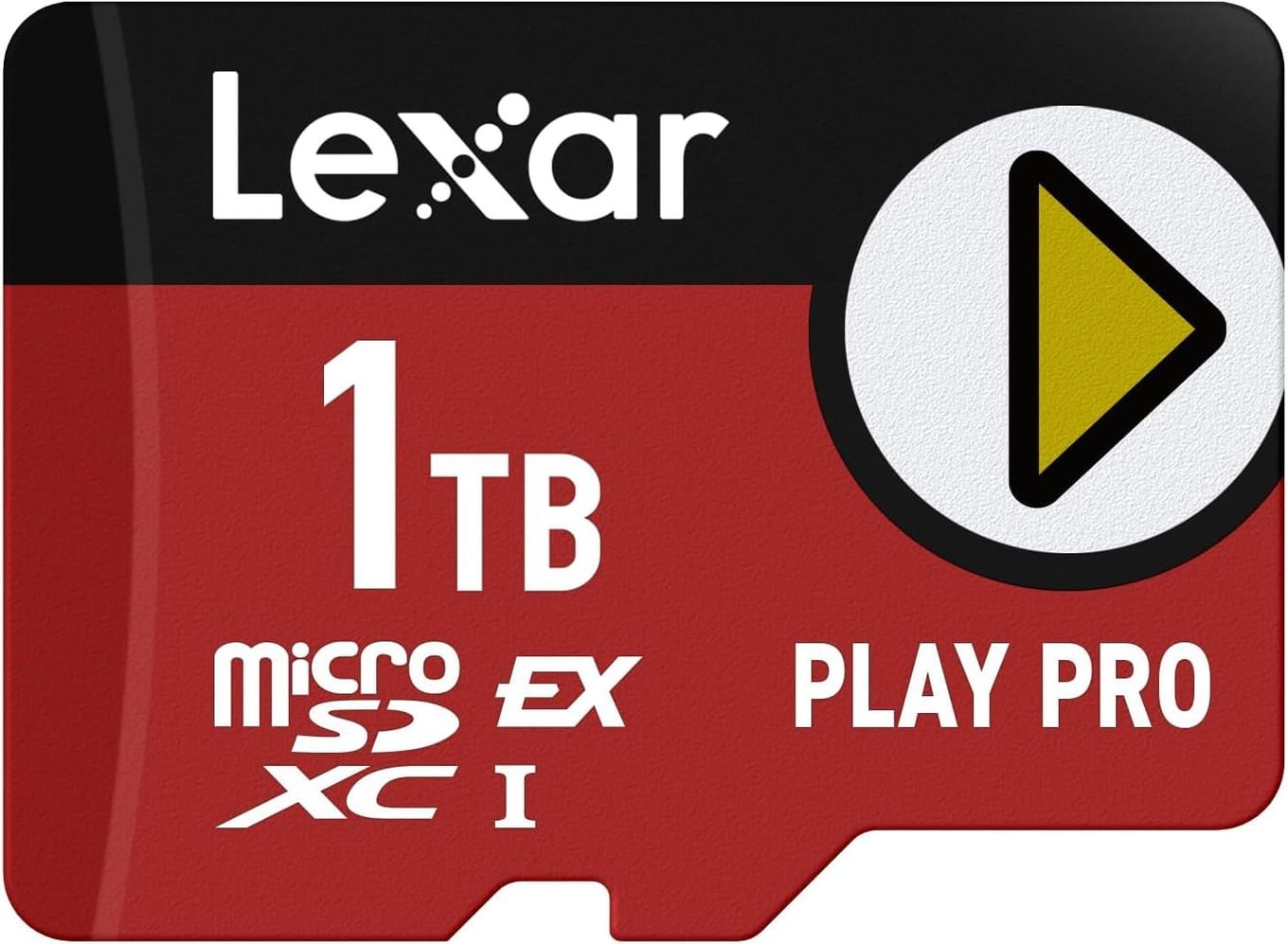
Lexar is here for the size. The listing puts 1 TB into a microSD Express card, and nothing else in this set goes that far.
The rated figures are read speeds up to 900MB/s and write speed up to 600MB/s, and Lexar's own page scopes that pair in its footnote: speeds based on internal testing, and maximum speeds reached only when used with a microSD Express host device. The listing attaches a second condition to the write figure — it is quoted when paired with the Lexar microSD Express card reader. Lexar's own page also lists a lower pair in a specification block that spans the PLAY PRO capacities: up to 205MB/s read, 140MB/s write speeds.
The listing calls the card backwards-compatible with UHS-I and UHS-II (at UHS-I speeds) host devices, and its Compatible Devices field reads "Camera, Gaming Console, Nintendo Switch 1, Nintendo Switch 2, Steam Deck". The video speed class on the card is V30. It includes a limited lifetime warranty and lifetime access to the Lexar Recovery Tool; Lexar's own page adds that the limited lifetime warranty is limited to 10 years from purchase in Germany and regions not recognizing lifetime warranty.
Key Specs
Capacity : 1 TB
Rated read : read speeds up to 900MB/s
Rated write : write speed up to 600MB/s, when paired with the Lexar microSD Express card reader
Scope Lexar puts on both : speeds based on internal testing; maximum speeds reached only when used with a microSD Express host device
Warranty and bundled software : limited lifetime warranty and lifetime access to the Lexar Recovery Tool, limited to 10 years from purchase in Germany and regions not recognizing lifetime warranty
Model Number : LMSXPS0001T-BNNNU
Bottom line. Lexar is the pick if the capacity is what decides it, and you read its rated maximum with the host condition Lexar attaches to it.
PNY microSD Express 256GB — Best 256GB#
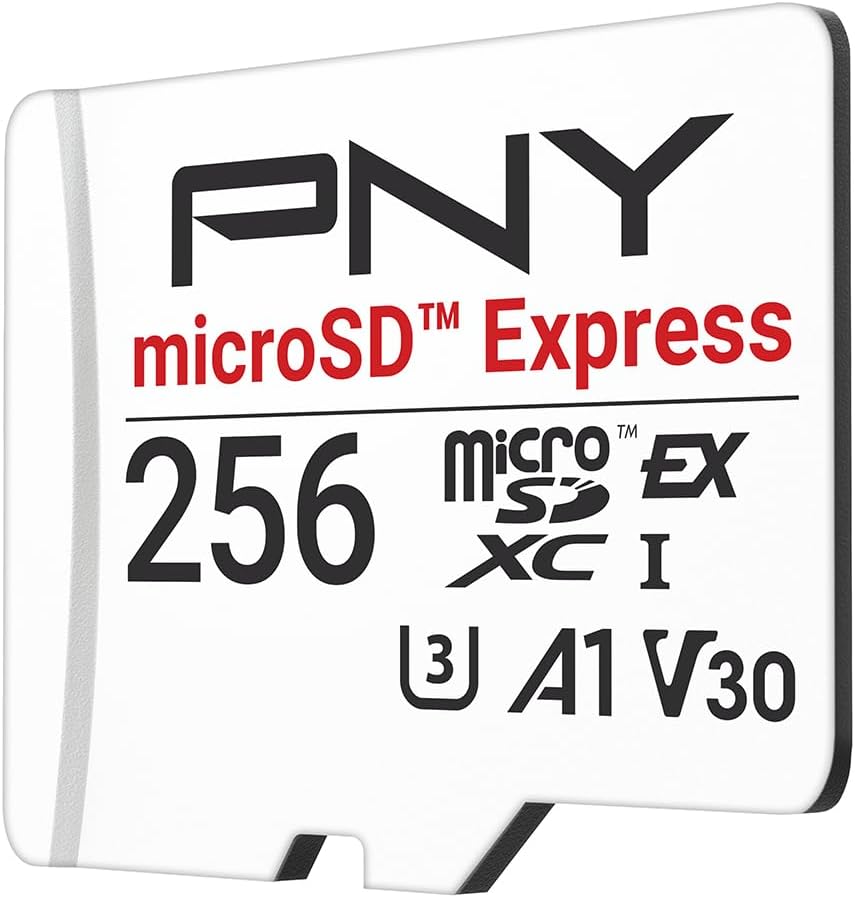
PNY is the 256 GB entry. Its Compatible Devices field is one string — "Devices with a microSDXC/microSDUC card slot" & "microSD Express host devices including Nintendo Switch® 2" — so it names a slot and a console. The listing says the card is "compatible with microSD Express Host Devices, including Nintendo Switch 2, and backwards compatible with microSD UHS-I and UHS-II devices", and its own description gives the speed that runs at: backwards compatible at UHS-I speeds with microSD UHS-I and UHS-II devices. A disclaimer on the same listing says "Compatible with UHS-II & UHS-I devices at UHS-II & UHS-I speeds"; both are printed here as found.
PNY rates the card at up to 890MB/s Read and up to 750MB/s Write speeds over PCIe Gen 3x1, and its own footnote for this SKU repeats the pair and adds: Requires compatible host device capable of reaching such speeds. PNY's page also carries a line-wide 850MB/s write figure for the microSD Express range; the figure for this SKU is 750MB/s, and that is the one this article follows. ASUS's row describes the X20's reader, PCIe® Gen4 x1; PNY's PCIe Gen 3x1 describes the card.
The listing claims adaptive thermal technology too, and says an A1 Application Performance rating allows users to run gaming apps directly from the microSD card. It is backed by a lifetime limited warranty with PNY Photo Recovery software available, and the video speed class on the card is V30.
One thing to know before you buy: under Device Compatibility for this card, PNY's page says that if you are experiencing issues with the PNY 1TB microSD Express card in your Nintendo Switch 2, "you may need to update the microSD Express card firmware", and it links a tool for doing it. That block is written for PNY's 1TB card; the same advisory runs again in the page's support block, there written for PNY's 128GB-1TB microSD Express cards.
Key Specs
Capacity : 256 GB
Rated read : up to 890MB/s Read
Rated write : up to 750MB/s Write speeds
Scope PNY puts on both : Requires compatible host device capable of reaching such speeds
Interface : PCIe Gen 3x1
Thermal : adaptive thermal technology
Compatible Devices : "Devices with a microSDXC/microSDUC card slot" & "microSD Express host devices including Nintendo Switch® 2"
Warranty and bundled software : lifetime limited warranty with PNY Photo Recovery software available
Model Number : P-SDU256P31880EXP-GE
Bottom line. PNY is the pick if 256 GB is the size you want and you want the A1 Application Performance rating its listing ties to running apps off the card.
Which one should you buy?#
SanDisk's microSD Express 512GB is the card to buy first for the ROG Xbox Ally X20: only SanDisk publishes a minimum sustained write speed in MB/s — 220 MB/s for the 512GB card, based on internal testing.
Buy the SanDisk microSD Express 512GB if a published floor is what decides it, and go in knowing the trade: its Compatible Devices field names a single device, and SanDisk's own page caps the lifetime warranty by region. View on Amazon
Buy the Samsung P9 Express 512GB if you want Samsung Magician Software checking the card on a Windows or macOS machine, and accept a warranty that runs three years where Lexar, SanDisk and PNY each print a lifetime one — Lexar's page caps it at 10 years, SanDisk's at 30, in some regions.
Buy the Lexar PLAY PRO 1TB if capacity is what decides it, and the PNY microSD Express 256GB if 256 GB is enough and you want a listing whose compatibility field names a card slot as well as a console.
Our recommendation: unless one thing already decides it for you — the capacity, the drive-health tool, or a 256 GB card — buy the SanDisk microSD Express 512GB.
FAQ#
Does the ROG Xbox Ally X20 take ordinary microSD cards?
Yes for a UHS-I card — ASUS's row names that mode as well as microSD Express. It lists the one card slot as a microSD Express card reader that supports up to SD v8.0, PCIe® Gen4 x1; UHS-I with DDR200 mode, so the UHS-I side is in ASUS's own description of that reader. Nothing captured here tested an ordinary UHS-I card in the machine, and ASUS's specification page for the X20 names no UHS-II mode for that card reader.
Do any of these cards say they work with the ROG Xbox Ally X20?
No. Not one of the captured card listings or maker pages names the ROG Xbox Ally X20 in its own fields. What connects them is the format: ASUS lists the X20's reader as a microSD Express card reader.
What warranty does each card carry?
Samsung's is a fixed three-year term. Lexar's, SanDisk's and PNY's are lifetime limited, and Lexar and SanDisk each cap that lifetime by region on their own pages.