

At a Glance#
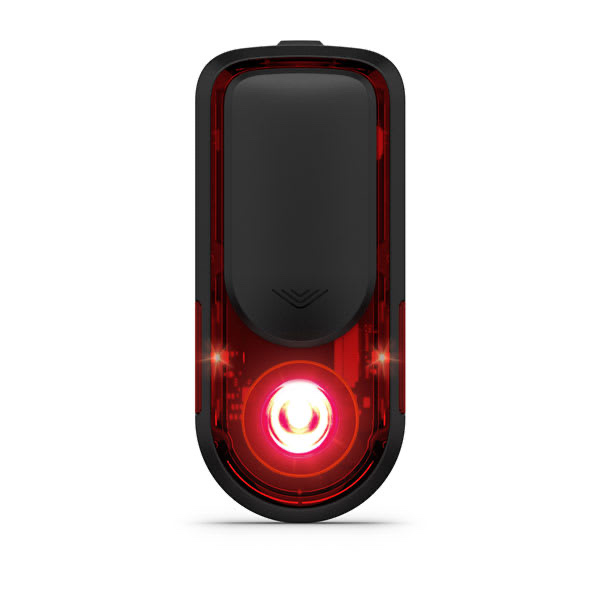
Product : Garmin Varia RearVue 820 Radar Tail Light
Brand : Garmin
Best For : Road and gravel cyclists who share the road with cars
Form Factor : Seatpost-mounted radar unit with integrated LED tail light
Buy Now : Garmin Varia RearVue 820 on Amazon
Key Highlights:
- 170-meter radar reach: Detects approaching vehicles well before you can hear them, often over 200 meters in clear conditions.
- Threat classification: Reports vehicle size, speed, and lane position instead of a generic dot on a screen.
- 2 km tail light: An LED that pushes up to 100 lumens in day flash mode and stays visible to drivers in bright daylight.
- Automatic brake light: The tail light flares on its own when you slow, with no button press.
- 24-hour battery, USB-C: All-day rides on a charge, topped up through a modern USB-C port.
Who Should Buy This#
Rear-facing radar changed road cycling more than any gadget in the last decade. It does one thing brilliantly. It tells you a vehicle is approaching from behind, long before your ears or a shoulder check could. The Varia RearVue 820 is Garmin's most advanced take on that idea. It is not a niche toy. It is a genuine safety layer for anyone who rides where cars drive.
The question is not whether radar helps — rear radar has become standard safety kit for road riders, because the constant low-level anxiety of not knowing what is behind you simply fades. The question is whether this particular unit earns a place on your seatpost. For most road and gravel riders, the answer is a confident yes. Here is who benefits most.
- The daily road commuter: You ride the same car-heavy roads every day. The 820 gives you seconds of warning at every pinch point, and the bright brake light makes drivers behind you take you seriously.
- The long-distance endurance rider: You need battery that lasts a full century or a bikepacking day. Up to 24 hours in day-flash mode and 30 hours in radar-only mode covers almost any single-day effort.
- The safety-first solo cyclist: You often ride alone with nobody watching your back. The radar becomes a second set of eyes that never gets tired or distracted.
- The Garmin ecosystem rider: You already own a recent Edge computer or a compatible watch. You unlock the full feature set, including lane position and vehicle size, with zero extra hardware.
If that sounds like your riding, it is worth checking the current listing on Garmin Varia RearVue 820 on Amazon before you read another line.
Radar That Reads the Road, Not Just the Traffic#
Every rear radar can tell you something is behind you. The RearVue 820 tells you what. That difference is the headline upgrade, and it changes how the device feels on the road.
The radar detects approaching vehicles from up to 170 meters (558 feet) away by Garmin's own manual — the product page rounds it to 175 — which is over one and a half football fields. In independent testing on straight, clear roads, the unit has picked up cars beyond 200 meters. Range matters because range is time. At highway speeds, an extra 50 meters of detection buys you a couple of extra seconds to react, choose your line, and settle your nerves before the car arrives.
What sets the 820 apart is classification. Older radars showed you a moving dot and left you guessing. This unit reports a vehicle's size, its speed, and its position on the road. When paired with a compatible head unit, that data turns into a clearer picture. You learn whether the thing behind you is a scooter or a truck. You learn if it is drifting into your lane or giving you room.
The detection field is 60 degrees, up from 40 degrees on the RTL515 generation. On a curving road, a narrow radar can lose a car as the road bends. The wide cone keeps vehicles tracked through corners and lane splits. It also handles multi-lane roads better, because it sees across the whole approach rather than a thin slice directly behind you.
Garmin also fixed the oldest complaint about radar. Same-speed vehicles used to vanish. If a car matched your pace, the old system assumed it was gone and dropped the alert, even though the car was still right there. The 820's smarter software keeps tracking a vehicle that sits at your speed — though Garmin cautions that same-speed tracking is limited or unavailable at slower speeds or when the radar cannot read the road, and its manual still warns it may miss a vehicle at exactly your speed. It narrows the old blind spot substantially rather than removing it.
There is one honest caveat. In heavy rain, the classification can stumble. Testers have seen it mislabel a car as a cyclist and the reverse when the roads are wet. The core detection still works and still warns you. It is the fine-grained sizing that gets noisy in a downpour. For the vast majority of dry and mixed rides, it is reliable.
A Tail Light Built to Be Seen From a Kilometer Away#
A radar is only half the safety story. The other half is being visible so drivers slow down before they even need the warning. The RearVue 820 pairs its radar with a genuinely bright tail light, and the two work together.
The LED pushes up to 100 lumens in day flash mode — the daylight setting — and is engineered for visibility up to roughly 2 km, which is about 1.24 miles. In solid mode it runs at 25 lumens. That is not a marketing number you only see at midnight. The flash pattern is designed to catch a driver's eye in bright sun, when most cheap lights simply disappear against the glare. Being seen a kilometer out means a driver starts adjusting their line early, which is exactly when it is safest for both of you.
The light is not just a dumb blinker. When a vehicle is detected, the tail light can change its behavior to draw more attention as the car closes in. So the same unit that warns you is also actively working to make the driver behind you more careful. That is a feedback loop no standalone light can offer.
You can tune the modes to suit your ride. Day-flash mode maximizes attention and battery life for bright conditions. A solid mode gives a steady beam for low light. The Varia app lets you set the behavior you want and forget about it. For riders who want the most capable light-plus-radar combo in one clean unit, Garmin Varia RearVue 820 on Amazon is where to grab it.
The Brake Light You Never Have to Think About#
One of the most underrated features on the 820 is its automatic brake light. It solves a problem you might not know you had. When you slow suddenly on a bike, the driver behind you has no obvious cue, the way they would with a car's brake lights.
The RearVue 820 fixes that itself. The moment it senses you decelerating, it flares the tail light brighter to signal that you are slowing. There is no button to press and nothing to remember. It just happens, the same way a car's brake lights do. Drivers understand that cue instinctively, so it translates directly into more space and earlier braking behind you.
You can tune the brake light pattern in the Varia app — Garmin describes it as a distinct flashing pattern the light adopts when you slow. Honest note here. In standard brightness modes, some testers found the brake flare a touch subtle compared to a car. It is a helpful extra cue, not a blinding strobe. But as a passive safety feature that costs you nothing to run, it is a smart inclusion that older Varia units never had.
Think about the moments it protects you. You reach a junction and grab the brakes hard. You spot a pothole and scrub speed fast. You crest a climb and slow to a crawl. In every one of those cases, the driver behind you gets an automatic, instantly recognizable signal that you are slowing. That earns you a little more space and a little more patience, exactly when you are most vulnerable. It is the kind of quiet, always-on safety that you never notice working, which is precisely why it is worth having.
All-Day Battery, USB-C, and a Mount That Just Works#
Safety gear only helps if it is charged and mounted when you need it. Garmin clearly listened to years of feedback here, because the practical details on the 820 are excellent.
Battery life is genuinely all-day. You get up to 24 hours in day-flash mode, around 10 hours in solid mode, and up to 30 hours in radar-only mode. There is also a peloton mode for group rides rated at up to 15 hours. Independent testing found the real-world numbers close to Garmin's claims, which is not always the case with light runtimes. For most riders, that means charging once a week rather than after every ride.
Charging finally moves to USB-C. The old Varia units used micro-USB, which felt dated for years. Now you can top up the radar with the same cable that charges your phone and headphones. It is a small change that removes a daily annoyance. One caveat: Garmin lists the battery as built-in, with no user-replacement procedure published, so plan on the cell lasting the life of the unit rather than being a swappable part.
Mounting uses Garmin's redesigned seat post mount, while the twist-lock interface on the light itself is unchanged, so existing Varia-compatible mounts still fit. The 820 ships with rubber pads for round, D-shaped, and aero seatposts, secured with one of the included bands or, if you prefer, the included cable ties. That means it fits modern aero frames and classic round posts alike. The fit is solid and stable, so it does not rattle loose over rough roads or gravel. It is also rated IPX7 for water resistance, so rain and road spray are no concern.
How It Fits Into the Garmin Ecosystem and Varia App#
The RearVue 820 is a great standalone light, but it becomes a genuine co-pilot when it talks to the rest of your gear. Understanding the connectivity is the key to knowing what you will actually get.
The radar broadcasts on three channels at once. It uses the ANT+ radar profile, the ANT+ bike light profile, and Bluetooth. That triple approach matters because it decides which features you unlock. Basic radar alerts travel over ANT+, so almost any modern bike computer that supports the radar profile can show approaching vehicles. Wahoo, Hammerhead, and third-party head units generally handle that layer fine.
The smarter features are a different story. Lane position and vehicle-size recognition ride on the Bluetooth link to Garmin's own ecosystem. That means those standout functions only appear on recent Garmin Edge computers, specifically the newer x40 and x50 series with updated firmware, or through the free Varia smartphone app. If you own a compatible Edge, the payoff is huge. You get a clean visual of what is behind you, sized and placed on the road, right on your existing screen.
The Varia app is the great equalizer for everyone else. You do not need to own a Garmin computer at all. Mount your phone, open the app, and you get radar alerts, tone warnings, and access to the advanced settings. It is also where you tune the brake light, pick your light modes, and update firmware. For a rider who wants full functionality without buying a head unit, the app path is a real, no-compromise option.
One practical note from early testing. A launch-window ANT+ quirk briefly showed odd distances beyond roughly 196 meters on some non-Garmin computers, and Garmin patched it quickly with a firmware update. It is a reminder to keep the unit updated through the app, which takes a minute and keeps the radar behaving as designed. If the full ecosystem experience appeals to you, Garmin Varia RearVue 820 on Amazon is the simplest place to start.
Technical Specifications#
- Radar detection range: Up to 170 m (558 ft) per the owner's manual; Garmin's product page lists 175 m
- Detection field of view: 60 degrees, up from 40 degrees on the RTL515
- Tail light output: Up to 100 lumens in day flash mode; 25 lumens in solid mode
- Tail light visibility: Up to roughly 2 km (1.24 miles)
- Brake light: Automatic braking detection with a distinct flash pattern, tunable in the Varia app
- Battery life: Up to 24 hours day-flash, about 10 hours solid, up to 30 hours radar-only
- Charging port: USB-C; the battery is built-in and Garmin publishes no user-replacement procedure
- Connectivity: ANT+ (radar, bike lights) and Bluetooth (radar, bike lights)
- Compatibility: Garmin Edge computers, many Garmin watches, and the free Varia app
- Water resistance: IPX7 rated
- Weight: About 90 grams (3.2 oz)
- Dimensions: Roughly 98.9 x 25.9 x 43.2 mm
- Mount: Redesigned seat post mount with rubber pads for round, D-shaped, and aero posts; bands and cable ties included
Pros & Cons#
Pros:
- Long warning distance: The 170-meter rating, often exceeded in the real world, buys you the extra seconds that matter most.
- Real intelligence, not just alerts: Vehicle size and threat classification tell you what is coming, not just that something is.
- Genuinely visible tail light: Garmin rates it visible from up to roughly 2 km away, with a 100-lumen day-flash mode.
- Automatic brake light: The flare warns traffic when you slow, with zero effort from you.
- Long, honest battery life: Up to 24 hours day-flash and 30 hours radar-only, verified close to claims.
- Modern hardware: USB-C charging finally retires the micro-USB port of older Varia units.
- Wide, curve-friendly detection: The 60-degree field keeps cars tracked through bends and multi-lane roads.
Cons:
- Best features need Garmin gear: Lane position and vehicle size require a recent Edge or the Varia app over Bluetooth.
- Rain confuses classification: Heavy wet weather can make the unit mislabel cars and cyclists.
- Heavier than before: At 90 grams it is noticeably heavier than the outgoing RTL515.
- Hard to justify over a working RTL515: If your older unit still runs well, the gains are real but incremental.
FAQ#
Q: How far away can the Garmin Varia RearVue 820 detect cars? A: Garmin's owner's manual rates the radar to detect approaching vehicles up to 170 meters (558 feet) away, and its product page lists 175 meters. Independent testers have measured detections beyond 200 meters on straight, clear roads. In practice that translates to several extra seconds of warning before a vehicle reaches you, which is the whole point of the device.
Q: Do I need a Garmin Edge to use the RearVue 820? A: No. The radar pairs with Garmin Edge bike computers, many Garmin watches, and any head unit that supports the ANT+ radar profile. You can also run it with just the free Varia smartphone app. However, the advanced lane-position and vehicle-size features only appear on recent Garmin Edge units or through the Varia app over Bluetooth.
Q: Does the RearVue 820 have a brake light? A: Yes. The light detects when you slow down and flares brighter to warn traffic behind you. You can tune the flash pattern in the Varia app. It works automatically with no button press, so drivers get a familiar brake-light cue as you decelerate.
Q: How long does the battery last and how does it charge? A: Battery life runs up to 24 hours in day-flash mode, around 10 hours in solid mode, and up to 30 hours in radar-only mode. It charges over USB-C, an upgrade from the micro-USB on older Varia units. The battery is also replaceable at end of life — a DIY Torx-and-screws job rather than a tool-free swap.
Q: Is the Varia RearVue 820 worth upgrading to from the RTL515? A: If your RTL515 still works, the upgrade is about better range, longer battery, USB-C, and the new threat-classification and same-speed tracking. Those are real gains, especially the ability to keep tracking a car that matches your speed (Garmin notes this is limited at slower speeds or when the radar is obstructed). If you ride hard on busy roads, the upgrade pays off. If you ride quiet lanes, the older unit remains capable.
Final Verdict#
Buy it. The Garmin Varia RearVue 820 is the most capable rearview cycling radar you can buy, and the case for owning one is simple. It gives you earlier, clearer, more trustworthy warnings about the single greatest danger in road cycling, the vehicle you cannot see coming.
The upgrades over the old generation are not cosmetic. Longer range, a 60-degree field, same-speed tracking, threat classification, and USB-C all address real complaints from real riders. Add a bright day-flash tail light and an automatic brake light, and you have a single seatpost unit that both warns you and makes you safer to the drivers behind you.
It is not flawless. The best intelligence features lean on the Garmin ecosystem, and classification gets noisy in heavy rain. It is also heavier than the unit it replaces. But none of that undercuts the core value. The radar detection itself is excellent regardless of what head unit you pair, and the safety it delivers is the kind you feel on every ride.
If you already run an RTL515 that works fine on quiet lanes, you can wait. Everyone else, especially riders on busy roads, commuters, and long-distance solo cyclists, should treat this as essential kit rather than a luxury.
Our recommendation: If you ride where cars drive, put the Varia RearVue 820 on your bike. Check current availability and grab it on Garmin Varia RearVue 820 on Amazon.