

At a Glance#
The five decisions : Condenser or dynamic and the room you record in, what the microphone connects to, whether the desk setup works one-handed, what the companion software actually adds, and which spec-sheet numbers are marketing rather than difference
The one most people get wrong : Chasing the highest sample rate — a 96 kHz mic and a 48 kHz mic sound the same on home voice, and the practical difference is subtle
The spec that matters instead : Capsule type, because a dynamic and a condenser hear your untreated room completely differently
The quiet dealbreaker : A boom arm thread that does not match the mic, or a companion app you are forced to open before the microphone behaves
Key Highlights:
- A dynamic capsule rejects room noise and forgives an untreated room; a condenser captures more detail and more of the room with it
- USB-C only is simpler; USB-C plus XLR is the one you do not replace when you add an interface
- Zero-latency headphone monitoring is on all four; onboard gain and the mount thread are where they split
- The companion apps add EQ, compression and mixing — genuinely useful, and entirely optional for basic recording
- Every microphone here is cardioid, so polar pattern is not a thing you are choosing between
Who This Is For#
This page tackles the criteria question — what to look for in a USB microphone — not the "best USB microphone" head term. There is no single winner at the bottom, because the decision that matters is which of five trade-offs describes your desk, and four strong microphones resolve those trade-offs in four different directions.
USB microphone marketing is unusually good at flattering the wrong number. The sample rate on the box is the figure most likely to be quoted and least likely to change what you hear, while the specification that actually predicts whether you will be happy — the capsule type, and how it behaves in the room you actually record in — rarely leads the page.
Especially useful if you are:
- A first-time buyer deciding between a condenser and a dynamic mic without knowing which one your room punishes
- A podcaster or voice-over recorder in an untreated room, where the capsule choice is the whole game
- A streamer who needs onboard controls and software mixing more than raw resolution
- Anyone who already owns a boom arm and needs the mount thread to match before anything else matters
1. Condenser or Dynamic, and the Room You Record In#
This is the first decision and the one that quietly settles most of the others, because it is really a decision about your room.
A dynamic microphone uses a moving coil. It is less sensitive, so it rejects most of what is happening around you and picks up mainly what is directly in front of it. The RØDE PodMic USB puts this plainly: unlike condenser microphones that capture everything in the room, its tight cardioid dynamic capsule focuses on your voice and ignores the rest — keyboard clatter, mouse clicks, room echo, background noise. The Shure MV7+ works the same way, using the dynamic capsule lineage that made the SM7B a broadcast fixture. In an untreated room — a bedroom, a home office, an apartment with street noise — a dynamic mic is forgiving, because the room never reaches the capsule in the first place.
A condenser microphone uses a charged diaphragm and is far more sensitive. It captures more detail and more nuance, which is exactly what you want in a quiet, treated space, and exactly the problem in a noisy one. The RØDE NT-USB Mini and the Elgato Wave:3 both use condenser capsules, and both reward a controlled room by resolving vocal detail that a dynamic capsule flattens. The same sensitivity that makes them sound richer also means they hear the air conditioning, the desk, and the neighbours.
So the honest question is not "which sounds better" but "what does my room sound like when I am not talking". If the answer is "not silent", the capsule choice has already been made for you.
Our recommendation: if your room is untreated or shared, buy dynamic and stop comparing frequency-response graphs. If your room is quiet and you can keep it that way, a condenser will reward you with detail a dynamic will not reach.
2. Connection: USB-C, XLR, or Both#
Every microphone here connects over USB-C with no audio interface, no phantom power, and no preamp required — that is the category. The real split is whether USB is the only way in.
The Elgato Wave:3 and the RØDE NT-USB Mini are USB-C only. That is not a weakness; it is a simpler object with fewer ways to be configured wrong, and for most people it is all they will ever use.
The Shure MV7+ and the RØDE PodMic USB add an XLR output alongside USB-C. On the MV7+ the two run simultaneously or independently; the PodMic USB offers the same dual output. The point is a growth path: you run USB into a laptop today, and the day you add an audio interface or a mixer you plug the same microphone in over XLR instead of replacing it. It is future-proofing rather than a feature you use on day one — but it is the difference between buying one microphone and buying two over the life of a hobby that gets more serious.
One caveat worth knowing on the PodMic USB: its onboard processing is only accessible over the USB connection, not in XLR mode. The dual output buys you flexibility, not both feature sets at once.
Our recommendation: if you are certain USB is your endpoint, USB-C only is the cleaner buy. If there is any chance you graduate to an interface, the XLR-plus-USB pair is the one you do not have to sell on later.
3. The Desk Setup: Monitoring Loop, Gain, and Whether Your Boom Arm Fits#
A microphone lives on a desk, and three practical details decide whether that desk is pleasant to work at — none of them are about sound quality.
Zero-latency headphone monitoring is the loop that lets you hear exactly what the microphone captures, in real time, with no delay between speaking and hearing yourself. All four here have a headphone output that does this, which matters more than it sounds: it is how you catch mouth clicks, background noise, and bad mic positioning while recording instead of discovering them in the edit.
Onboard gain and controls are where they diverge. The MV7+ has an LED touch panel for gain, monitor mix and mute directly on the mic. The Wave:3 uses a multifunction dial that switches between gain, headphone volume and the mic-to-PC crossfade. The NT-USB Mini keeps it minimal with a headphone volume dial and no physical mute. The PodMic USB has on-mic headphone volume but pushes its deeper controls into software — there are no onboard controls beyond headphone level.
The mount thread is the detail that ambushes people who already own a boom arm. The MV7+ and the Wave:3 use the standard 5/8-inch thread most arms ship with. So does the NT-USB Mini — RØDE's user guide reads "a standard ⅝-inch thread, but the NT-USB Mini also comes with a 3/8-inch adaptor if required", so keep that adaptor. The PodMic USB weighs 900g and needs a genuinely sturdy arm that can hold that mass without drooping — its heft is a stability asset on a strong arm and a problem on a weak one. The PodMic USB weighs 900g and needs a genuinely sturdy arm that can hold that mass without drooping — its heft is a stability asset on a strong arm and a problem on a weak one.
Our recommendation: if you already own an arm, check its thread and its weight rating before you check anything about the microphone. A mic that will not mount on the arm you own is the wrong mic regardless of how it sounds.
4. Companion Software and Onboard DSP#
Each of these microphones ships with a free desktop app, and each app runs real processing — EQ, compression, noise gating — that used to require outboard hardware. The important framing: the software adds features, it does not gate basic operation. All four are class-compliant USB audio devices that appear as an input and record the moment you plug them in, drivers or not.
Shure MOTIV, for the MV7+, adds AutoLevel — gain that adjusts itself in real time, which saves a podcaster whose energy climbs mid-episode — plus EQ, a compressor and a limiter, on top of the mic's onboard touch-panel controls.
RØDE Connect, for the NT-USB Mini, unlocks APHEX processing baked into the mic: the Aural Exciter for presence, Big Bottom for low-end warmth, plus a compressor and a noise gate, each a single click. It also connects up to four NT-USB Minis to one computer for multi-person podcasts with automatic mix-minus — a feature competitors usually reserve for a premium tier.
RØDE Central, for the PodMic USB, is where that mic's APHEX DSP actually lives: a high-pass filter, noise gate, compressor, and the same Aural Exciter and Big Bottom processors, with savable presets for different recording scenarios and firmware updates. Because there are no deep onboard controls, this app is less optional here than elsewhere if you want the processing at all.
Elgato Wave Link is the outlier in purpose. Rather than sculpting one voice, it is a nine-channel virtual mixer — game audio, Discord, music, alerts, microphone — feeding two independent outputs, one for the stream and one for your headphones. It replaces a physical mixer or virtual audio cable software, which is why it is the streamer's answer specifically.
Our recommendation: decide whether you want the software to fix a voice or mix a broadcast. RØDE and Shure sculpt a single source; Wave Link routes many. Pick the one that matches the job, and remember none of it is required to simply record.
5. Sample Rate and Polar Pattern Are Where the Marketing Lives#
This is the section that turns a spec sheet from a sales tool back into a comparison, because two of its most-quoted numbers do almost nothing here.
Take sample rate. Elgato's spec sheet for the Wave:3 reads "Sample Rate 48 / 96 kHz" — it runs at either — while the MV7+, the NT-USB Mini and the PodMic USB are 48 kHz. The box will present 96 kHz as higher resolution, and technically it is — but for home voice recording the practical difference is subtle, and most listeners will not hear it. A higher sample rate is not a reason to pick the Wave:3 over the others; its genuinely differentiating features are Clipguard and Wave Link, not the number on the spec line. Treat 96-versus-48 the way you would treat a charger claiming to be faster purely because of the technology inside it: the headline is real and the audible result is not.
Then polar pattern. Every microphone here is cardioid — it picks up from the front and rejects the sides and rear. That is the right pattern for a single voice at a desk, but because all four share it, it is not something you are choosing between. Neither the NT-USB Mini nor the Wave:3 offers switchable patterns, and that is fine for the job; it simply means "cardioid" on a spec sheet is describing the category, not distinguishing the product.
What actually differentiates within these numbers is capsule behaviour, not the sample-rate or pattern labels: the dynamic-versus-condenser choice from the first section, and features like the Wave:3's Clipguard, which runs a parallel lower-gain signal path so a sudden shout or desk slam switches to the clean backup instead of clipping.
Our recommendation: ignore the sample-rate line and the polar-pattern line when comparing these four. If a feature only shows up as a bigger number and not as a different capability, it is there to be quoted, not to be heard.
Four Microphones, Four Different Answers#
None is better in the abstract. They answer the five decisions above in four directions.
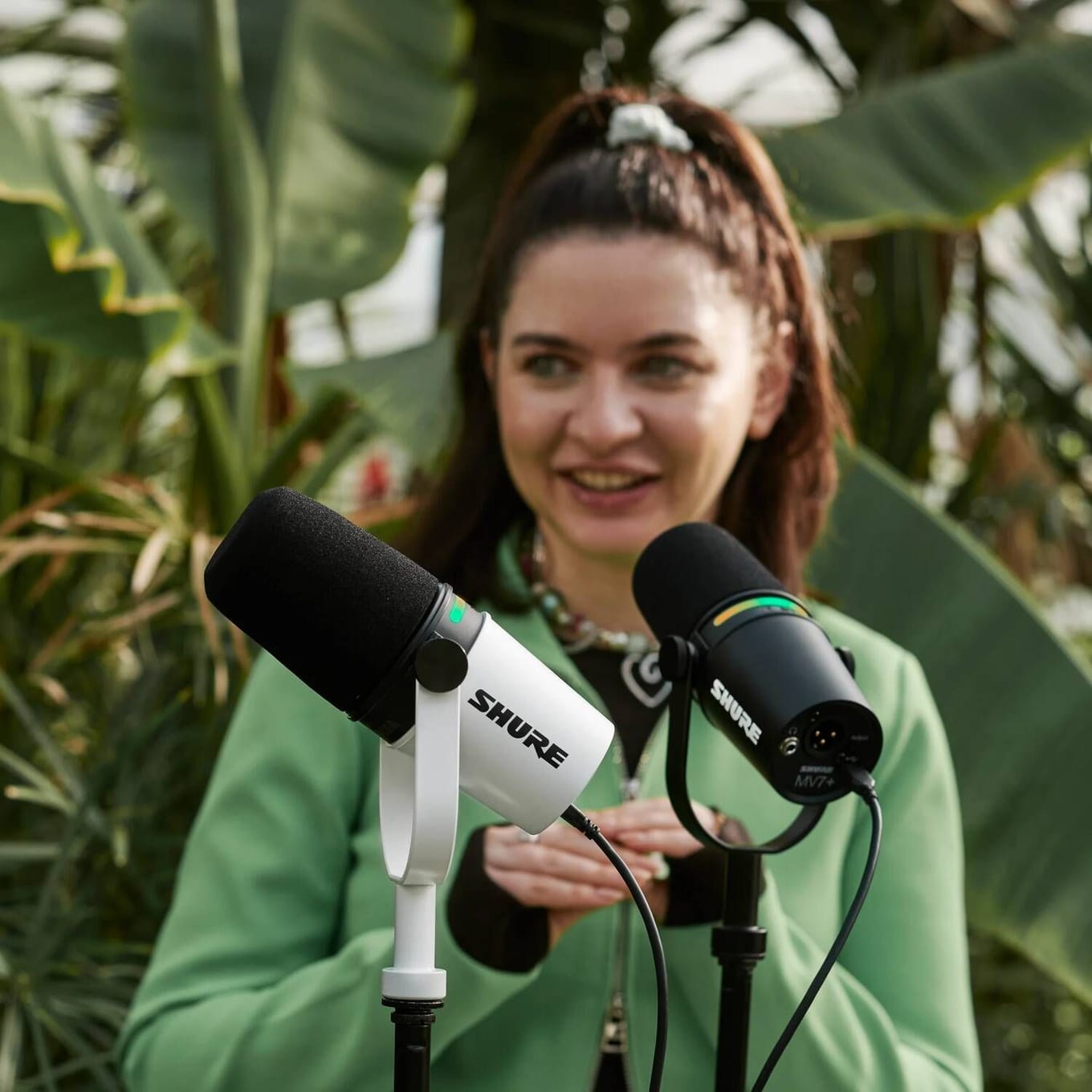
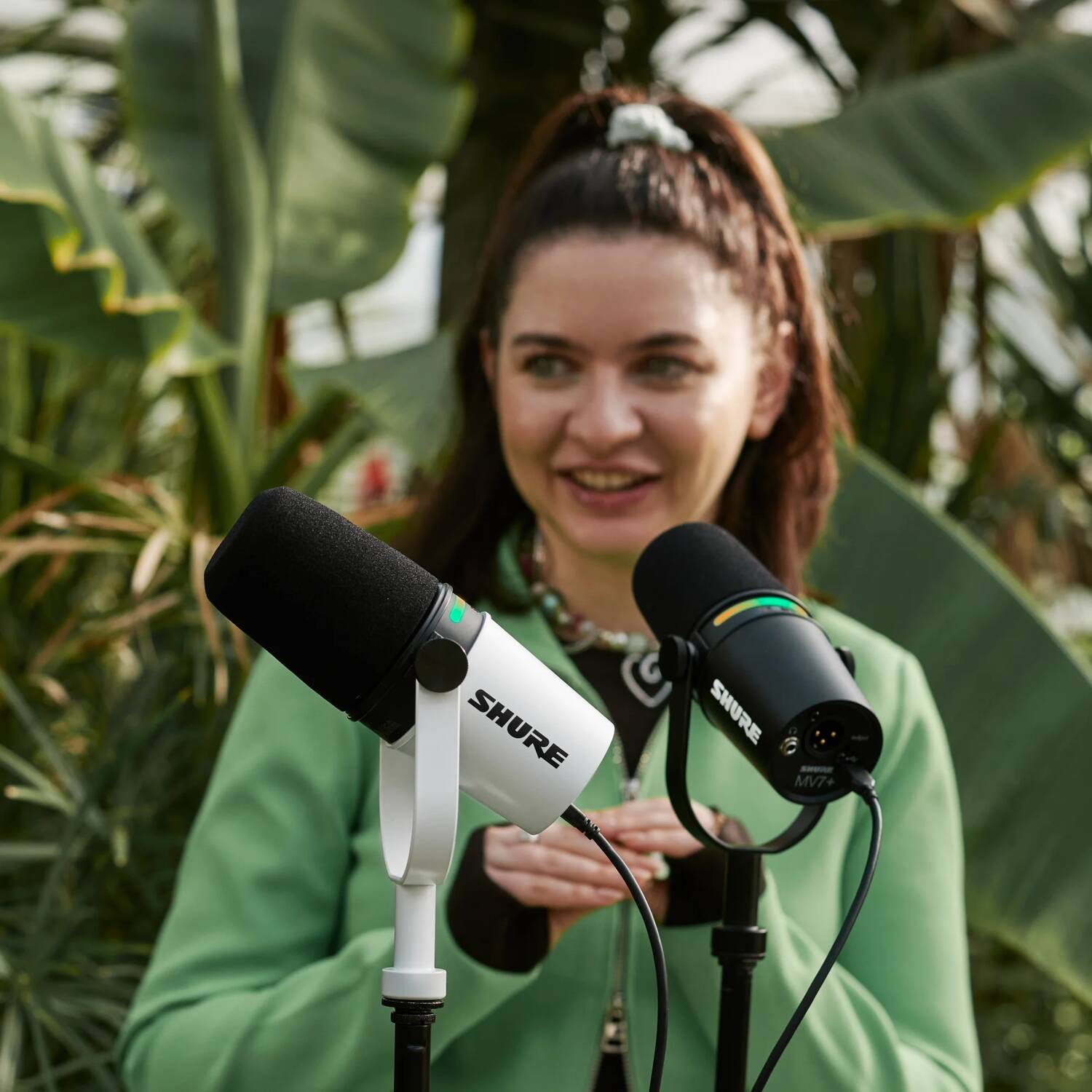
The Shure MV7+ is the grow-into-it answer. A dynamic capsule that forgives an untreated room, USB-C and XLR running together or independently, an onboard touch panel for gain and mute, MOTIV's self-adjusting AutoLevel, and a 5/8-inch thread most arms already fit. If you want one microphone that starts on a laptop and ends in a studio without being replaced, this is the shape that solves it: View on Amazon
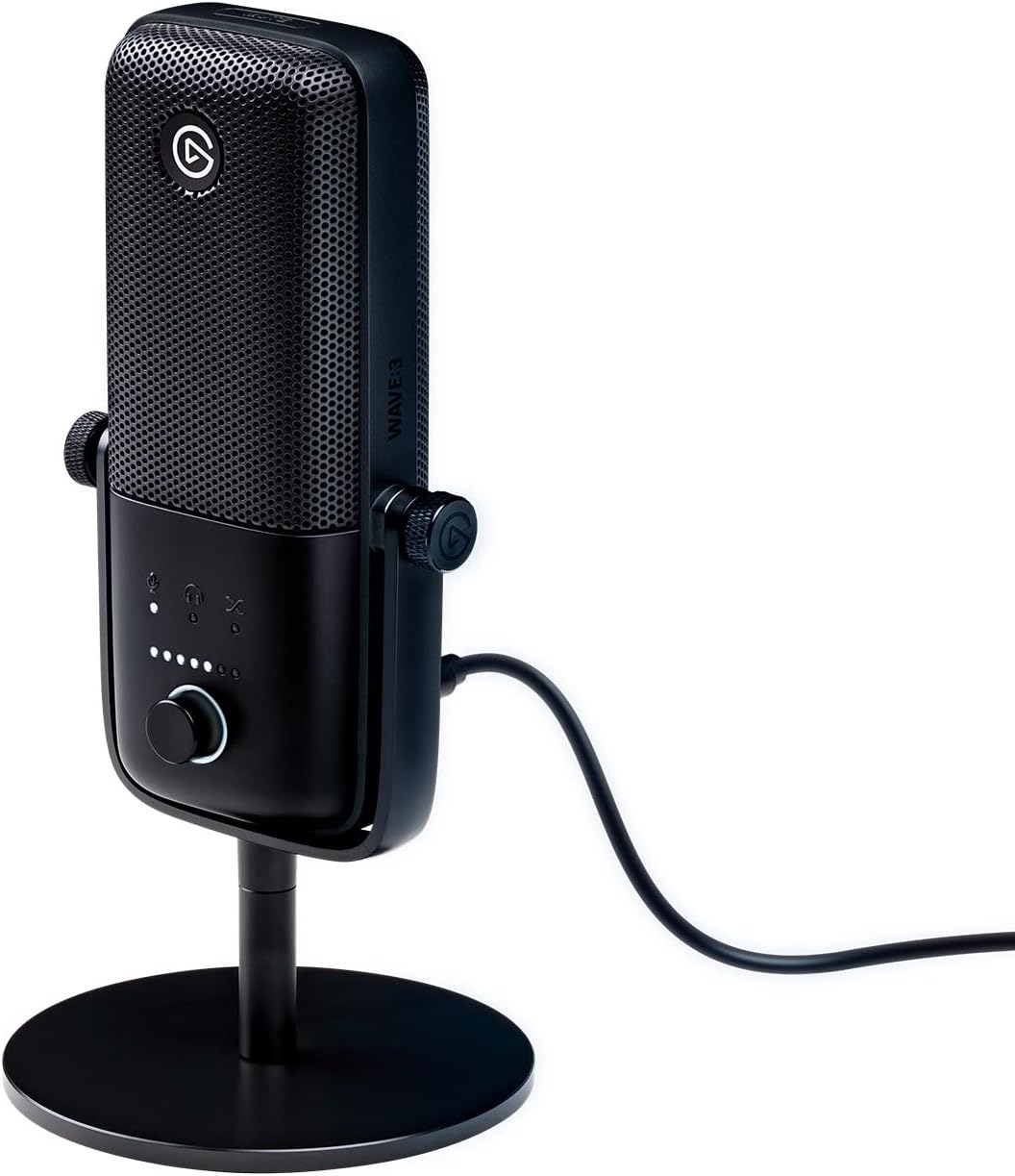
The Elgato Wave:3 is the streamer's answer. Its condenser capsule wants a quiet room, but its real value is elsewhere: Clipguard catching sudden volume spikes before they distort, and Wave Link's nine-channel mixer replacing a physical board. If your audio goes out live and needs routing more than it needs an XLR port, this is the one built for it: View on Amazon
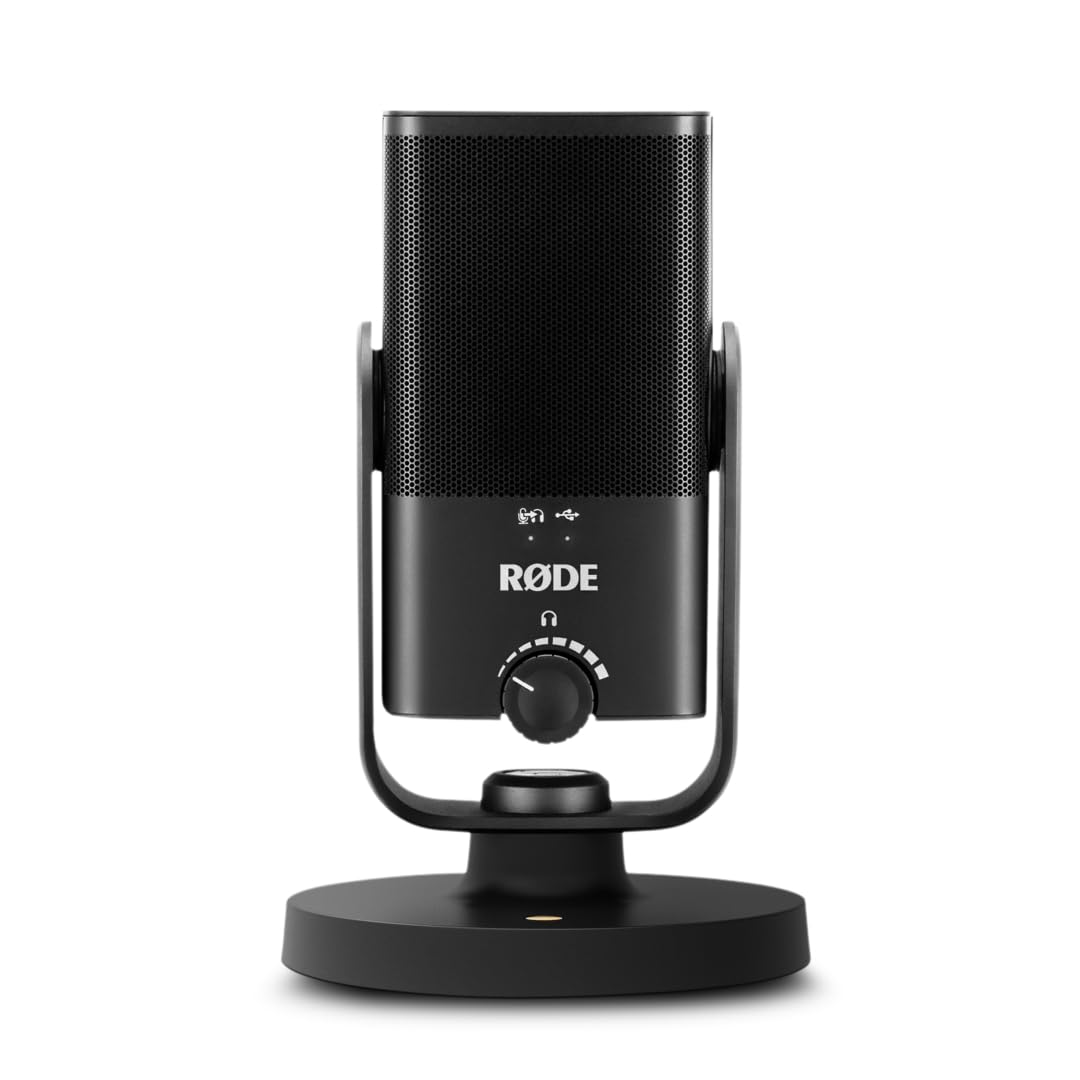
The RØDE NT-USB Mini is the compact-condenser answer. USB-C only, a magnetic desk stand, a built-in pop filter, RØDE Connect's APHEX processing, and multi-mic support up to four units — all in a body smaller than a coffee mug. It uses the standard ⅝-inch thread, and RØDE puts a 3/8-inch adaptor in the box if your arm needs one. For a controlled room and a clean desk, it is the smartest small footprint here: View on Amazon
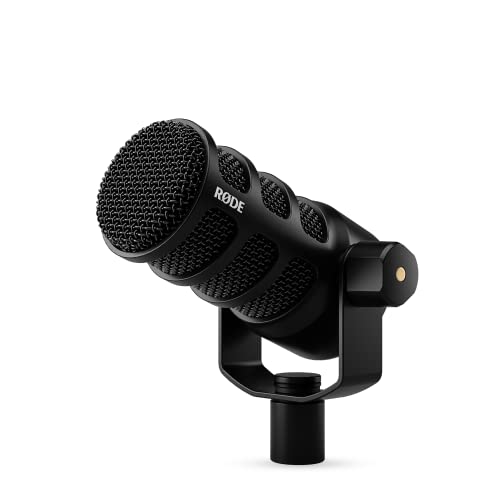
The RØDE PodMic USB is the broadcast-dynamic answer. A high-power neodymium dynamic capsule with a tight cardioid pattern that ignores the room, dual USB-C and XLR, APHEX DSP through RØDE Central, and 900g of all-metal heft that stays planted — on an arm strong enough to hold it. If you want the warm, room-rejecting sound of a broadcast dynamic with a growth path to XLR, this is it: View on Amazon
How to Choose in Five Minutes#
Start with the room. If it is untreated, shared, or noisy, buy dynamic — the MV7+ or the PodMic USB — and let the capsule reject what you cannot treat. If it is quiet and stays quiet, a condenser will give you detail the dynamic will not.
Then decide the connection. If USB is your endpoint forever, USB-C only is cleaner. If there is any chance of an interface later, take the XLR-plus-USB pair and skip the future upgrade.
Then check your desk and your arm. All three use the standard 5/8-inch thread, and the NT-USB Mini adds a 3/8-inch adaptor in the box — confirm against the manufacturer's own guide rather than assuming, and check your arm can hold the weight, which matters most with the 900g PodMic USB.
Then ask what the software is for. If you want to fix one voice, MOTIV, RØDE Connect and RØDE Central all sculpt a single source; if you want to mix a live broadcast, Wave Link is the only one that routes.
Finally, ignore the sample rate and the polar pattern. They are the same story on every box here, and the decision was already made back at the room.