

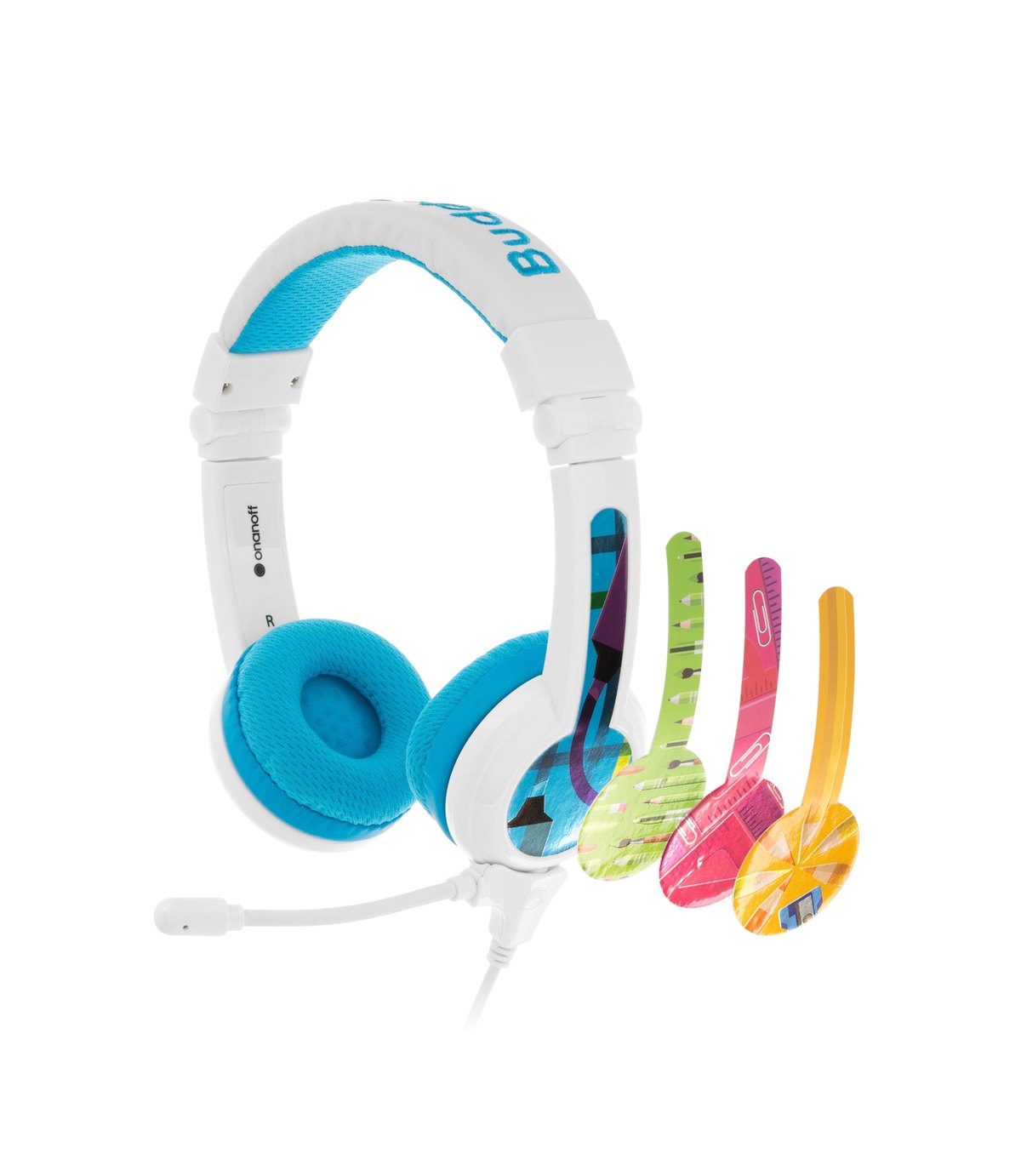
Buying headphones for a school-age child comes down to one feature: a volume cap. All three picks are volume-limited, rated by their makers to keep the sound under a set ceiling — the reason to buy kids' headphones over an adult pair. The Philips K2019 is the light wired pair for younger children, the JLab JBuddies Studio Wired is the best value, and the Puro Sound Labs BT2200 Plus is the premium wireless pick.
The number that matters is 85 decibels. All three makers rate their limiter there, even with the dial all the way up. That's the feature you're paying for. One caveat, covered below: in one independent test the Puro went past 85 dB over Bluetooth, and its included cable is what kept it near the cap.
At a Glance: Our Three Picks#
Light wired pair for younger kids : View on Amazon
Best-value wired pair : View on Amazon
The premium wireless option : View on Amazon
Who this comparison is for#
- You're buying a first pair for a child starting school, for online lessons or reading apps.
- You want the volume capped at 85dB without relying on your child to keep it down.
- You're choosing between a simple wired pair for school and a wireless pair for travel.
How we picked#
- Volume limiting first. Every pick is rated by its maker to cap the volume at 85dB. That cap is the point, so it was our first filter.
- Built for school. We favored a microphone for online class, a durable cord or long battery, and a fit made for smaller heads — the things that decide whether a pair survives a term.
- Honest about trade-offs. No Bluetooth on the wired pairs, an on-ear fit that loosens, a wireless pair whose cap held only on its cable in one test — we call each one out. This is about safer listening habits, not a promise about hearing.
- A clear pick for each need. One light wired pair for younger children, one no-fuss value pair, and one premium wireless set — so most families can match a pick to how their child listens.
Philips K2019 — For Younger Kids#
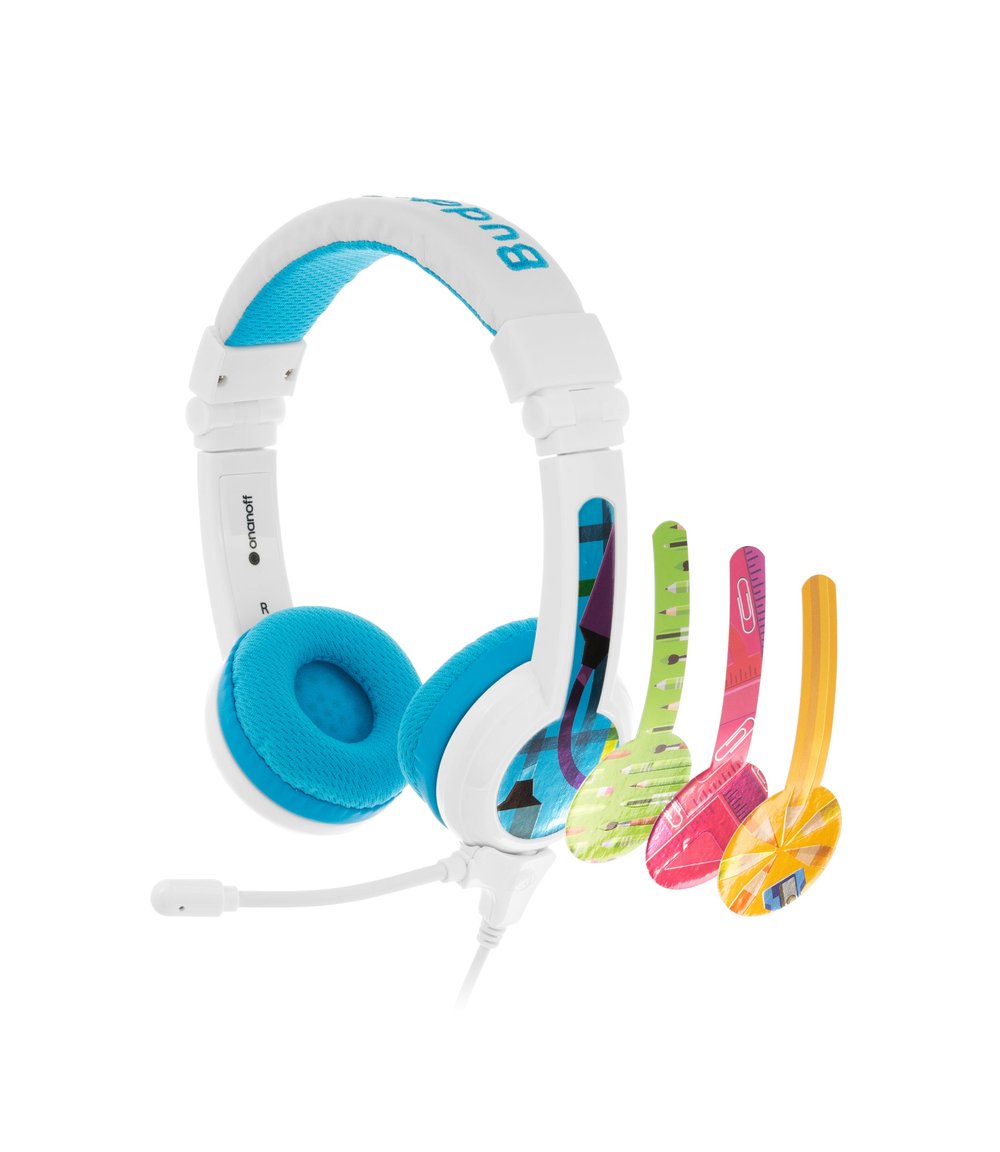
Get the Philips K2019 for a younger child. It's limited to 85 decibels, it's for ages 3 and up, and at 129 g it's light on a small head. The slim headband adjusts as your child grows, the ear cushions are soft foam, and the built-in mic handles online lessons. It's wired, so there's nothing to charge or pair before class, and it folds up for the school bag.
Key specs#
Connection : Wired, on-ear
Volume limit : 85dB
Microphone : Built-in mic
Fit : Adjustable headband, soft foam ear cushions, foldable
Age range : 3 and up
Best for : Younger children who need a light, wired pair with a mic
Bottom line. A light, wired 85dB pair with a mic built in, for ages 3 and up — the straightforward pair for a small child's first school year.
JLab JBuddies Studio Wired — Best Value#
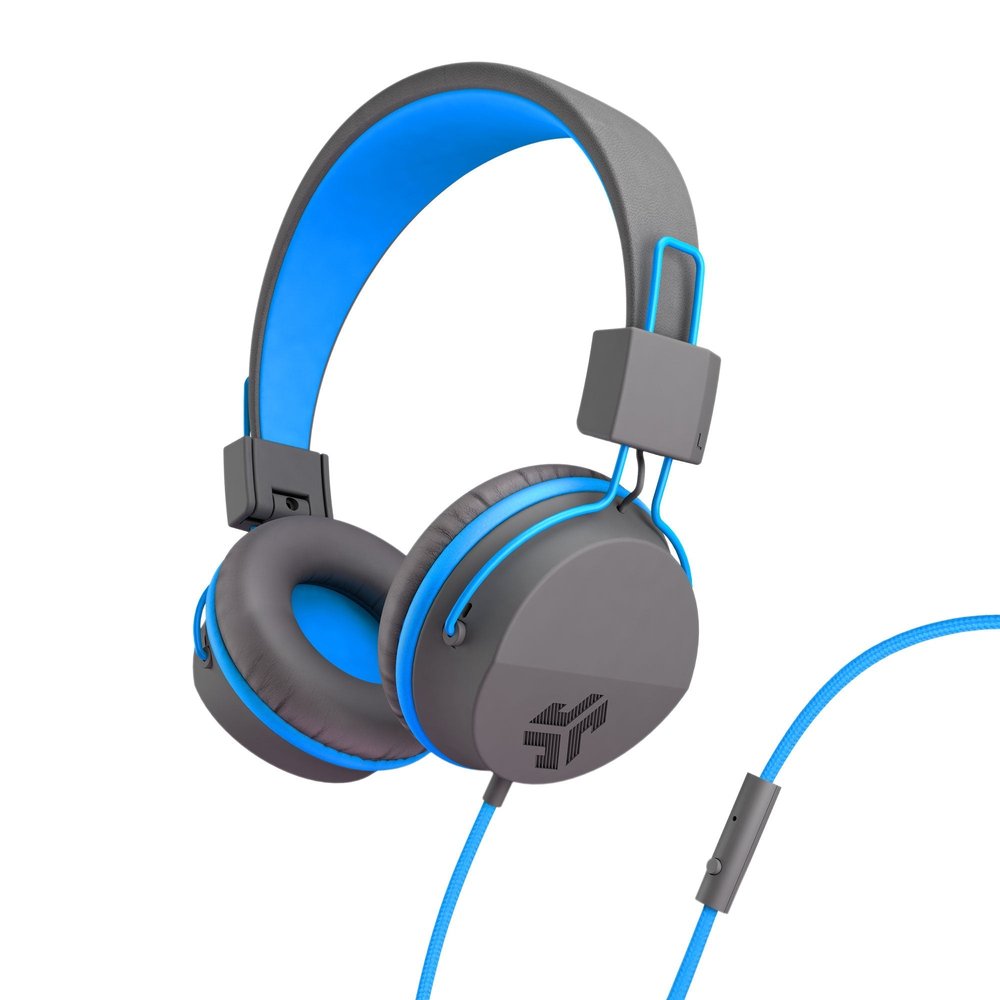
The JLab JBuddies Studio Wired is the pick when you want the volume handled simply and cheaply. Its cap is fixed at 85 decibels. There's no higher mode to switch into, so the cap stays on no matter what buttons a child presses. For a value headphone, that's the box that matters most, and this one ticks it.
The build is school-friendly too. An inline mic and track control sit on a braided nylon cord ending in a 90-degree jack that takes the strain when a device is jammed in a bag. The ear cups fold flat for the bag, and the headband adjusts on metal sliders to fit ages 6 to 16. Those sliders are thin, so pack it with a little care. A no-fuss pair with a fixed cap.
Key specs#
Connection : Wired, braided cord with 90° jack
Volume limit : Fixed at 85dB
Microphone : Inline mic with track control
Headband : Adjustable on metal sliders, ear cups fold flat
Age range : Roughly 6 to 16 years
Best for : A fixed-cap pair at a friendly price
Bottom line. A fixed 85dB cap nobody can override, on a folding build with an inline mic — the value pick. The on-ear fit can loosen on the smallest heads, and an inline mic picks up more room noise than a boom.
Puro Sound Labs BT2200 Plus — Premium Wireless#
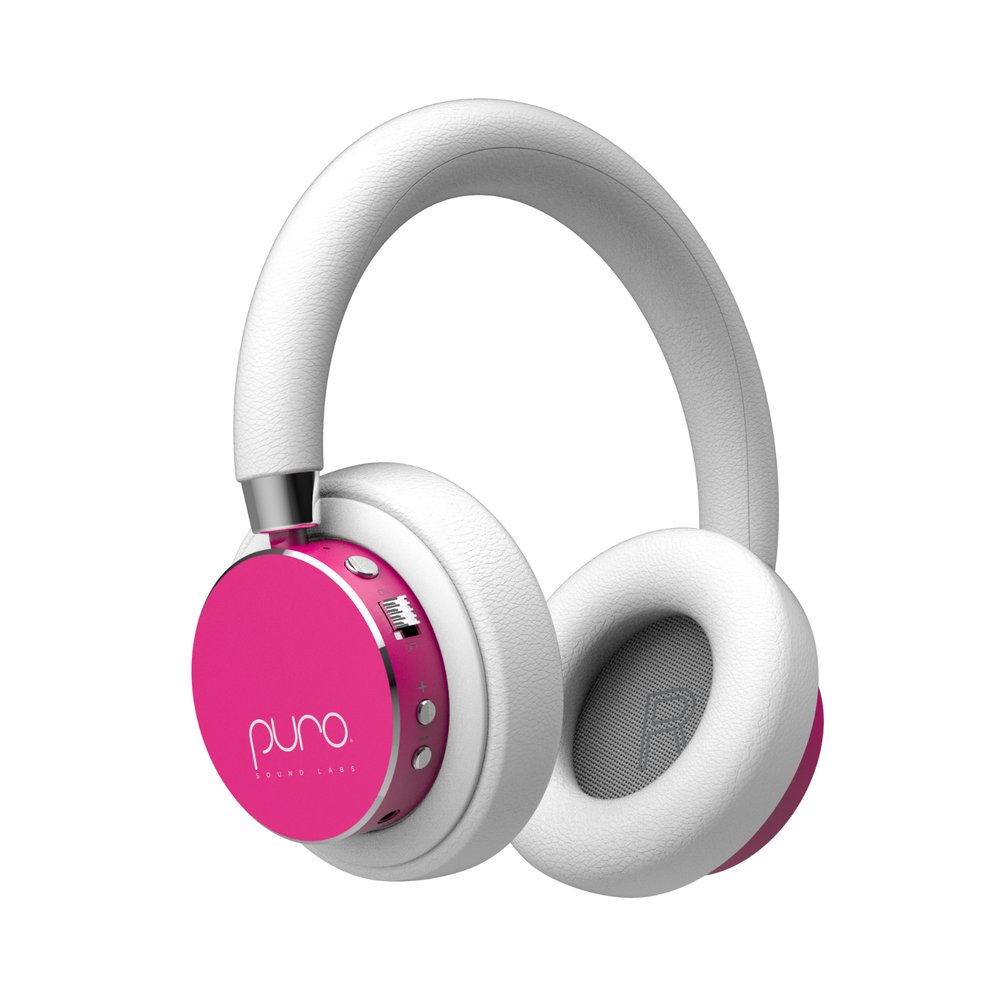
The Puro Sound Labs BT2200 Plus is the pair to buy when you want to go wireless, with a volume-limiting cable in the box. Puro rates its limit at 85 dBA, but over Bluetooth one independent test measured 100 dB with white noise, and music peaked at about 89 dB. On the included cable it measured about 85 dB from a laptop, and only a strong headphone amp pushed it well past that. So if the cap is why you're buying, use the cable, and set a volume limit on the device as well. Puro rates the closed design at 83% noise isolation, but the same independent test found it cuts some speech and high-pitched noise while engine hum stays, so in a loud place a child may still turn it up.
It's the most travel-ready pick, too. Puro rates the battery at 20 hours, it charges over USB-C, and it ships with a 3.5mm cable plus a hard case. If your child travels, flies, or hates cords, this is the one, and the cable is there for the times the cap matters most.
Key specs#
Connection : Bluetooth 5.0, plus a 3.5mm cable
Volume limit : Rated 85 dBA. In one test it held on the included cable, not over Bluetooth
Noise reduction : 83% noise isolation (Puro's rating)
Battery : 20 hours (Puro's rating), USB-C charging
In the box : 3.5mm wired cable and hard case
Best for : Travel, with the included cable for when the cap matters
Bottom line. The most travel-ready pair here, wireless with a cable and a case in the box. It's the premium price here, and its 85 dBA cap held in one test only on the included cable, so use the cable when the limit matters.
Which one should you buy?#
For a younger child, buy the Philips K2019. It's light and simple, with a mic built in and no battery to charge before class.
If you want the cap for the least money, buy the JLab JBuddies Studio Wired. It's the best value here, and its braided cord doesn't tangle.
If your child travels or hates cords, buy the Puro Sound Labs BT2200 Plus. You pay a premium for a wireless pair with a cable in the box. Use the cable when the cap matters, because in one independent test the 85 dBA limit held on the cable but not over Bluetooth.
Whichever you pick, set a volume limit on the device too, because the cap is the maker's rating. And it still isn't a pass for all-day listening. For kids in online classes, the WHO suggests speakers where you can, a device volume under 60%, and quiet breaks away from the screen when there's no class.
FAQ#
Is 85dB really enough volume?#
For everyday listening, yes — 85 decibels is loud enough for lessons, music and video in a quiet room. The honest catch is that in a genuinely loud spot, like a busy bus, a capped pair can feel quiet because it won't climb to drown out the background. That's the safety trade working as designed: a cap that holds won't let a child push the volume up to beat the noise. On the Puro, that means using its cable, because over Bluetooth it went past 85 dB in one independent test.
Wired or wireless for school?#
For the classroom, wired is usually the safer bet. Many schools prefer or require it because there's no battery to die mid-lesson, no pairing to fumble, and nothing to charge overnight — you plug the jack in and it works. The Philips K2019 and JLab JBuddies are wired for exactly this. Wireless shines outside school: for trips, flights and home use, the Puro BT2200 Plus is far more convenient, and its included 3.5mm cable lets it go wired on days the school asks for one. The cable is also what kept it near the cap in one independent test.
Can a child turn the volume above the cap?#
No setting lifts the cap, but the Puro can still go past it over Bluetooth. The JLab JBuddies has a fixed 85dB limit with no higher mode, and the Philips K2019 is limited to 85dB with no louder mode either. The Puro BT2200 Plus is the one to watch: Puro rates it at 85 dBA, but one independent test measured more over Bluetooth (100 dB with white noise, music peaking at about 89 dB) and kept it near 85 dB only on the included cable. A cable from another brand skips the Puro's limiter, too.
Which pick is best for online lessons and video calls?#
All three have a mic. The Philips K2019 has one built in, the JLab JBuddies has an inline mic with track control, and the Puro BT2200 Plus has a built-in mic for Bluetooth calls and an inline mic on its included cable. For class, the wired pairs are simpler, with nothing to pair or charge.